Encourage Deep Roots
In the first growing season, water less frequently but deeply so that moisture reaches 15–20 cm down, which encourages the plant to form a drought-resilient root system that will need very little supplemental water later.

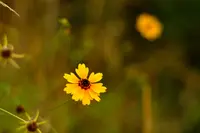
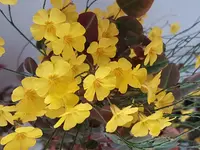
Stiff greenthread (Thelesperma filifolium) is a hardy perennial wildflower in the aster family, native to prairies and open areas of the central and southern United States. It forms clumps of very slender, thread-like leaves topped by bright yellow, daisy-like blooms on tall, wiry stems.
This species is adapted to dry, sunny habitats and poor, sandy or rocky soils, which makes it relatively easy to grow in low-input gardens. It suits xeriscapes, meadows, and naturalistic plantings where minimal watering is provided. Gardeners who care for stiff greenthread often value its long blooming season and high drought tolerance.
Thelesperma filifolium also supports pollinators by providing nectar and pollen for bees and butterflies through much of the warm season.

Care Difficulty
Easy Care

Light Preference
Full Sun

Water Requirements
Low Water

Temperature Preference
Cold Hardy

Hardiness Zone
4–9

Soil Texture
Sandy, Loamy, Rocky

Soil pH
Slightly acidic (6.5–7.0), Slightly alkaline (7.0–7.5)

Soil Drainage
Well-drained

Fertilization
Minimal (feed rarely)
Scan your plant to receive care tips personalized for your specific plant
Available on iOS and Android
Thelesperma filifolium thrives in bright, open sites with plenty of direct sun.
This species prefers dry, well-drained conditions and is highly drought tolerant once established.
This warm-season perennial handles heat well but has only moderate cold tolerance.
This species handles low atmospheric moisture well, so humidity management is rarely important.
This prairie perennial prefers lean, fast-draining soil and tolerates relatively poor conditions.
This species can grow successfully in containers if drainage and root conditions are managed carefully.
Native Thelesperma filifolium needs very modest feeding, especially in lean or sandy soils.
Pruning Thelesperma filifolium is simple and mainly supports abundant flowers and a tidy shape.
This species is most often grown in-ground, with transplanting done sparingly to avoid root disturbance.
Propagation of Thelesperma filifolium is usually done from seed, with simple requirements.
This prairie perennial is generally cold hardy in much of the US and needs minimal winter care outdoors.

Plant Health Check
Not sure what's wrong with your plant? Check your plant's health inside the app.
This species produces extremely narrow, threadlike leaves that reduce surface area, an adaptation that limits water loss in the dry, windy grasslands and prairies where it naturally occurs.
Its long flowering season in spring and early summer makes it a consistent nectar and pollen source for native bees and butterflies in central and southern US grassland ecosystems.
The species often grows on calcareous or alkaline soils, showing notable tolerance to high pH conditions that limit many other wildflowers.
This species is highly attractive to native bees, small wasps, and some butterflies that seek its nectar and pollen. Planting several together creates a useful nectar patch that supports local pollinators in low-water landscapes.
Keep your plants happy and healthy with plant identification, disease detection, and easy care guidance.