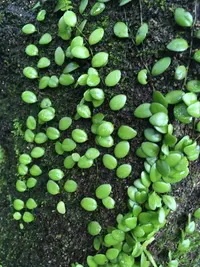
latticevein fern Care (Thelypteris reticulata)

latticevein fern

About latticevein fern

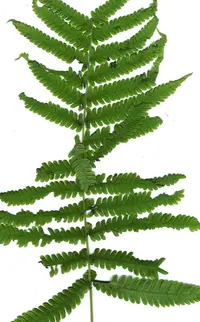
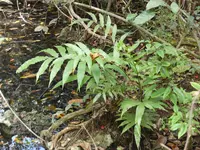
The latticevein fern, Thelypteris reticulata, is a tropical fern known for its finely divided fronds and distinctive net-like vein pattern. It typically forms loose clumps that slowly expand into soft, arching mounds of foliage.

In nature it grows on moist forest floors and along stream banks in warm regions of the Americas, where shade and constant humidity support its growth. This background makes it moderately demanding indoors, as it dislikes drying out or exposure to harsh sun.

Gardeners who want to learn how to care for latticevein fern should focus on steady moisture, filtered light, and an airy, humus-rich soil to mimic its woodland habitat.

Main Plant Requirements

Care Difficulty

Moderate Care

Light Preference

Partial Shade

Water Requirements

Keep Soil Moist

Temperature Preference

Tropical / Frost Sensitive

Hardiness Zone

9–11

Soil Texture

Loamy, Silty, Organic-rich

Soil pH

Acidic (5.5–6.5), Slightly acidic (6.5–7.0)

Soil Drainage

Moist but well-drained

Fertilization

Minimal (feed rarely)

Get Personalized Care Plan

Scan your plant to receive care tips personalized for your specific plant

Available on iOS and Android

How to Care for the latticevein fern

This fern prefers bright, indirect light that mimics a lightly shaded forest floor.

  • Provide 2–4 hours of soft morning sun with dappled or filtered light the rest of the day; avoid harsh midday and afternoon sun that can scorch fronds.
  • Tolerates partial to full shade, but very deep shade reduces vigor and produces sparse, elongated fronds over time in latticevein fern.
  • In hot summers, shift exposure to more shade, while in cooler seasons allow a bit more indirect light to maintain compact, healthy growth.

This species prefers evenly moist, but not waterlogged, soil around its root zone.

  • Water when the top 2–3 cm of soil feels slightly dry, aiming to keep the deeper soil lightly moist without standing water.
  • Use soil with good structure and drainage; persistent soggy conditions, sour smell, or blackened, limp fronds indicate overwatering and possible root rot.
  • In hotter months, monitor more often as edges may crisp or fronds droop slightly when underwatered; in cooler seasons, allow a bit more surface drying between waterings.

This fern grows best in consistently warm, frost-free conditions.

  • Aim for 65–80°F (18–27°C) for active growth, which supports steady frond production and healthy root activity.
  • Avoid temperatures below 40°F (4°C); light frost can damage fronds, and prolonged exposure near freezing may kill crowns of Thelypteris reticulata.
  • Tolerates short periods up to about 90°F (32°C) if humidity and soil moisture are maintained, but in sustained heat provide extra shade and avoid hot, drying winds.

This fern needs consistently high humidity to maintain vigorous fronds.

  • Aim for 60–80% humidity; drier air slows growth and causes browned pinnae edges.
  • In heated or air-conditioned rooms, use a pebble tray or room humidifier near latticevein fern.
  • Humidity stress shows as crisping tips and curling fronds; group plants and avoid strong air drafts to reduce moisture loss.

This species prefers loose, moist, organic-rich soil that mimics a forest floor.

  • Use a mix of roughly 50% peat or coco coir, 30–40% compost, and 10–20% perlite or fine bark for structure and moisture retention.
  • Aim for slightly acidic to neutral pH around 6.0–7.0, avoiding chalky or strongly alkaline substrates.
  • Ensure drainage is steady, not rapid; the mix should stay evenly moist without remaining waterlogged or forming sticky, airless clumps.
  • Improve aeration and prevent compaction by including fibrous materials like shredded bark or leaf mold rather than relying only on dense compost.

This fern adapts well to container culture when moisture and stability are managed carefully.

  • Choose a wide, relatively shallow pot to match its spreading rhizomes and keep the root zone evenly moist.
  • Use a slightly heavier pot material, such as ceramic, to stabilize the arching fronds and prevent tipping in wind.
  • Raise the container on pot feet or grids so drainage holes stay clear and excess water exits quickly after watering.

This fern has modest nutrient needs, but thoughtful feeding supports lush fronds in containers and managed plantings.

  • Use a balanced liquid fertilizer (such as 10-10-10) at 1/4–1/2 strength for latticevein fern in active growth.
  • Apply every 4–6 weeks in spring and summer for potted plants or intensively managed beds.
  • Stop feeding in fall and winter, when growth slows or pauses, to avoid weak, leggy fronds.
  • Compost or a slow-release, low-dose fertilizer can be mixed lightly into the topsoil once each spring.

Pruning Thelypteris reticulata is mainly hygienic, helping maintain tidy, healthy foliage.

  • Best timing is late winter to early spring, before strong new growth starts.
  • Remove dead, yellowing, or damaged fronds at the base using clean, sharp scissors or pruners.
  • Thin crowded or overlapping fronds to improve airflow and reduce fungal issues.
  • Light shaping is possible, but avoid cutting into the central crown, where new fronds emerge.

This fern benefits from occasional moving or division when clumps become dense or outgrow their space.

  • Look for roots circling the pot, water running straight through, or noticeably slower growth as signs it needs attention.
  • Plan to repot or transplant Thelypteris reticulata every 2–3 years, ideally in spring or early fall.
  • Lift the plant gently, loosen or trim circling roots, and replant at the same depth in moist, well-drained, humus-rich soil.
  • Water thoroughly afterward, keep soil evenly moist, and shelter from strong sun for 1–2 weeks to reduce transplant stress.

This species is most practically increased by division, rather than by spores, for home growers.

  • Divide mature clumps of Thelypteris reticulata in early spring when new fronds just start to emerge.
  • Lift the clump, then separate it into sections, each with healthy rhizomes and several fronds or buds.
  • Replant divisions immediately into moist, humus-rich soil, keeping crowns level with the surface.
  • Maintain high humidity, consistent moisture, and light shade until new frond growth confirms establishment.

In mild to warm climates, this fern needs little winter intervention, but colder areas require some protection.

  • Thelypteris reticulata is frost sensitive; fronds may burn or collapse below about 30–32°F.
  • Apply a 5–8 cm layer of organic mulch around the root zone in fall, keeping it off the crown.
  • Move container-grown plants indoors or into a frost-free greenhouse with bright shade and evenly moist soil.

Care Tips

Rhizome Division Timing

Divide crowded clumps only in warm, stable weather and keep divisions shaded and evenly moist for 2–3 weeks to help them re-establish quickly.

Edge Containment

Install a shallow root barrier or maintain a spade-cut edge around beds every 6–12 months to prevent this fern’s creeping rhizomes from invading nearby plantings.

Frond Cleaning Routine

Remove spent and yellowing fronds at the base with clean, sharp pruners every few months to reduce fungal pressure and keep new growth well ventilated.

Slugs And Snails Control

In damp, shaded plantings, hand-pick slugs at dusk and use iron phosphate bait in pet-safe formulations to prevent chewing damage on tender new fronds.

Mulch Management

Maintain 2–5 cm of loose, fine-textured mulch, but pull it a few cm back from the crown to avoid rot and to make monitoring for pests and new shoots easier when caring for latticevein fern.

Common Pests and Diseases

Scale insects

This pest attaches to fronds and stems, appearing as small brown or gray bumps that cause yellowing and decline in vigor. Symptoms include sticky honeydew on the foliage and sooty mold growth on the leaf surface.

Solution

Isolate the plant, then gently scrape or wipe scales off fronds with a cotton pad dipped in 70% isopropyl alcohol, repeating weekly until new growth is clean. Improve air movement around the fern and, if the infestation persists, use a targeted horticultural oil spray labeled for ferns, applied to both upper and lower leaf surfaces.

Fern aphids

These insects cluster on tender new fronds and undersides of leaves, sucking sap and causing distortion, curling, and pale or mottled foliage. Sticky honeydew and occasional presence of ants are common secondary signs.

Solution

Rinse fronds thoroughly with a strong but gentle stream of water, focusing on new growth and the underside of fronds, and repeat every few days until populations drop. If needed, apply an insecticidal soap labeled for ferns, sprayed in the early morning or evening to avoid leaf stress, and maintain stable moisture to support strong regrowth while caring for latticevein fern.

Rhizoctonia leaf blight

This disease causes irregular brown to dark lesions on pinnae and frond tips, often starting where moisture lingers, with affected tissue becoming dry and fragile. Symptoms include patchy thinning of the canopy as damaged fronds die back.

Solution

Remove and discard all affected fronds, sterilizing pruning tools between cuts, and avoid overhead watering so fronds dry quickly. Improve spacing and airflow around the plant, reduce leaf wetness duration, and if spread continues, use a fungicide labeled for ornamental ferns containing a Rhizoctonia-active ingredient, following all label directions.

Bipolaris leaf spot

This disease produces elongated tan to dark brown spots with slightly darker margins on fronds, sometimes merging into larger blotches that weaken the plant. Symptoms include premature frond yellowing and a generally thin, uneven appearance.

Solution

Cut off and discard heavily spotted fronds to reduce spore load, then water at the soil level to keep foliage as dry as possible. Increase air circulation, avoid crowding with other plants, and in persistent cases apply a broad-spectrum foliar fungicide appropriate for ferns, rotating products if used more than once to limit resistance.

Interesting Facts

Distinctive netted veins

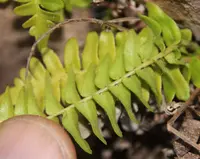
The fronds show a clearly visible net-like pattern of secondary veins between the main veins, which gives rise to the species name reticulata and can help distinguish it from similar swamp ferns.

Preference for wet soils

In the wild, this fern often grows in wet habitats such as streambanks, marsh margins, and damp forest floors, where its rhizomes can tolerate periodically waterlogged, low-oxygen substrates.

Large, arching fronds

Mature plants can form dense clumps with long, gracefully arching fronds that create a layered canopy, providing shade and humidity for small understory organisms in their native habitats.

Botan icon

Did you know?

This species is widely distributed across tropical and subtropical regions of the Americas, including parts of the southeastern United States, the Caribbean, Central America, and South America, reflecting a high ecological tolerance for different warm, humid environments.

FAQs about latticevein fern

This species spreads by creeping rhizomes and spores, forming dense clumps over time. In moist, favorable sites it can expand noticeably, but it is usually manageable with edging, periodic division, and removing unwanted offsets.

Grow Healthy Plants with Botan Care

Keep your plants happy and healthy with plant identification, disease detection, and easy care guidance.

Botan plant care app — identify plants on mobile

Explore More Plants