Stake For Stems
Install thin canes or a low grid-style support early in the season and loosely tie stems with soft ties so the tall flower heads stay upright and do not snap in wind or heavy rain.

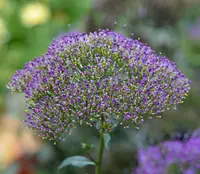
Throatwort (Trachelium caeruleum) is a herbaceous perennial often grown as an annual, valued for its dense clusters of tiny, star-like flowers. The blooms form soft, cushiony heads in shades of violet-blue, white, or pink above upright, branching stems.
It is native to the Mediterranean region, where it grows in sunny, well-drained sites with mild winters. In gardens and containers it stays compact and bushy, making it useful for borders and cut flowers.
This plant is moderately easy to grow if given consistent moisture, good drainage, and at least moderate light. Understanding how to care for Throatwort helps keep its flowering steady and foliage healthy.

Care Difficulty
Moderate Care

Light Preference
Full Sun

Water Requirements
Regular Water

Temperature Preference
Warm Climate

Hardiness Zone
8–10

Soil Texture
Sandy, Loamy, Organic-rich

Soil pH
Acidic (5.5–6.5), Slightly acidic (6.5–7.0)

Soil Drainage
Moist but well-drained

Fertilization
Moderate (every 2–4 weeks)
Scan your plant to receive care tips personalized for your specific plant
Available on iOS and Android
This sun-loving perennial performs best with bright conditions but benefits from protection from harsh heat.
This plant prefers evenly moist but not saturated soil, supported by good drainage.
This species grows best in mild, temperate conditions without strong temperature extremes.
This species prefers moderately moist air but usually adapts to typical household humidity.
Trachelium caeruleum grows best in loose, fertile, well‑drained soil that still retains moderate moisture.
This species is well suited to growing in containers outdoors.
This flowering annual benefits from modest, consistent feeding during its active growing season.
Pruning Trachelium caeruleum helps maintain a compact shape and encourages abundant blooms.
This plant is usually grown as an annual bedding or cut-flower plant, so transplanting timing is more important than long-term repotting.
Trachelium caeruleum is most commonly propagated from seed rather than by vegetative methods.
In most climates this species is treated as a tender annual, so long-term winter care is minimal.

Plant Health Check
Not sure what's wrong with your plant? Check your plant's health inside the app.
This species produces hundreds of tiny star-shaped florets packed into rounded, cushion-like flower heads, creating a single dense surface that is especially attractive to small pollinating insects such as hoverflies and solitary bees.
In the wild, it is native to rocky slopes and coastal cliffs of the western Mediterranean, where it is adapted to well-drained, often calcareous soils and exposure to intense sun and wind.
The species is widely used in the cut flower industry because its complex flower heads and stiff stems hold structure and color for an extended period in the vase compared with many other filler flowers.

Breeding of this species for the floriculture trade has produced a wide color range from deep violet-blue to white and greenish tones, and many commercial cultivars are selected specifically for uniform flowering time to fit tightly scheduled cut flower production cycles.
Lack of flowers usually comes from low light, excess nitrogen fertilizer, or old, exhausted plants. Deadhead spent blooms, avoid high-nitrogen feeds, and ensure at least moderate light to support bud formation and prolonged flowering.
Keep your plants happy and healthy with plant identification, disease detection, and easy care guidance.