Rotate Container
Turn the pot 90° every 2–3 weeks so the leaf rosettes and twisted foliage develop evenly and do not lean permanently toward the light source.

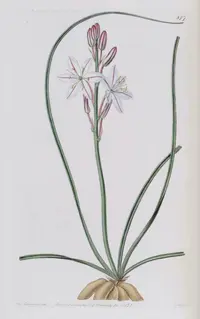
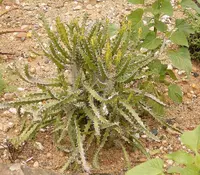
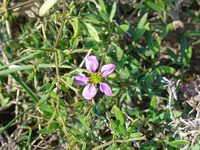
Common capespinach, Trachyandra ciliata, is a small, short-lived perennial from coastal South Africa and Namibia, often found in sandy, well-drained soils. It forms low clumps of narrow, often somewhat fleshy leaves and sends up simple flower stalks with small, pale blossoms. The plant grows in open, sunny habitats and is adapted to dry, windy conditions, which makes it relatively drought-tolerant in cultivation. It can be sensitive to prolonged moisture around the roots, so good drainage is important. Gardeners who care for Common Capespinach usually succeed when they provide bright light, lean soil, and careful watering, especially in cooler or wetter climates.

Care Difficulty
Moderate Care

Light Preference
Full Sun

Water Requirements
Low Water

Temperature Preference
Warm Climate

Hardiness Zone
10–11

Soil Texture
Sandy, Loamy, Rocky

Soil pH
Slightly acidic (6.5–7.0), Neutral (7.0)

Soil Drainage
Well-drained

Fertilization
Minimal (feed rarely)
Scan your plant to receive care tips personalized for your specific plant
Available on iOS and Android
Trachyandra ciliata prefers bright, open sun but benefits from some protection in extreme conditions.
Watering for Trachyandra ciliata should mimic a dry, winter-rainfall climate with brief moist periods and fast drainage.
This species grows best in mild, dry conditions and reacts poorly to hard frost or extreme heat.
This species prefers relatively dry air and does not need elevated humidity.
Soil for Trachyandra ciliata must be very fast-draining and low in organic matter.
This species is suitable for container growing when provided with excellent drainage and a shallow, stable pot.
This drought-adapted species needs only light feeding, so focus on modest support rather than heavy fertilizer use when caring for Common Capespinach.
Pruning Trachyandra ciliata is minimal and mainly focuses on keeping the plant tidy and healthy.
This species is more often grown in the ground, so transplanting is usually more relevant than frequent repotting.
Trachyandra ciliata is typically propagated from seed, with some potential for careful division in established clumps.
This plant tolerates mild, dry winters but benefits from basic protection in regions with hard frost.

Plant Health Check
Not sure what's wrong with your plant? Check your plant's health inside the app.
This species is native to coastal and semi-arid regions of South Africa and Namibia, where it grows in winter-rainfall climates and lies mostly dormant during the hot, dry summer.
It typically forms low rosettes in sandy soils, often partially buried, which helps stabilize it in wind-exposed habitats and reduces water loss at the soil surface.
It is usually a short-lived perennial or sometimes an annual in harsher sites, completing its life cycle quickly when moisture is available, an adaptation common in arid and coastal floras.
Brown leaf tips or patches usually come from inconsistent watering, low humidity, or fertilizer salts building up in the soil. Check root health, flush the pot occasionally, trim damaged tissue, and keep moisture levels steady.
Keep your plants happy and healthy with plant identification, disease detection, and easy care guidance.