Controlled Water Depth
Use a rigid pond basket or container without drainage holes so the root zone stays submerged at a consistent 10–30 cm water depth, which keeps plants vigorous and prevents sudden stress from fluctuating water levels.

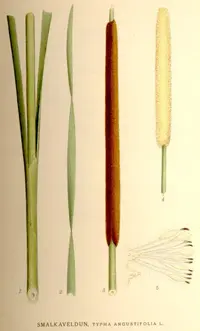
Lesser bulrush (Typha angustifolia) is a perennial aquatic plant typically found along the edges of ponds, lakes, and slow-moving streams. It forms dense stands with tall, narrow leaves and slim brown flower spikes.
This species is native to many temperate regions and often appears in wetland restoration and wildlife habitat projects. Its strong rhizomes spread steadily, so it can become dominant in shallow water areas.
Typha angustifolia prefers full sun, consistently wet or shallowly flooded conditions, and nutrient-rich, muddy or silty substrates. Understanding these marsh-like needs is essential to care for lesser bulrush successfully in managed water gardens or naturalized plantings.

Care Difficulty
Moderate Care

Light Preference
Full Sun

Water Requirements
Aquatic

Temperature Preference
Cold Hardy

Hardiness Zone
3–10

Soil Texture
Loamy, Silty, Organic-rich

Soil pH
Slightly acidic (6.5–7.0), Neutral (7.0)

Soil Drainage
Waterlogged tolerant

Fertilization
Minimal (feed rarely)
Scan your plant to receive care tips personalized for your specific plant
Available on iOS and Android
This wetland species thrives in strong sun but accepts some light variation through the year.
This emergent aquatic plant prefers constant saturation rather than cyclic drying.
This hardy wetland species tolerates a wide temperature range once established.
This wetland species requires very high humidity and constant moisture to thrive in cultivation.
Typha angustifolia grows best in permanently waterlogged, organic-rich substrates rather than typical potting soil.
This species is suitable for large, water-holding containers such as tubs or half-barrels.
Typha angustifolia in nutrient-rich, wet soil needs only light supplemental feeding.
Typha angustifolia benefits from simple, seasonal pruning to keep stands healthy and tidy.
This species is usually grown in ponds or marshy beds, so care focuses on dividing and transplanting clumps rather than frequent repotting.
Typha angustifolia is most reliably propagated by division, with seeds used where naturalizing large areas.
This cold-hardy wetland plant usually needs minimal winter care in most temperate climates.

Plant Health Check
Not sure what's wrong with your plant? Check your plant's health inside the app.
This species has notably narrower leaves, typically 3–10 mm wide, which helps distinguish it in the field from the broader-leaved Typha latifolia that often grows alongside it.
Its male and female flower sections along the stem are clearly separated by a visible gap, unlike the continuous flowering spikes of some related cattail species.
This plant often occupies slightly deeper or more permanently flooded zones in wetlands than broadleaf cattail, contributing to vertical zoning patterns in marsh vegetation.

This species is widely used in constructed wetlands and wastewater treatment systems because its dense root and rhizome network can uptake nutrients and provide extensive surface area for microorganisms that break down organic pollutants.
This species spreads mainly by creeping rhizomes and wind-dispersed seed. In nutrient-rich, shallow water it can form dense stands and outcompete other plants. Containment usually requires physical barriers, regular thinning, or limiting fertile, still-water areas.
Keep your plants happy and healthy with plant identification, disease detection, and easy care guidance.