Sturdy staking
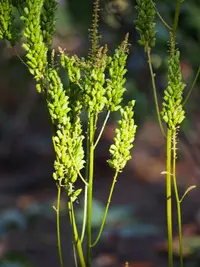
Install slim stakes or a light wire grid early in the season and loosely tie stems in 20–30 cm intervals to prevent wind damage and lodging as the tall, wiry growth matures.

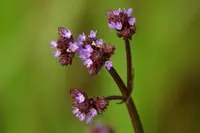
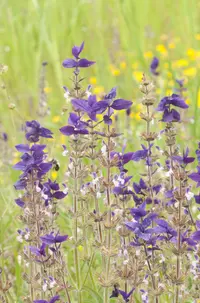
Brazilian vervain (Verbena brasiliensis) is an upright, fast-growing herbaceous perennial often grown as an annual in cooler regions. It forms tall, slender stems topped with small clusters of purple flowers.
This species is native to South America but has naturalized in many warm and temperate areas, where it can spread easily and sometimes behave invasively. Its toughness, self-seeding habit, and tolerance of poor soils make it relatively easy to establish, but it may require management to prevent unwanted spread.
Understanding how to care for Brazilian vervain starts with its preference for full sun, moderately moist but well-drained soil, and open spaces where its height and airy form can develop fully.

Care Difficulty
Easy Care

Light Preference
Full Sun

Water Requirements
Moderate Water

Temperature Preference
Warm Climate

Hardiness Zone
8–11

Soil Texture
Sandy, Loamy, Organic-rich

Soil pH
Acidic (5.5–6.5), Slightly acidic (6.5–7.0)

Soil Drainage
Well-drained

Fertilization
Minimal (feed rarely)
Scan your plant to receive care tips personalized for your specific plant
Available on iOS and Android
This sun-loving perennial thrives in open, bright conditions with consistent exposure.
This species prefers evenly moist, free-draining soil rather than constantly wet conditions.
This warm-season plant grows best in mild to hot conditions without prolonged cold or frost.
Humidity is rarely a limiting factor for Verbena brasiliensis in typical home and outdoor conditions.
Verbena brasiliensis prefers mineral, free-draining soil that does not stay wet after rain or watering.
This species can be grown in containers if the pot is set up to offset its vigorous, upright growth.
This tall perennial usually needs only light feeding, especially in fertile garden soil.
Pruning helps maintain shape, flowering, and self-seeding control in Verbena brasiliensis.
This species is more often transplanted in beds than kept long-term in containers.
This plant is commonly propagated from both seed and softwood cuttings.
In mild climates this species often persists, but it behaves as a tender perennial or annual in colder regions.

Plant Health Check
Not sure what's wrong with your plant? Check your plant's health inside the app.
This species is native to southern South America, especially Brazil, Argentina, and Uruguay, and has spread from there to many warm and subtropical regions worldwide as an introduced plant.
The small fruits carry lightweight structures that allow the seeds to be carried long distances by wind, which helps explain its rapid spread along roadsides, riverbanks, and disturbed ground in many countries.
This species uses C4 photosynthesis, a carbon-fixing pathway that makes it more efficient under high light, heat, and drought, giving it a competitive advantage in open, sunny habitats.
This species self-seeds heavily and can spread quickly, especially in disturbed or open ground. In many warm regions it is considered invasive. Deadhead spent flowers, remove unwanted seedlings early, and monitor nearby areas regularly to prevent escape.
Keep your plants happy and healthy with plant identification, disease detection, and easy care guidance.