



muscadine Identification (Vitis rotundifolia)

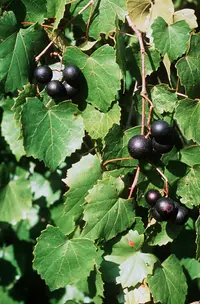
Recognize Vitis rotundifolia by its simple, alternate leaves that are broadly round to heart-shaped, usually 2 to 5 inches (5 to 13 cm) wide, on a thick, woody climbing vine.

Another strong clue is the bark: older stems shred into narrow strips, giving the trunk and main branches a stringy, peeling look.

Vitis rotundifolia Identification

Check Your Plant ID

Not sure about your plant ID? Upload a photo and check it with Botan.

Clear images work best. Avoid photos taken too close or too far away

  • 1 free identification
  • No sign-up
  • 30,000+ plants in database

Check the vine’s leaves, bark, and fruit shape first.

  • Leaves are simple, alternate, and broadly round to heart-shaped, often 2-5 inches (5-13 cm) wide, with coarse teeth along the edge.
  • Leaf stalks are fairly long, and the blade usually has a smooth, unlobed outline or only very shallow lobes.
  • Older stems show shaggy, peeling bark in narrow strips, while the plant climbs as a thick woody vine.
  • Fruits are borne in small, loose clusters rather than large bunches, and each berry is relatively large and round.

These visible traits together fit Vitis rotundifolia.

Vitis rotundifolia shows clear visual shifts from slender juvenile vine to heavy fruiting climber.

  • Young plant: Young vines are thin and twining, with widely spaced leaves and little branching; stems stay green and flexible before thicker woody framework develops.
  • Mature plant: Mature plants form stout, woody trunks and permanent cordlike branches, often climbing or spreading 35-100 feet (11-30 m), with denser canopy and heavier lateral branching.
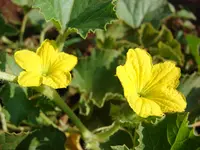
  • Flowering stage: Flowering plants show many small greenish flowers in short clusters at leaf axils, adding a speckled texture that is absent on strictly vegetative shoots.
  • Fruiting stage: Fruiting stage is distinctive from flowering by round berries borne singly or in small loose clusters, visually replacing the flowers with obvious smooth fruit.

In spring, Vitis rotundifolia leafs out with rounded to heart-shaped, glossy leaves. By late spring to early summer, small greenish flower clusters become visible. Late summer into fall brings large, thick-skinned grapes that ripen to bronze, purple, or black. After leaf drop in fall, the vine shows bare, twining stems and a coarse, woody framework.

A few wild and cultivated vines can be mistaken for muscadine at a glance.

summer grape(Vitis aestivalis)

Often confused because both are climbing grapes with simple, rounded leaves. Summer grape usually has more distinctly lobed leaves and tight clusters of many smaller berries, while muscadine bears fewer, larger fruits in looser clusters.

fox grape(Vitis labrusca)

This grape can look similar by leaf size and vining habit. Fox grape leaves are typically more obviously heart-shaped with a whitish, fuzzy underside, while muscadine leaves are usually smoother beneath and less deeply cordate at the base.

Vitis rotundifolia is native to the southeastern United States, from Delaware south through Florida and west to eastern Texas and Oklahoma. That range helps separate it from many wild grapes found farther north or inland. In the wild it is most often seen in woods, thickets, fencerows, stream edges, and coastal plain habitats. Finding it in lowland southeastern habitats can support identification, especially where native grape vines are common.

Scan. Check. Confirm.

Use Botan to identify or verify the plant from a photo, helping avoid mix-ups before you label it or compare similar species.

FAQ

Flowers are borne in small clusters opposite the leaves. They are usually greenish and not showy. This arrangement can support identifying muscadine when paired with the species’ simple, rounder leaves and vine habit.

More Plant Identification Guides

Identify First. Learn What Comes Next.

Identify a plant from a photo with Botan, then review species-specific care information, plant details, and common problems.

Botan app identifying a plant from a photo
Best Time to Plant Grass Seed: When to Seed Your Lawn

6 min read · 19 Nov 2026

Best Time to Plant Grass Seed: When to Seed Your Lawn

The best time to plant grass seed depends on your climate and grass type. Cool-season lawns establish best in late summer or early fall, while warm-season grasses perform best once soil warms in late spring or early summer.

Plant Care
Best Time to Plant Grass Seed: When to Seed Your Lawn
Top 15 Plants That Don’t Need Sunlight

8 min read · 17 Sept 2026

Top 15 Plants That Don’t Need Sunlight

Some plants thrive in dim rooms, shaded corners, and places with indirect light. In this guide, you’ll explore the top 15 species best suited to low-light conditions and how to care for them.

Plant Recommendations
Top 15 Plants That Don’t Need Sunlight
Plants That Repel Mosquitoes – 10 Effective Choices

8 min read · 6 Jul 2026

Plants That Repel Mosquitoes – 10 Effective Choices

Plants that repel mosquitoes can help mask human scent naturally and make outdoor spaces more comfortable. Explore the most effective options, their benefits and drawbacks, and choose the right plant for your space.

Plant Recommendations
Plants That Repel Mosquitoes – 10 Effective Choices