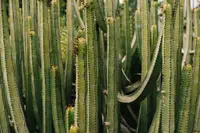
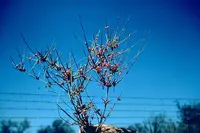
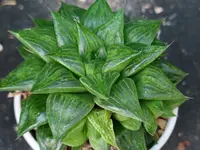
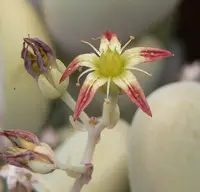
Don Quixote's lace Care (Yucca treculeana)

Also known as: Spanish dagger, Spanish bayonet
Don Quixote's lace

About Don Quixote's lace

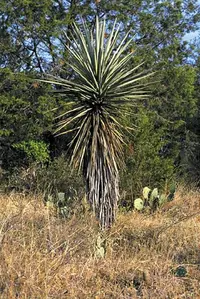
Don Quixote's lace (Yucca treculeana) is a hardy, trunk-forming yucca native to arid regions of Texas and northeastern Mexico. It is an evergreen succulent shrub or small tree with stiff, sword-shaped leaves that form a bold rosette on top of a thick trunk.

Mature plants can develop multiple heads, giving a striking architectural look in dry gardens or large containers. Tall flower stalks with creamy white blooms appear seasonally and attract pollinators.

This species is adapted to hot sun, low rainfall, and well-drained, often rocky soils, which makes it drought tolerant but sensitive to poor drainage. Understanding how to care for Don Quixote's lace starts with providing strong light and avoiding consistently wet conditions.

Main Plant Requirements

Care Difficulty

Easy Care

Light Preference

Full Sun

Water Requirements

Low Water

Temperature Preference

Warm Climate

Hardiness Zone

6–11

Soil Texture

Sandy, Loamy, Rocky

Soil pH

Slightly acidic (6.5–7.0), Slightly alkaline (7.0–7.5)

Soil Drainage

Well-drained

Fertilization

Minimal (feed rarely)

Get Personalized Care Plan

Scan your plant to receive care tips personalized for your specific plant

Available on iOS and Android

How to Care for the Don Quixote's lace

Yucca treculeana thrives in strong, direct light typical of open desert or scrub habitats.

  • Provide 6–10 hours of full sun daily; partial shade for 2–4 hours is acceptable, especially in very hot inland climates.
  • Site the plant where it receives morning to midafternoon sun; light afternoon shade can reduce leaf scorch in exposed, reflective locations.
  • In caring for Don Quixote's lace, insufficient light causes weak, leaning growth, while extreme reflected heat from pavement can bleach or crisp leaf tips in summer.

This desert-adapted species prefers infrequent, deep watering and very fast drainage.

  • Outdoors in the ground, water only when the top 5–8 cm of soil are completely dry, then soak the root zone and allow it to drain fully.
  • In summer, dry periods of 2–4 weeks are usually tolerated; in cooler months, natural rainfall often provides enough moisture in most arid and semi-arid regions.
  • Yucca treculeana shows overwatering by yellowing, mushy lower leaves and soft stems; underwatering shows as slow folding, browning tips, and very hard, dusty soil.

This species is highly heat-tolerant but only moderately hardy to cold.

  • Optimal growth occurs around 70–95°F (21–35°C), typical of hot, dry climates with strong sun and good air movement.
  • Established plants can survive short drops to about 10–15°F (-12 to -9°C), but young plants are more vulnerable and benefit from protection during hard freezes.
  • Prolonged frost, freezing wet soil, or repeated cycles around 20°F (-7°C) may damage leaf tissue, while extreme heat above 105°F (41°C) increases stress if soil is poorly drained.

This species prefers dry air and rarely needs humidity adjustment indoors.

  • Aim for 20–40% relative humidity, similar to a typical heated or air-conditioned home.
  • Plant tolerates very dry air; humidity stress shows as soft, rotting leaf bases rather than crispy tips.
  • If air is extremely dry and hot, increase humidity slightly by grouping plants, but always prioritize airflow around the rosette.

Yucca treculeana grows best in lean, sharply drained, mineral-based soil.

  • Use a gritty mix such as 50–60% coarse sand or small gravel blended with cactus mix to keep roots dry between waterings.
  • Ensure very fast drainage; water should exit the pot or planting hole within seconds, not pool on the surface.
  • Keep pH slightly alkaline to neutral (pH 7.0–8.0) by avoiding peat-heavy mixes and using limestone chips if native soil is acidic.
  • Improve aeration in heavy or clay soil by raising the planting area and incorporating coarse sand, small gravel, and crushed granite while avoiding rich compost.

This yucca can be grown in containers, especially in colder climates or where soil drains poorly.

  • Choose a deep, heavy pot to balance the tall, top-heavy rosette and prevent tipping in strong wind.
  • Select thick-walled terracotta or concrete to reduce overheating of roots in full sun and to moderate moisture swings.
  • Elevate the container on feet or bricks so drainage holes stay clear and water runs off rapidly after heavy rain or irrigation.

This desert-adapted species needs minimal feeding, but light nutrients can support container-grown Don Quixote's lace in poor substrates.

  • Use a diluted balanced liquid fertilizer (around 10-10-10 or 20-20-20 at 1/4–1/2 strength) for potted plants.
  • Feed once every 6–8 weeks during active growth in spring and summer only.
  • Avoid fertilizing in fall and winter when growth slows or stops.
  • In the ground, rely mostly on lean, well-drained soil; a thin layer of compost in spring is usually enough.

Yucca treculeana benefits from selective pruning to maintain safety, appearance, and plant health.

  • Carry out most pruning in late winter to early spring before strong new growth begins.
  • Remove dead, damaged, or crossing leaves and stems using clean, sharp bypass pruners or a pruning saw.
  • Cut spent flower stalks back to the base once they dry to tidy the plant and reduce seed production.
  • Limit removal of healthy green leaves to preserve photosynthesis and maintain the plant’s structural strength.

This species is usually grown in the ground, so focus on careful transplanting rather than frequent repotting.

  • Transplant in late winter or early spring when temperatures are mild and soil is workable.
  • Look for signs such as roots circling a container, poor drainage, or stalled growth before moving a potted plant up 1 size.
  • Dig a wide, shallow hole, keep the root ball as intact as possible, and backfill with sharply drained soil to reduce shock.
  • Water deeply once after transplanting, then allow the soil to dry between waterings while the root system re-establishes.

Propagation is most practical from offsets and stem cuttings, with seed mainly used for larger restoration or breeding efforts.

  • Detach basal offsets in late spring, keeping some roots attached, and plant them in a gritty, fast-draining mix.
  • Take semi-woody stem cuttings, allow cut ends to callus for several days, then insert into barely moist substrate.
  • Provide bright light, warmth around 70–80°F, and low to moderate moisture to prevent rot during rooting.
  • Sow seeds in spring on the surface of a sandy mix, keep slightly moist, and allow several weeks to months for germination.

This yucca is fairly cold hardy, so winter care is minimal in suitable climates.

  • Established plants tolerate brief frosts and light freezes, especially in dry soil conditions.
  • In colder regions, apply a 5–8 cm layer of dry mulch around the root zone, keeping it away from the trunk.
  • Tie outer leaves loosely around the crown in very cold snaps to reduce ice accumulation on the growing point.
  • Move container plants to an unheated, bright, frost-free area and keep soil on the dry side.

Care Tips

Wind-hardening seedlings

If starting plants from seed or small nursery stock, expose them gradually to stronger wind over 2–3 weeks so trunks and leaf bases thicken and anchor more firmly before planting in a permanently exposed site.

Rock mulch ring

Create a 30–60 cm ring of coarse gravel or small rocks around the base instead of organic mulch to keep the crown dry, reduce weed competition, and prevent rot from trapped moisture against the stem.

Root direction control

When planting near structures or pathways, orient the original root mass so the strongest roots point away from paved areas or foundations to reduce future lifting or cracking as the plant matures.

Safe pup removal

To thin a clump or create new plants, cut offsets when they reach about 20–30 cm tall using a clean, sharp saw, let the cut ends dry for 3–7 days, then plant in a well-drained mix to reduce infection risk while growing Don Quixote's lace.

Storm damage management

After strong storms, inspect the crown for broken or bent leaves and cleanly remove only severely damaged tissue to lower the chance of fungal entry while keeping enough foliage for photosynthesis.

Common Pests and Diseases

Yucca moth larvae

This pest tunnels inside leaves and the crown, causing yellow streaks, weak growth, and sometimes collapse of the central growing point. Symptoms include frass (sawdust-like droppings) and soft, decaying tissue where larvae feed.

Solution

Cut out and discard heavily infested leaves and any soft crown tissue, making clean cuts into firm, healthy tissue. Keep the plant dry at the wound area, avoid overhead watering, and consider using a systemic insecticide labeled for borers in yucca if larvae activity continues.

Scale insects

These insects appear as small, tan to brown bumps on leaves and stems, often clustered along the midrib. This pest sucks sap, causing yellowing, leaf drop, and sticky honeydew that can attract sooty mold.

Solution

Physically remove scale with a soft brush or cloth dipped in soapy water or isopropyl alcohol, then rinse the plant well. For larger infestations, apply a horticultural oil or insecticidal soap thoroughly to leaf surfaces, repeating at 7–14 day intervals until new growth is clean.

Yucca weevil

This pest feeds at the base and crown, causing wilting, sudden collapse, and browning of leaves even when soil moisture is adequate. Symptoms include tunnels and hollowed tissue near the stem base, sometimes with a fermented smell.

Solution

Excavate and discard severely damaged plants, as internal feeding is hard to control once advanced. For established plantings, monitor for adult weevils and apply an appropriate systemic insecticide to the crown and soil zone during active seasons, while removing plant debris that can shelter adults.

Leaf spot

This disease causes brown to black spots with sometimes pale halos on older leaves, which can merge into larger blotches under humid or wet conditions. Symptoms include premature yellowing and shedding of spotted leaves, especially near the base of the plant.

Solution

Remove and discard affected leaves to reduce inoculum, and keep foliage as dry as possible by watering at the soil level. Improve spacing and airflow, and if spotting spreads, use a copper-based or other labeled ornamental fungicide according to instructions, focusing on new and emerging leaves.

Bacterial soft rot

This disease leads to water-soaked, foul-smelling, mushy tissue in the crown or leaf bases, often following mechanical injury or insect damage. Symptoms include rapid collapse of the central rosette and an unpleasant odor from decaying tissue.

Solution

Cut away all soft, discolored tissue back to firm, white tissue with sterilized tools, and dispose of infected material. Allow the wound to dry, reduce watering, avoid overhead irrigation, and improve drainage; severely affected plants are often best removed completely to prevent spread to nearby specimens.

Interesting Facts

Southern Texas native

This species is naturally concentrated in south Texas and adjacent northeastern Mexico, where it grows on dry limestone hills, coastal sands, and thornscrub instead of broad desert plains.

Massive woody rosettes

Unlike many smaller yuccas, it forms substantial woody trunks topped with dense leaf rosettes that can collectively reach tree-like proportions and create a prominent structural feature in its native habitat.

Night-pollinated flowers

Its tall flower spikes open white, strongly scented blooms at night that are pollinated mainly by specialized yucca moths, which also lay eggs in the flowers while ensuring seed production for the plant.

Botan icon

Did you know?

In parts of its native range, this species is one of the tallest arborescent yuccas, with old individuals developing multiple upright trunks that can form a small, open-canopy grove supporting birds and other wildlife in otherwise sparse scrubland.

FAQs about Don Quixote's lace

This species performs best outdoors in full sun, dry conditions, and open air. It can be kept in a very bright, cool conservatory, but long-term Don Quixote's lace indoor care is challenging due to size and light demands.

Grow Healthy Plants with Botan Care

Keep your plants happy and healthy with plant identification, disease detection, and easy care guidance.

Botan plant care app — identify plants on mobile

Explore More Plants