


Rotate For Symmetry
Turn the pot 90° every 2–4 weeks so new growth receives similar light exposure and the plant maintains an even, upright form instead of leaning toward the brightest side.

The ZZ plant, Zamioculcas zamiifolia Raven™, is a tropical evergreen grown mainly as a low-maintenance indoor foliage plant. It forms upright, arching stems with thick, glossy leaflets that emerge bright green and slowly mature to a deep, nearly black shade.
This species comes from dry forests and rocky areas of eastern Africa, which explains its strong tolerance to drought and irregular watering. Its fleshy rhizomes store water, making it resilient if you occasionally forget to water.
Z. zamiifolia Raven™ adapts well to typical indoor conditions and grows slowly, staying compact and tidy. It prefers bright, indirect light and free-draining soil, and many beginners find it straightforward to care for ZZ Plant.

Care Difficulty
Easy Care

Light Preference
Bright Indirect Light

Water Requirements
Low Water

Temperature Preference
Tropical / Frost Sensitive

Hardiness Zone
10–12

Soil Texture
Sandy, Loamy, Organic-rich

Soil pH
Acidic (5.5–6.5), Slightly acidic (6.5–7.0)

Soil Drainage
Well-drained

Fertilization
Minimal (feed rarely)
Scan your plant to receive care tips personalized for your specific plant
Available on iOS and Android
This plant prefers bright, indirect light and copes well with typical home conditions.
This species stores moisture in its rhizomes, so it prefers slightly dry soil between waterings.
This plant prefers stable, warm conditions and does not tolerate frost.
This plant handles typical indoor humidity well and rarely needs special humidity care.
Zamioculcas zamiifolia Raven™ prefers a loose, fast-draining, airy mix that dries quickly between waterings.
This species is very suitable for container growing due to its compact, upright habit and slow root expansion.
This plant has modest feeding needs, so use light, controlled fertilization during active growth.
Pruning needs for Zamioculcas zamiifolia Raven™ are low and mainly focused on removing unattractive growth.
Repotting is infrequent but helpful when the plant becomes root-bound or growth stalls.
Propagation is commonly done from divisions or leaf cuttings, but new plants develop quite slowly.
Indoor plants need simple winter adjustments since they are not frost tolerant outdoors in most climates.

Plant Health Check
Not sure what's wrong with your plant? Check your plant's health inside the app.
The Raven form is believed to have originated as a naturally occurring dark-leaved mutation selected from standard green Zamioculcas zamiifolia plants, rather than being created through genetic engineering.
New leaves emerge bright lime green and gradually turn nearly black as chlorophyll is masked by darker pigments, a maturation process that can take several weeks under stable light conditions.
Raven is a patented cultivar with plant breeders’ rights in several regions, which means commercial propagation and sale are regulated to protect the original breeder’s selection.

Laboratory analyses have shown that Raven’s very dark leaf color is due to high concentrations of anthocyanins, a group of pigments that can help protect the foliage from excess light while still allowing the plant to photosynthesize efficiently in relatively low-light interiors.
Brown tips usually come from low humidity, underwatering, or accumulated salts from fertilizer and tap water. Flush the soil occasionally, water more evenly, and trim crisp brown tips with clean scissors if desired.
Keep your plants happy and healthy with plant identification, disease detection, and easy care guidance.

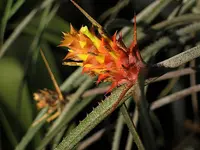
Acanthostachys strobilacea
Acanthostachys strobilacea
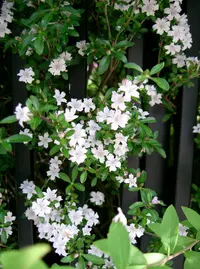
Buchozia japonica
Buchozia japonica

Annona foetida
Annona foetida
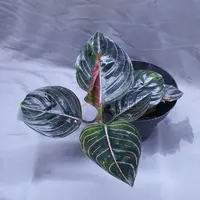
Aglaonema rotundum
Aglaonema rotundum
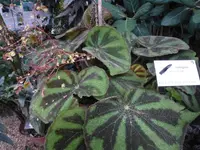
Begonia variegata
Begonia variegata

Blushing Philodendron
Philodendron erubescens 'Golden Erubescens'
Amazon Lily
Urceolina × grandiflora

Anacardium spruceanum
Anacardium spruceanum