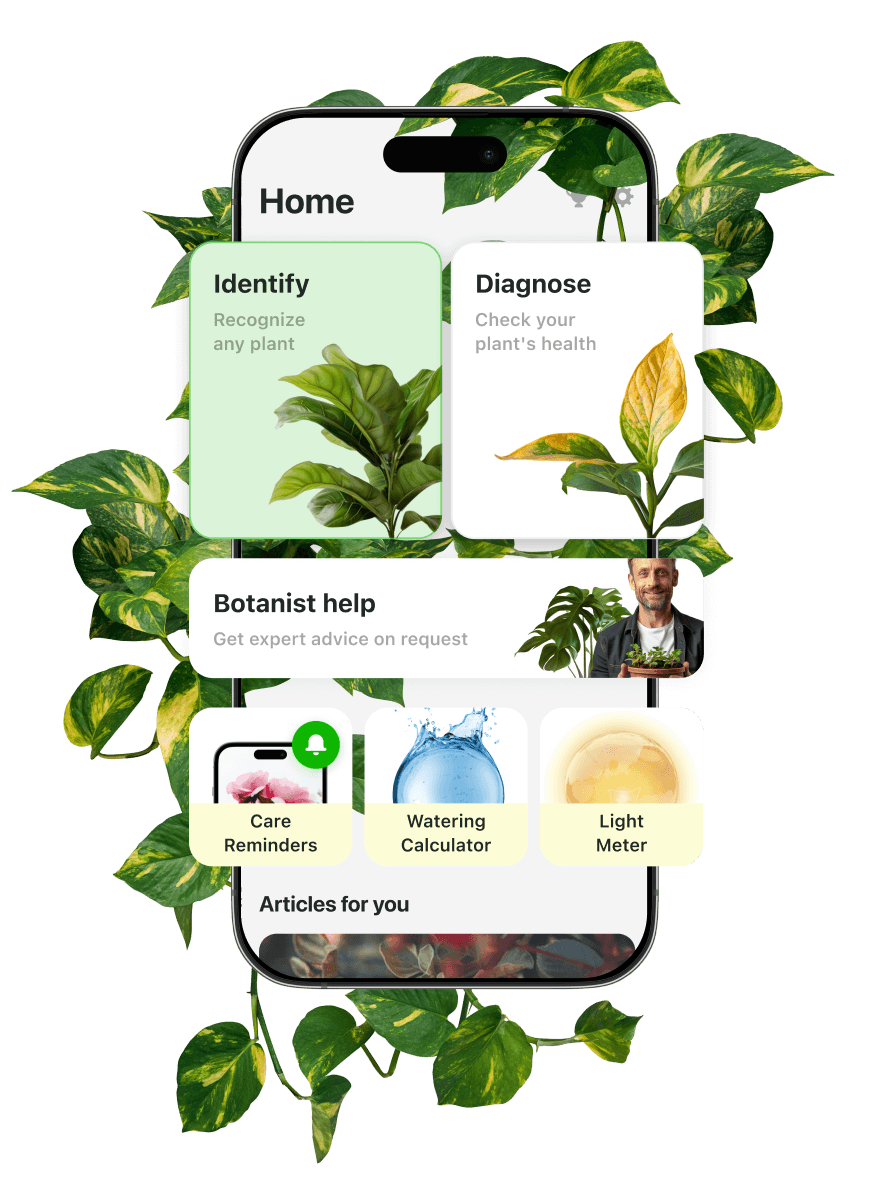
10 Best Plant Care Apps to Keep Your Plants Healthy in 2026
We’ve tested, reviewed, and compared the most popular, high-quality plant care apps to make it easier for you to find the best one. Explore the features, see how they meet your priorities, and make an informed choice.


On this page
- Plant Care Apps – Quick Comparison
- Complete App Review: Features, Strengths, and Limitations
- 1. Botan — 9.8
- 2. PictureThis — 9.7
- 3. PlantIn — 9.5
- 4. Planta — 9.3
- 5. Plant Parent — 9.0
- 6. Plantum — 9.0
- 7. HappyPlant — 8.8
- 8. Greg — 8.5
- 9. Blossom — 8.5
- 10. Seed to Spoon — 8.3
- What Makes a Good Plant Care App?
- Free vs Paid Plant Care Apps
- Plant Care App – Which Is Best for Your Needs
- For Beginners
- For Experienced Gardeners & Home Plant Owners
- For Users Who Want Free Tools
- Which Plant Care App Is Best in 2026?
Advanced, AI-powered plant care tools have made modern gardening a hundred times easier. There are many options offered on the market, and choosing the best plant care app isn’t always easy.
We’ve tested, analyzed, and compared the 10 most promising care and identification applications for Android and iOS. Learn more about their features, pros, and cons, and choose the one that will make the growing process enjoyable and stress-free for you.
Plant Care Apps – Quick Comparison
Every good plant health app has its own set of features and technical capabilities. Some tools are designed for watering only, while others offer full-scale care and reminder systems. Availability, costs, and platform support vary, too.
We compared the top 10 apps against those criteria. Take a look to see which might match your main priorities.
App | Custom Care Advice | Care Reminders | Plant Diagnostics | Expert Help | Environmental Tools | Pricing Model | OS | Total Score/10 |
|---|---|---|---|---|---|---|---|---|
Botan | ✅ | ✅ | ✅ (automatic) | ✅ (via live chat) | ✅ | Premium, 3-day free trial | Android/iOS | 9.8 |
PictureThis | ✅ | ✅ | ✅ (automatic) | ✅ (after 1st payment only) | ✅ | Premium, 7-day trial | Android/iOS | 9.7 |
PlantIn | ✅ | ✅ | ✅ (automatic) | ✅ (via live chat) | ✅ | Premium, 7-day trial | Android/iOS | 9.5 |
Planta | ✅ | ✅ | ✅ (manual) | ✅ (via email (24-48 hours) | ✅ | Premium, 7-day trial | Android/iOS | 9.3 |
PlantParent | ✅ | ✅ | ✅ (automatic) | ❌ | ✅ | Premium, 7-day trial | Android/iOS | 9.0 |
Plantum | ✅ | ✅ | ✅ (automatic) | ✅ | ✅ | Premium, 3-day trial | Android/iOS | 9.0 |
HappyPlant | ❌ | ✅ (watering only) | ❌ | ❌ | ❌ | Free | iOS only | 8.8 |
Greg | ✅ (limited) | ✅ | ✅ (automatic) | ❌ | ✅ (but limited) | Premium, 7-day trial | Android/iOS | 8.5 |
Blossom | ✅ | ✅ | ✅ automatic | ❌ | ✅ | Premium, 7-day trial | Android/iOS | 8.5 |
From Seed to Spoon | ✅ | ✅ | ✅ (automatic) | ✅ (AI) | ✅ | Premium, 7-day trial | Android/iOS (iPads) | 8.3 |
At first glance, many apps overlap in the basics, but the bigger differences are in the additional features.

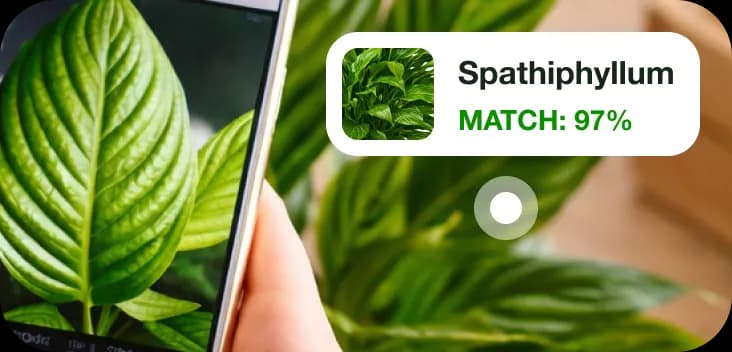
Identify Your Plant
Scan the plant and get a result with 98% accuracy
Complete App Review: Features, Strengths, and Limitations
The more details you have, the higher your chances of picking the best app for plant care. That's why we covered all the key features, strengths, and weaknesses for every app, no exceptions.
1. Botan — 9.8

Botan is a plant help app designed to be effective for beginners and pros alike. The system covers everything from first identification to long-term plant care.
It starts with plant identification (with 98% accuracy) and goes on to building a full care routine: Garden stores your personal plant collection, Schedule keeps watering, fertilizing, and other care reminders on track, and History logs everything you've ever scanned.
The database includes 30,000+ species, and the algorithms are based on scientific information and specialized AI.
- Key features: Plant identifier, diagnostics, recovery guides, care reminders, watering calculator, pruning, fertilization & repotting tips, expert help via live chat, etc.
- Best for: All experience levels
- Main advantage: Wide feature set covering everything, high ID speed
- Limitations: Premium only, ultra-exotic or very localized species may not be in the database, no community forums yet
Botan offers it all, from grass identification to science-based treatment guides and recovery time estimates. A 3-day trial lets you identify and get guides for as many plants as you want. The virtual garden will remain available after it ends. However, further IDs will only be available with Premium.
2. PictureThis — 9.7

PictureThis is a one-size-fits-all care tool for plant lovers. It has multiple features and two versions: a paid version with unlimited identifications and detailed information, and a free version with basic care tips and plant profiles, though with ads.
- Key features: Plant ID, Diagnose, Water calculator, Light Meter, Repotting Checker, Plant Advisor (available only after the first payment), Allergen ID
- Best for: Users who need allergen identification
- Main advantage: Plants trending/Plant index by country
- Limitations: The brand claims inconsistent species count (from 10K to 80K), privacy concerns (operated by a Chinese company, Glority)
PictureThis is famous for its interesting features, like the Books collection and categorized IDs (for allergens and insects), but the best features are available only to premium users.
3. PlantIn — 9.5

PlantIn is a multi-functional app for plant health that’s been on the market for over 5 years. It has many useful features, such as a light meter, a watering calculator, and plant identification, and it has its own blog.
- Key features: Custom care journal, plant profiles with useful information & fun facts, feed with members’ posts, botanist help, mushroom ID
- Best for: Enthusiasts seeking community help
- Main advantage: High value for beginners due to Plant School
- Limitations: No ad-free experience for free members, limited database with 17K+ plants, some hidden subscription fees
So, PlantIn is a functional app with some interesting tools and an active community. However, it’s also a freemium app (some subscriptions may cost up to $520/yr; but prices vary widely by region, plan, and platform) with limited features and frequent ads for free users.
4. Planta — 9.3

Planta is an AI-powered tool focused primarily on plant care reminders. The goal is to make care simple and nearly automated through environmental tools (water, lighting, humidity, fertilizing, and other trackers) and the Task Management tool.
- Key features: Tasks, photo gallery to track the progress, Dr. Planta diagnostic feature, Plant Wishlist, Care Share
- Best for: Users who want care reminders & full automation
- Main advantage: Detailed questionnaires and custom reminders
- Limitations: The number of species in the database isn’t publicly available, a 1-year premium plan only
Planta is a practical tool designed to help houseplants thrive. However, it’s hard to call the app intuitive, and it’s not perfect for growing exotic or rare plants.
5. Plant Parent — 9.0

Those looking for a straightforward yet still functional tool may like Plant Parent. This is an app offering practical features, such as a garden calendar, a Diagnosis feature, and a set of virtual gardening tools.
- Key features: Water & fertilization schedule, progress updates, light meter, repotting check, water calculator, weed ID
- Best for: Easy and fast disease diagnostics
- Main advantage: A separate Weeds ID feature
- Limitations: Only 7K+ unique species, no direct chat with professionals
The app is minimalistic and offers clear treatment guides and many DIY solution recipes, but it’s limited in its ability to provide personalized consultations.
6. Plantum — 9.0

Plantum is an international plant care platform available in 9 languages and covering 100+ countries. It works as both a practical and a research tool for educators and students worldwide.
- Key features: Diagnostic tool, weather tracker, light & pot meter, wild mushroom and insect identification
- Best for: Researchers and students
- Main advantage: Extensive use of augmented reality
- Limitations: 33K available species mentioned on the site vs. 400K species on the app, real experts still sound like AI
Plantum has its perks for researchers, letting educators and students unlock the best features, but it’s very limited for free users and is largely AI-driven, despite being promoted as a professional community.
7. HappyPlant — 8.8

HappyPlant is a water reminder indie app available for free. Though it doesn’t offer as many features as other apps on the market, it’s still functional enough for basic care.
- Key features: Watering schedule & reminders, your own garden of “water babies”
- Best for: Beginners who want to water plants properly
- Main advantage: Free, premium only as a one-time $1.99 payment (rather a donation, not required, but can vary depending on timing and region)
- Limitations: Very limited functionality
HappyPlant is a good app for those who need a single function and don’t want to be overwhelmed by blogs, books, pH levels, and many other recommendations. However, it will hardly help experienced gardeners.
8. Greg — 8.5

Greg is a relatively new app, but it has quite a large and active community. Though it offers mostly standard tools like a smart care schedule and general plant identification, it also adds some creative features like Friends & Feed.
- Key features: Smart water and fertilizer reminders, indoor sunlight gauge, 360° care guides
- Best for: People seeking communication with other enthusiasts
- Main advantage: Fun community features
- Limitations: Limited database of species, no diagnostics
The app can be used for free, but in this case, you’ll only be able to use Plant Identifier, Progress Tracker, and Community Q&A.
9. Blossom — 8.5

Blossom is a freemium app focused purely on plant care. It’s quite intuitive and well-designed. Also, it has all the basic yet highly useful functions, such as all basic IDs, a gardening schedule, and an advanced search.
- Key features: Plant ID, Disease ID, To Do lists, Weather alerts, “Explore” blog feature, notes
- Best for: Finding the most suitable plants for your skill level
- Main advantage: Very stylish yet functional
- Limitations: No consultations with professionals or specialized AI
It’s hard to say that Blossom is packed with advanced features, but it performs well for medium-level gardening and houseplant growing.
10. Seed to Spoon — 8.3

Seed to Spoon is a visual garden planner. The best thing about it is that, unlike many other tools on our list, it works not only as an Android/iOS app, but also as a full-scale on-browser planner.
- Key features: Visual garden planner, Seed to Spoon AI chatbot, sprouting & harvest schedule, channel on TikTok
- Best for: Users in the United States and Canada
- Main advantage: Custom schedules based on zip codes and hardiness zones
- Limitations: Not available in many countries, very limited database
Seed to Spoon is a fun app to use, especially in the premium mode, where consultations with AI Growbot are unlimited. However, it’s still not as effective as many other apps on the list until more species are added.
What Makes a Good Plant Care App?
Studies confirm that user satisfaction with pretty much any app depends on at least 6 factors, including information, system, and service quality, ease of use, and the app's overall and chatbot usefulness.
But those are very abstract. Let’s take a look at specific things that actually determine the app’s effectiveness:
- Plant-specific care guidance. You should be able to scan your specific plant and get care advice based on multiple factors: features and demands of the species, your specific plant condition, and environmental factors (lighting, pot space, etc)
- Plant diagnostic & custom treatment plan. Also, the algorithm must be able to diagnose your plant, and definitely not at the GPT level. This must be a niche system giving the right diagnosis in 95%+ of cases.
- Fertilizing and repotting tracking. These are easy to forget regardless of experience level, so a calendar or reminder system is essential.
- Environmental tools. These include tracking and recommendations on water, light, humidity, fertilizing, soil, drainage, and propagation methods.
- Effective system of reminders. You should be able to choose only the necessary ones for specific plants.
- Overall ease of use. The app must be intuitive. It should be easy for a new user to get started, and the features must not look overwhelming, even if it’s an advanced app.
Another criterion is the database size. There are over 374,000 plant species, and this figure increases annually. No app covers them all, and that’s normal. However, it must be large enough and regularly updated.

Free vs Paid Plant Care Apps
Neither of these categories is objectively better or worse — they just offer different levels of functionality. Each suits users with specific priorities.
Feature | Free Apps | Premium Apps |
Plant ID | Not available or capped uses, often with a lower-cost AI model | Unlimited uses, connection to scientific databases, and specialized AI |
Care reminders | Watering Only | Watering, fertilizing, misting, repotting, and cleaning |
Expert Chat | Not available | Available only on the top niche apps |
Health diagnostics | Basic or not available | AI-based diagnostic |
Environmental tools | Basic or not available | Light meter, watering calculator, pruning, fertilization, and repotting schedule |
Community features | Limited or full, depending on the policy | Full if available |
Exclusive features | None | Smart plant suggestions, books, rewards, etc. |
Premium apps are built around advanced AI technology. Apps like Botan are connected to the broader scientific basis, too. Such capabilities don’t come free. The same goes for botanists’ consultations or exclusive features that require the entire team's expertise.
Nonetheless, some users may not need that level of expertise and customization, which is perfectly normal. In this case, a free app with limited yet useful functions may be the best choice.

Plant Care App – Which Is Best for Your Needs
The question “What is the best plant care app?” doesn’t have a universal, one-size-fits-all answer. Of course, you’ll need a quality tool, but ultimately, the choice should depend on your goals, priorities, budget, and experience level.
For Beginners
This must be an app that allows you to scan the photo, correctly identify it, and receive effective care tips.
Ideally, there must also be a diagnostic feature. For instance, if you notice black spots on basil leaves, you should be able to identify a problem with 1-2 photos and get detailed, science-based instructions on how to solve it.
It can be a universal tool like Botan or a very simple one like the HappyPlant app or Plantin if you’re seeking help from the community.
For Experienced Gardeners & Home Plant Owners
That’s where advanced features come into play. In this case, we’d recommend seeking the highest accuracy, custom care plans, and expert consultations. Also, more advanced features such as pruning, potting, fertilization, and lighting evaluation systems help improve skills. Some premium apps, such as Botan or Plant Parent, meet those criteria well enough.
For Users Who Want Free Tools
Free tools can be useful. As we mentioned before, there’s the Happy Plant example, which only lets you donate $1.99 to support developers. There are also freemium apps like PictureThis that show ads quite frequently but still perform their key functions — identification, basic reminders, and basic tips.
Which Plant Care App Is Best in 2026?
The answer to this question depends on your priorities. Do you need a tool that solves only one problem? Or maybe you are already a pro who wants to polish your skills?
Again, there are versatile tools like Botan that serve all three user groups. All the most practical features are available, and you can set the reminders and environmental features however you want, so they work for you right now.
If you have one specific goal or another priority, you can choose an alternative — for example, a completely free app like HappyPlant for watering only, Plantum, or PictureThis for more in-depth education.
The best plant care app is simply the one that fits you best.
FAQ
Botan is the best overall — it covers practical tools, educational materials, and expert consultations for all experience levels. There are some options that are best in their niches. For example, HappyPlant is best for free watering reminders, while Plantum and PictureThis are great for education.
Dariia Plaksina
Botanist
5 years of botanical research experience
Dariia Plaksina is a biologist, botanist, and writer of informational articles with over 5 years of experience exploring the world of plants, nature, and biology. She studied at Taras Shevchenko National University of Kyiv, Educational and Scientific Center “Institute of Biology and Medicine,” where she built a strong scientific foundation for her future work.
For Dariia, writing is a hobby, a calling, and a way to make reliable knowledge easier to understand. Her articles focus on plant care, plant health, and natural processes, helping readers learn more about the living world through clear, accessible, and science-based explanations.
Related Articles
6 min read · 21 Oct 2026
Best Plant Watering App: 7 Apps for Reminders and Schedules
Discover 7 top apps for watering reminders. Learn what each offers, compare watering features, plus additional care features and costs. Get extra tips to choose the right tool for your specific needs.
7 min read · 24 Sept 2026
AI Gardening: 7 Best AI Apps for Plant Care and Garden Planning
AI gardening apps can identify plants, detect possible diseases, give care plans, and help you test garden layouts. This guide compares seven useful tools for different plants, spaces, and gardening goals.
4 min read · 18 Sept 2026
How Much Do Plant Apps Cost? A Guide to Plant App Pricing in the US
Plant apps seem cheap until the free trial ends and fees start to appear. Here's how much such applications cost in the US, what's included in each plan, and how to choose the right one without overpaying for extra features.
Explore Plants by Care Needs

Identify the plant and problem. Help your plant recover
Identify plant problems early, understand what's wrong, and get clear care guidance. Botan helps you turn guesswork into confident plant care