Best Plant Identification Apps – Accuracy, Features, and Price
We’ve tested, analyzed, and reviewed 8 top tools to find the best plant identification app. Find out which recognized common and rare plants are on the 1st attempt. Learn each app’s key features, pros, and cons — and make a fully informed choice.

On this page
- Accuracy Test: Which Apps Identified All 10 Plants?
- Overall Comparison: Accuracy, Speed, and Features
- 1. Accuracy and Reliability
- 2. Speed of Identification
- 3. Disease Identification
- 4. Care Features
- 5. Monthly Price
- Detailed Review of Each App
- 1. Botan — 9.5
- 2. PictureThis — 9.3
- 3. LeafSnap — 8.9
- 4. PlantNet — 8.5
- 5. iNaturalist — 8.0
- 6. Planta — 7.8
- 7. Plantin — 7.5
- 8. PlantSnap — 7.0
- Free vs Paid Plant Identification Apps
- The Best Plant Identifier App in 2026
There are a few main things that make for the best plant identification app. These are ID accuracy, speed, and additional features — disease identification, care and treatment guides, and environmental tools.
We’ve tested 8 top apps, including Botan and other market leaders. Read on to learn which ones are the most accurate, which have the best care tools, and which are the best value for money.
Accuracy Test: Which Apps Identified All 10 Plants?
First, we carefully selected 8 top apps based on multiple criteria, from user ratings to reasonable pricing. Then we tested each, aiming to identify 10 common, rarer, and quite exotic species.
The table below shows how it went.
✅ – IDs that were successful on the first attempt (1 point)
🟠 – the correct genus, but the wrong species (0.5 points)
❌ – indicates a complete failure to identify the plant or an obviously incorrect result (0 points)
So, see which can claim the title of the best plant identifier app.
App/plant | Variegated Swiss Cheese/Monstera Adansonii Variegata | Calla lily/ Zantedeschia aethiopica | Green Lavender/Lavandula viridis | Sleeping Pothos/Epipremnum aureum | Climbing Onion/Bowiea Volubilis | Florida yew/Taxus floridana | Albatross daffodil/Narcissus Albatross | Cornelian cherry/Cornus mas | Queen Anthurium/Anthurium warocqueanum | Harbison's Hawthorn/ Crataegus harbisonii | Total Score |
Botan | ✅ | ✅ | 🟠 | ✅ | ✅ | ✅ | ✅ | ✅ | ✅ | ✅ | 9.5 |
PictureThis | ✅ | ✅ | 🟠 | 🟠 | ✅ | ✅ | ✅ | ✅ | ✅ | ✅ | 9.0 |
LeafSnap | ✅ | ✅ | ✅ | 🟠 | ✅ | 🟠 | 🟠 | ✅ | ✅ | 🟠 | 8.0 |
PlantNet | ✅ | ✅ | ✅ | 🟠 | ✅ | ✅ | 🟠 | ✅ | ✅ | ✅ | 9.0 |
iNaturalist | 🟠 | ✅ | 🟠 | 🟠 | 🟠 | 🟠 | 🟠 | 🟠 | 🟠 | 🟠 | 5.5 |
Plantin | ✅ | ✅ | 🟠 | ❌ | ❌ | 🟠 | ✅ | ✅ | 🟠 | ✅ | 6.5 |
PlantSnap | 🟠 | ✅ | 🟠 | 🟠 | ❌ | 🟠 | 🟠 | ✅ | 🟠 | ✅ | 6.0 |
Planta | ✅ | ✅ | 🟠 | 🟠 | ✅ | 🟠 | 🟠 | ✅ | ✅ | ❌ | 7.0 |

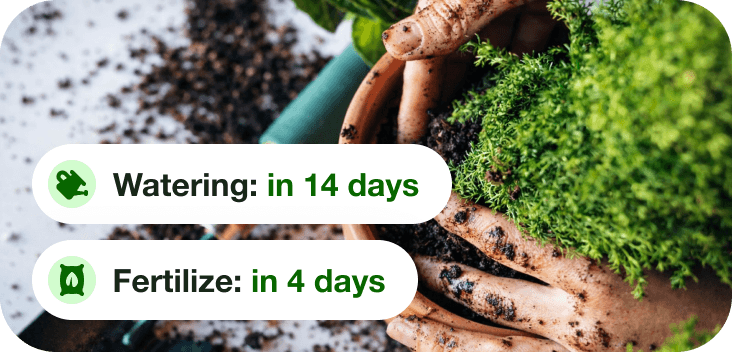
Your Personalized Care Plan
Get personalized plant care recommendations in the app
Overall Comparison: Accuracy, Speed, and Features
Accuracy is crucial, but it’s not the only factor to consider. The best plant ID app must also be fast, offer additional features such as disease identification and care guides, and be reasonably priced.
App/Criterion | Accuracy Score | ID Speed | Disease ID | Care Features | Monthly Price | Rating |
BotanApp | 95 | 5 seconds | ✅ | ✅ | $13.33 | 9.5 |
PictureThis | 90 | 3 seconds | ✅ | ✅ | $2.50 | 9.3 |
LeafSnap | 80 | 3 seconds | ✅ | ✅ | $4.16 | 8.9 |
PlantNet | 90 | 5 seconds | ❌ | ❌ | Free | 8.5 |
iNaturalist | 70 | 3 seconds | ❌ | ❌ | Free | 8.0 |
Planta | 80 | 5 seconds | ✅ | ✅ | $9.99 | 7.8 |
PlantIn | 65 | 4 seconds | ✅ | ✅ | $39.99 | 7.5 |
PlantSnap | 60 | 8 seconds | ❌ | ✅ | $4.16 | 7.0 |
1. Accuracy and Reliability
Of course, the best plant identification app must deliver accurate and reliable species-level results. First, it should have a database of at least 20,000+ species and be able to recognize rare and exotic species. Also, it’s expected to use specialized AI. It makes mistakes, but it’s becoming increasingly accurate, especially when combined with science-based evidence.
Let’s say you want to identify cacti — a good app will identify both good old Christmas cacti and rare Copiapoa. It should also update the database with user-submitted pictures and deliver adequate results even when photos are taken in low light or at unusual angles.
2. Speed of Identification
The plant ID market has its standards regarding speed. Recognition can’t be instant because the system must process the photo. 3-5 seconds is the norm for high-quality photos of common species. 10 seconds is considered too long.
Also, top apps don’t request 2-3 photos of the plant to identify it. Ideally, a single photo should be enough to identify the species and start building a care plan.
3. Disease Identification
We’d recommend choosing the tool that also identifies diseases. A high-quality tool must distinguish between issues with similar symptoms, such as yellowing from overwatering vs. nutrient deficiency or dark spots on the leaves from root rot vs. bacterial infection.
After the disease is identified, you should receive not just general recommendations but a step-by-step treatment plan with an estimated recovery time. The best apps can also handle multiple issues by creating a guide that addresses multiple problems at once.
4. Care Features
The key care features include step-by-step guides, environmental recommendations and tools, and a schedule or task manager. Despite the diversity, the entire system shouldn’t feel overwhelming even for a beginner.
Ideally, there should be a virtual garden to add plants to, a calendar, and a profile for every single plant. Some apps also feature progress functions so you can track positive changes. The best apps also include customizable calculators and reminders for watering, fertilization, repotting, and lighting.
5. Monthly Price
The best app for identifying plants must not only be functional but also reasonably priced. The average cost of services in this segment ranges from $10 to $15 per month. Nearly every app offers a yearly plan at a 50-60% discount when compared to the price of 12 monthly payments. Also, most apps offer a 3-7 free trial.
Some apps, like Botan, may offer lifetime access for $50–$60+, which is even more cost-effective. However, even the price itself is less important than the transparency. The terms must be clearly explained to everyone.

Detailed Review of Each App
So, we already know the accuracy levels of all the top 10 plant care apps. But this is not the only factor that matters. Below, we take a closer look at each tool’s key features, advantages, disadvantages, compatibility, and pricing.
1. Botan — 9.5
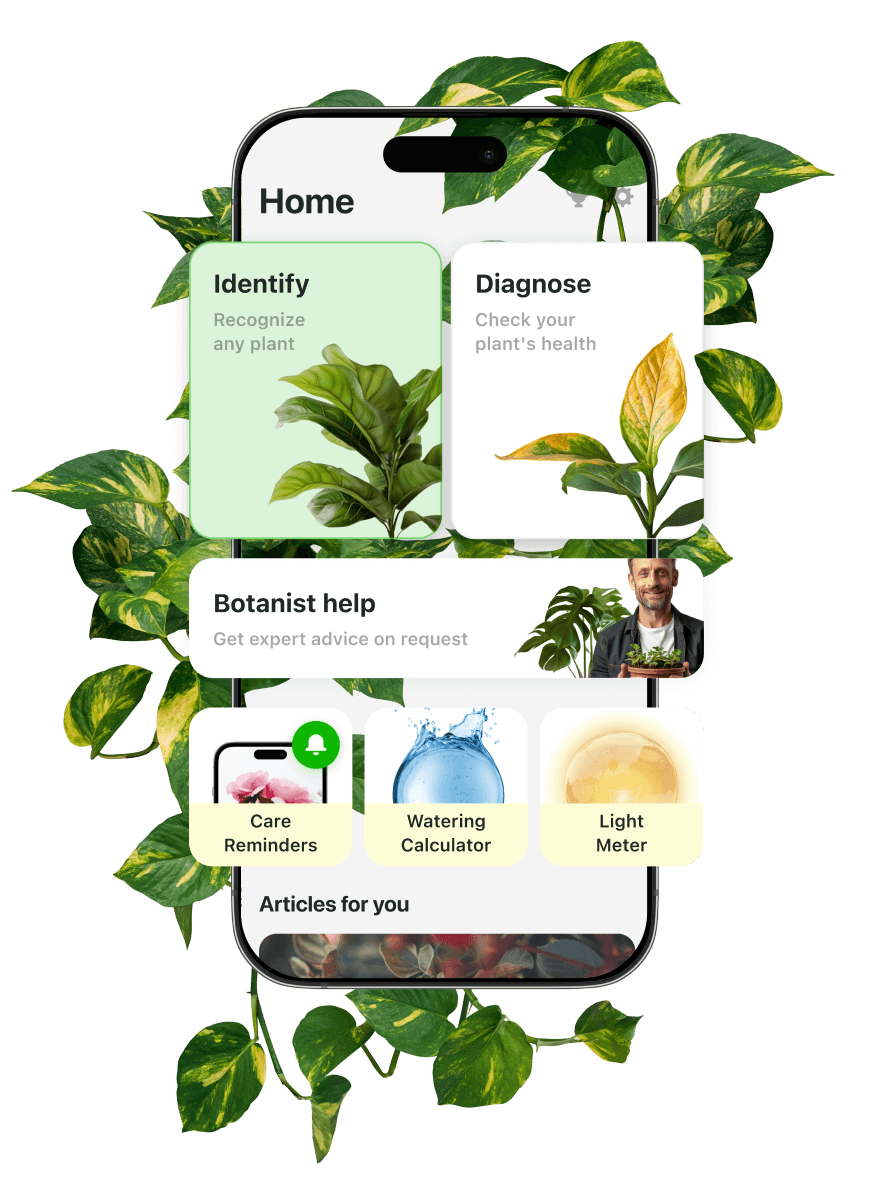
Botan App is a versatile ID and care app for beginners and pros alike. It’s intuitive, so users can easily get the most out of its key features. Those include automatic plant ID, disease diagnosis and treatment guidance, detailed care tutorials, and a watering calculator. Users can also get recommendations for pruning, repotting, and fertilization, and reach experts via live chat.
- Price: Weekly Plan — $11, Quarterly Plan — $35.99 ($13.33 per month, $159.96 per year), Lifetime Access — $69.99
- OS: Android, iOS
- Best for: Beginners who want to make progress and pros who want to improve their existing skills
- Main advantage: Versatility, science-based advice only
- Limitations: No community features
The entire system is based on the Tasks, Garden, and History features. Reminders and recommendations are fully customizable. However, it’s not free, and there’s no direct connection with other users.

2. PictureThis — 9.3
PictureThis is a popular plant identification app with many basic and additional features. In particular, users can identify plants, insects, and even birds, diagnose diseases, and use environmental tools such as the Water Calculator, Light Meter, and Repotting Checker.
- Price: Yearly Plan —$29.99 (approximately $2.50 per month)
- OS: Android, iOS
- Best for: Learning more about the flora and the fauna (insects, birds) surrounding you
- Main advantage: High educational value of content
- Limitations: Unclear or contradictory information on the number of species in the database, privacy concerns
PictureThis is an effective tool, but it’s better suited to professionals than to beginners, who may find its features overwhelming.

3. LeafSnap — 8.9
LeafSnap is an ID and care app covering 30,000+ species. The website version is very basic, and the brand clearly focuses on its mobile. Its key features include disease identification, care reminders, mushroom ID, and a water calculator.
- Price: Weekly Plan — $7, Yearly Plan — $49.99 (approximately $4.16 per month)
- OS: Android, iOS
- Best for: Casual users
- Main advantage: Intuitive and beginner-friendly
- Limitations: General guides, poorly structured content, no professional help
LeafSnap is a useful tool, especially for beginners, but be careful when choosing your plan — if you select a yearly plan, the purchase will be processed automatically, without the advertised 3-day free trial.

4. PlantNet — 8.5
PlantNet is a citizen science project on plant biodiversity. It already covers over 84,000 species, and enthusiasts expand its database daily. It offers automatic IDs, multi-part recognition, and geographical filters.
- Price: Free
- OS: Android, iOS
- Best for: Educators, citizen scientists
- Main advantage: Completely free app
- Limitations: No care tips, no disease ID, no reminders, not beginner-friendly
PlantNet is a great science project that really helps you discover flora in your region or beyond, but it doesn’t help with care, at least not directly through the app's features.

5. iNaturalist — 8.0
Just like PlantNet, iNaturalist is a non-commercial project you can participate in. It’s an initiative by the California Academy of Sciences and the National Geographic Society that lets you identify plants, animals, and fungi around you.
- Price: Free
- OS: Android, iOS
- Best for: People who want to contribute to global biodiversity science
- Main advantage: Completely free, with optional donations
- Limitations: Only around 80% accuracy, rarely identifies species (the results often include genus only), and no care features
iNaturalist is 100% community-driven. It lets you identify plants, animals, and fungi, record audio, write comments, and take notes, but plant care and species ID just aren’t its primary focus.

6. Planta — 7.8
Planta is a modern ID and care app designed to help users keep their plants alive and thriving. The system lets members discover new plants, create their own virtual garden, and easily customize their reminders.
- Price: Monthly Plan — $9.99, Yearly Plan — $59.99
- OS: Android, iOS
- Best for: Never missing watering, fertilization, or repotting
- Main advantage: Strong schedule and planning features
- Limitations: Feed is directly available on the site only (at least for now), experts process users’ requests within 24-48 hours
Planta lets you set all kinds of reminders, diagnose your plants, create custom tasks, and track progress. But consider that its pricing policy varies by region, and sometimes only a 1-year plan is offered.

7. Plantin — 7.5
PlantIn is another highly practical tool for plant ID and care. However, it’s hard to say that identification is the system’s primary focus. The key advantage of the app is its effective environmental tools (watering calculator, light meter) and disease/pest IDs.
- Price: One-Week Trial Plan — $11.99, 4-Week Plan (1-month) — $39.99, 12-Week Plan (3-month) — $79.99 (approximately $26.66 per month)
- OS: Android, iOS
- Best for: Communication with other enthusiasts
- Main advantage: Posts from users & Mushroom ID
- Limitations: Only 17,000 species in the database, confusing pricing
Also, PlantIn offers AI or human expert consultations. It’s an effective tool overall, but read the pricing policy carefully to make sure you understand the final cost.

8. PlantSnap — 7.0
PlantSnap is promoted as a flower and tree identifier, but it covers 600,000+ species, including mushrooms, succulents, and more. It has some creative features, such as Community Feed, Friends, and Flora Live (real-time voice interaction with an AI during identification).
- Price: Yearly Premium Plan — $49.99 (approximately $4.16 per month), Yearly Premium Plus Plan — $69.99 (approximately $5.83 per month)
- OS: Android, iOS
- Best for: Real-time interaction with an AI bot
- Main advantage: Active community, dozens of photos posted daily
- Limitations: No separate disease identification feature
PlantSnap is a great tool for discovering flora around you and communicating with others, but its ID accuracy isn’t very high, and the disease ID feature is limited.

Free vs Paid Plant Identification Apps
Another interesting question is whether paying for a premium subscription makes sense. In fact, that depends on your goals and expectations.
Take a look at the table to see what each category offers.
Feature | Free ID app | Premium ID app |
Number of ID scans | Up to 3-5 snaps daily | Unlimited |
Number of disease scans | 1-2 or unavailable | Unlimited |
Verification model | Basic, AI only | Advanced, specialized AI, connected to the scientific databases |
Common species ID accuracy | Up to 95% | Up to 98% |
Rare species ID accuracy | Up to 85% | Up to 98% |
Weed, grass, tree ID | Struggles across less popular categories | Offers accurate ID, may have separate features for different plant categories |
Lighting, angle, focus impact | Very high | High |
Information after ID | Basic care info | Detailed custom guides, environmental tips, and treatment plans |
The key differences are scan limits and the overall effectiveness. Free apps are enough for simple, one-time identifications. Premium apps work much better for those who choose growing plants as a hobby or profession.
The Best Plant Identifier App in 2026
So, what is the best plant identifier app? Botan is the best tool overall, thanks to its versatility, high accuracy, and a suite of features, including disease diagnosis, expert chat, and detailed care guides
However, each app has key advantages to consider. The selection of top apps in a few key categories is as follows:
- Best overall: Botan
- Best price: PlantNet (free), PlantSnap (starts at $2.50/month)
- Best for casual users: LeafSnap
- Best for community-based ID: PlantIn
Consider your priorities, expectations, and level of experience — that’s how you choose the app that suits you best.
FAQ
According to our tests of the 8 top apps, Botan is the most accurate identifier. 9 out of 10 plants used for the experiment were identified on the first attempt. The overall accuracy is 98%.
Dariia Plaksina
Botanist
5 years of botanical research experience
Dariia Plaksina is a biologist, botanist, and writer of informational articles with over 5 years of experience exploring the world of plants, nature, and biology. She studied at Taras Shevchenko National University of Kyiv, Educational and Scientific Center “Institute of Biology and Medicine,” where she built a strong scientific foundation for her future work.
For Dariia, writing is a hobby, a calling, and a way to make reliable knowledge easier to understand. Her articles focus on plant care, plant health, and natural processes, helping readers learn more about the living world through clear, accessible, and science-based explanations.
Related Articles
16 min read · 9 Sept 2026
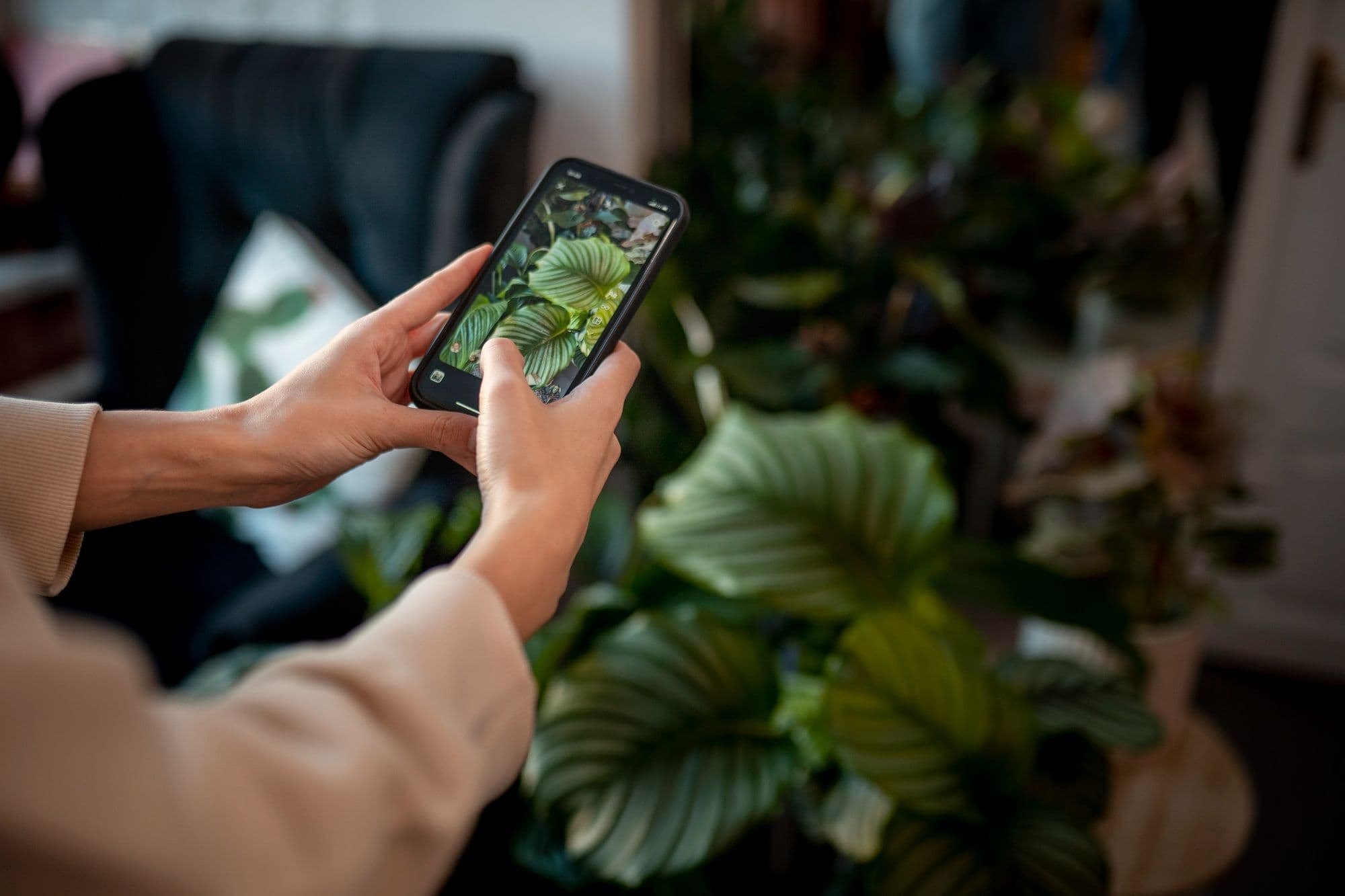
11 Best AI Apps for iPhone in 2026: Top Picks for Every Need
Not every AI app deserves space on your iPhone. This guide covers 11 of the best AI tools, from chatbots and writing assistants to image editors and plant care apps. All are compared across features, pricing, and use cases.
10 min read · 3 Sept 2026
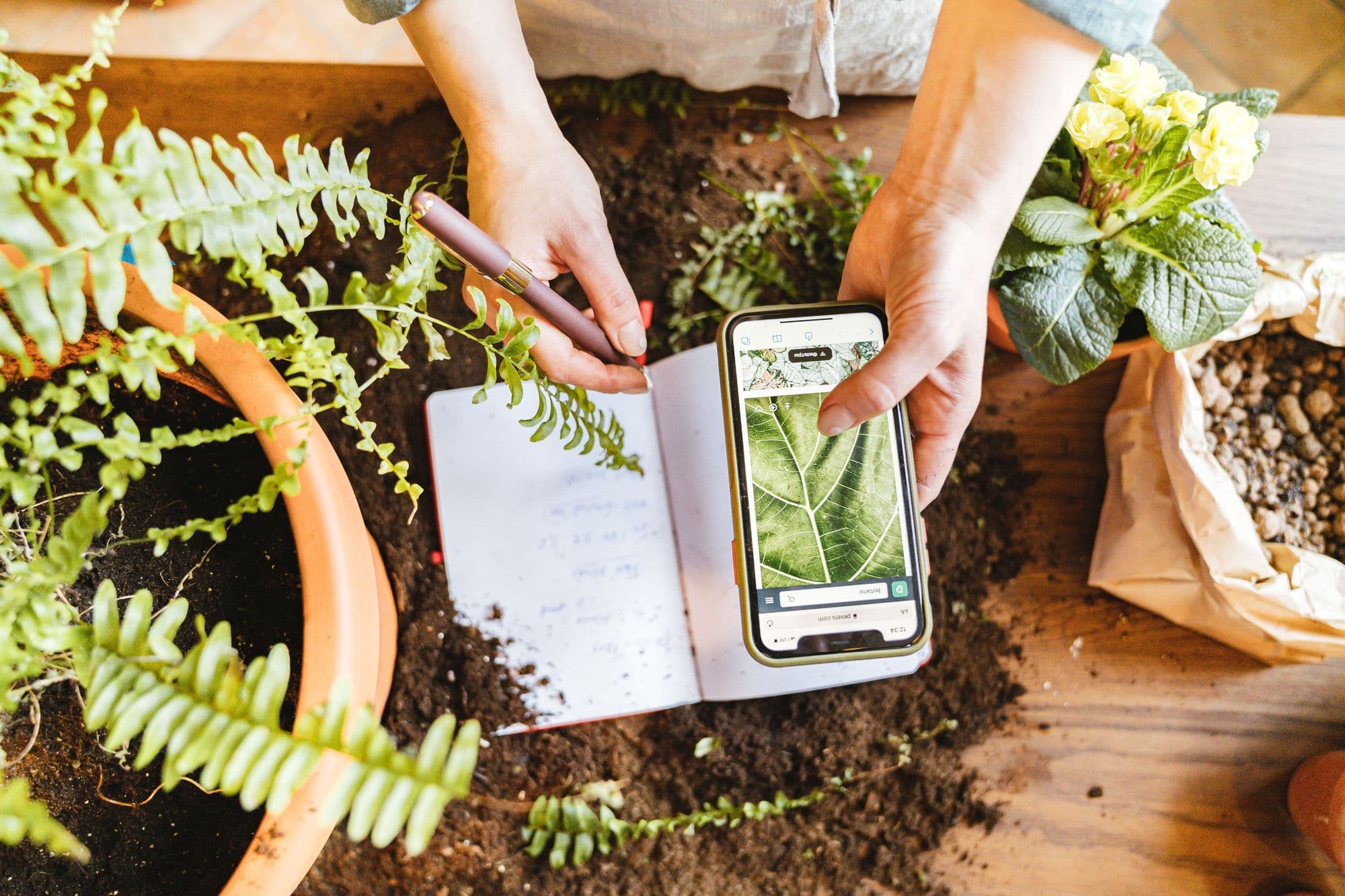
12 Best Green Apps for a More Sustainable and Eco-Friendly Lifestyle
Discover 12 sustainability apps that target specific daily habits, from what you eat and wear to how you travel and how you care for plants. Learn to make small yet consistent daily choices that add up to a real environmental impact.
10 min read · 28 Aug 2026
12 Best Gardening Apps of 2026 for Planning, Plant Care & More
We’ve chosen and tested 12 plant apps that offer the best functionality for gardeners. Below, you’ll see which features they offer, how much they cost, and what their key pros are. Match each to your priorities to choose the best option.
Explore Plants by Care Needs
Identify the plant and problem. Help your plant recover
Identify plant problems early, understand what's wrong, and get clear care guidance. Botan helps you turn guesswork into confident plant care