Wind exposure management
Establish plants in a site with consistent air movement but shielded from harsh prevailing winds using low shrubs or windbreak netting, which reduces stem breakage while still lowering fungal disease pressure.

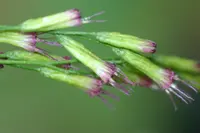
Acanthostyles buniifolius is a perennial shrub-like plant in the aster family, native to dry grasslands and scrub areas of South America. It forms dense, woody clumps with finely divided, aromatic foliage and small composite flower heads.
In cultivation it behaves as a tough, sun-loving plant that tolerates poor, well-drained soils and seasonal drought. Its resilience and low water needs can make it appealing for low-maintenance gardens, although it is uncommon in general horticulture.
Gardeners who care for Acanthostyles buniifolius should focus on providing strong light, good drainage, and avoiding prolonged wet or heavy soils.

Care Difficulty
Moderate Care

Light Preference
Full Sun

Water Requirements
Low Water

Temperature Preference
Warm Climate

Hardiness Zone
8–11

Soil Texture
Sandy, Loamy, Rocky

Soil pH
Slightly acidic (6.5–7.0), Neutral (7.0)

Soil Drainage
Well-drained

Fertilization
Minimal (feed rarely)
Scan your plant to receive care tips personalized for your specific plant
Available on iOS and Android
This shrub prefers bright, open conditions with some protection from intense midday sun.
This species prefers evenly moist but not saturated soil once established in the landscape.
This plant is adapted to temperate to warm conditions and dislikes prolonged hard frost.
This species tolerates a wide humidity range and usually does not need special humidity management outdoors.
This shrub prefers well-structured, free-draining mineral soils that do not stay waterlogged.
This species can be grown in containers when provided with a stable, free-draining setup.
This drought-tolerant shrub from nutrient-poor habitats needs only modest feeding in garden settings.
Pruning is mainly used to keep the shrub tidy and encourage flowering wood.
This species is usually grown in the ground, so focus on careful transplanting rather than frequent repotting.
Propagation is possible from seed or semi-hardwood cuttings, though it may be slow and requires patience.
In mild climates this shrub is fairly cold tolerant but benefits from some winter root protection in colder regions.

Plant Health Check
Not sure what's wrong with your plant? Check your plant's health inside the app.
This species is native to open, often dry grasslands and shrublands of Argentina, Bolivia, Brazil, Paraguay, and Uruguay, where it forms part of the herbaceous layer in subtropical and temperate campos and pampas vegetation.
The leaves release a noticeable aromatic, resin-like scent when crushed, produced by surface glands that synthesize volatile compounds typical of many members of Asteraceae.
After flowering, it forms small, hard fruits with stiff bristles and hooked or barbed tips, an adaptation that allows them to cling to animal fur and clothing, aiding long-distance seed dispersal.
This species produces small composite flower heads that provide nectar and pollen, mainly attracting bees and small native pollinators. Butterflies may visit occasionally, but it is more valuable as a general wild pollinator support plant.
Keep your plants happy and healthy with plant identification, disease detection, and easy care guidance.