Wind-hardening saplings
For young trees in open or windy sites, gradually expose them to stronger wind over 2–3 weeks by reducing shelter, which encourages sturdier trunks and better root anchorage.

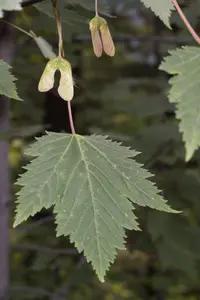
Rocky Mountain maple, Acer glabrum, is a small deciduous tree or large shrub native to western North America, especially mountainous regions. It often forms multi-stemmed clumps with smooth gray-brown bark and modest, 3-lobed green leaves that turn yellow to red in autumn.
This species naturally grows along streams, canyons, and open forest edges, where conditions are cool and soils are reasonably moist but well drained. It is relatively tough and cold hardy, but young plants can struggle in hot, exposed, or very dry urban sites.
Those planning to care for Rocky Mountain maple should provide partial sun, consistent moisture, and moderately fertile soil to support steady, healthy growth.

Care Difficulty
Moderate Care

Light Preference
Partial Sun

Water Requirements
Moderate Water

Temperature Preference
Cold Hardy

Hardiness Zone
4–8

Soil Texture
Sandy, Loamy, Rocky

Soil pH
Acidic (5.5–6.5), Slightly acidic (6.5–7.0)

Soil Drainage
Moist but well-drained

Fertilization
Minimal (feed rarely)
Scan your plant to receive care tips personalized for your specific plant
Available on iOS and Android
This small native maple prefers bright outdoor light with some protection from intense afternoon sun.
This species prefers consistently moist, well‑drained soil rather than prolonged dryness or standing water.
This hardy maple thrives in cool to moderate outdoor climates and tolerates substantial winter cold.
This species is adapted to relatively dry mountain air and usually does not need special humidity management outdoors.
Acer glabrum prefers cool, moist, well-structured mineral soils that drain freely yet do not dry out rapidly.
This species can be grown in containers for a limited time, mainly as a young tree or patio specimen.
Acer glabrum generally grows well in average garden soil and needs only modest feeding.
Acer glabrum benefits from light structural pruning to maintain a healthy canopy.
This maple is usually grown in the ground, so focus on careful transplanting of young trees.
Propagation of Acer glabrum is most reliable from seed, with some success from softwood cuttings.
This cold-hardy species usually needs minimal winter care when planted in the ground within its native range.

Plant Health Check
Not sure what's wrong with your plant? Check your plant's health inside the app.
This maple commonly grows at higher elevations in western North America, where it tolerates cold winters, short growing seasons, and strong mountain winds better than many other native tree species.
It often forms thickets along streams and moist slopes, stabilizing soil with its root system and providing shade that helps keep water temperatures lower for aquatic organisms.
Depending on site conditions, it can develop as a multi-stemmed shrub or a small single-stemmed tree, showing strong phenotypic plasticity, which means its growth form changes in response to local light, moisture, and disturbance patterns.
Rocky Mountain maple twigs and leaves are an important browse source for mule deer, elk, and moose in many western mountain ecosystems, especially in winter and early spring when other woody forage is scarce.
Growth is usually moderate, about 20–40 cm per year under good conditions. Young trees establish slowly, then speed up once roots are well developed. Poor soil, drought, or heat stress can noticeably slow annual extension growth.
Keep your plants happy and healthy with plant identification, disease detection, and easy care guidance.