Early structural training
In the first 3–5 years, select 1 strong central leader and remove competing upright shoots in late winter to develop a stable framework that resists snow and wind damage later in life.

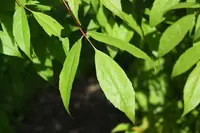
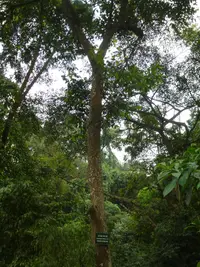
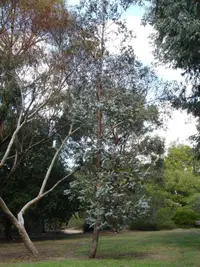
Manchurian maple, Acer mandshuricum, is a small to medium deciduous tree valued for its finely divided leaves and strong autumn color. It typically forms an elegant, open crown with delicate, three-lobed foliage. Native to northeastern Asia, including parts of China, Korea, and the Russian Far East, it is adapted to cool to cold winters. The tree grows at a moderate pace and stays relatively compact, which suits smaller gardens. It is considered moderately easy to grow where winters are cold enough, provided it has well-drained soil and steady moisture. Understanding how to care for Manchurian maple starts with giving it a cool climate and protection from severe heat or drought.

Care Difficulty
Moderate Care

Light Preference
Partial Shade

Water Requirements
Moderate Water

Temperature Preference
Cold Hardy

Hardiness Zone
4–7

Soil Texture
Loamy, Sandy, Organic-rich

Soil pH
Acidic (5.5–6.5), Slightly acidic (6.5–7.0)

Soil Drainage
Moist but well-drained

Fertilization
Minimal (feed rarely)
Scan your plant to receive care tips personalized for your specific plant
Available on iOS and Android
This deciduous tree prefers bright, gentle light that supports steady growth and strong autumn color.
This species prefers consistently moist, cool soil without prolonged saturation.
This hardy tree is adapted to cool to temperate climates with cold winters and mild to warm summers.
This species prefers moderate outdoor humidity but usually copes well with typical garden air.
Acer mandshuricum performs best in loose, moist, well-drained soil with high organic content.
This small maple can be grown in containers when given a large, stable pot and careful moisture management.
This species grows slowly and usually needs only modest feeding in average garden soil.
Acer mandshuricum benefits from light, deliberate pruning to maintain structure and health.
This maple is usually grown in the ground, so focus on careful transplanting rather than frequent repotting.
Propagation of Acer mandshuricum is possible but slower and more technical than many common garden shrubs.
This species is generally cold hardy in suitable climates and needs only moderate winter care once established.

Plant Health Check
Not sure what's wrong with your plant? Check your plant's health inside the app.
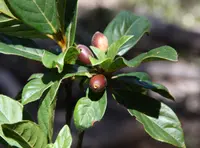
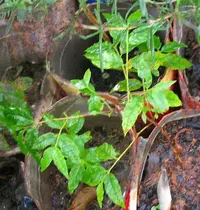
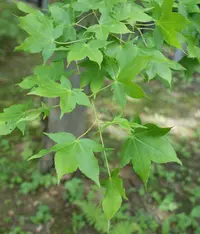
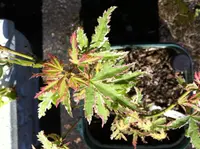
This maple has uniquely divided leaves with three separate narrow leaflets that give the canopy a fine, lacy appearance, unlike the single, palmate leaves of many other maples.
It is naturally distributed in northeastern China, Korea, and the Russian Far East, where it tolerates long, cold winters typical of continental climates.
In spring, it produces small, yellowish-green flowers in loose clusters that are not showy from a distance but are important early-season nectar sources for local insects.

In many temperate arboretums outside its native range, this species is considered uncommon and is often grown in specialized maple collections because of its distinctive three-lobed foliage and reliable red autumn color that help botanists compare leaf forms within the genus Acer.
Growth is moderate. In suitable conditions, it usually adds 20–30 cm per year. Expect roughly 10–15 years to develop into a small, well-shaped tree, depending on climate, soil quality, and initial planting size.
Keep your plants happy and healthy with plant identification, disease detection, and easy care guidance.