Branch Layering Support
Use 2–3 discreet, padded stakes and soft ties to gently spread congested branches outward over 1–2 seasons, improving light penetration and the visibility of variegated foliage without cracking brittle wood.

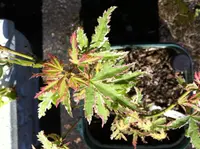
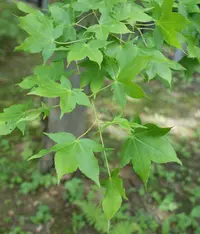
Acer palmatum 'Butterfly' is a compact, deciduous Japanese maple valued for its finely cut, variegated foliage. Leaves emerge creamy white and green with soft pink tones, then mature to green and white with occasional red edging.
This cultivar typically forms a small, upright, multi-stemmed tree, making it suitable for smaller gardens, courtyards, and containers. It originated from selections of Japanese maple native to woodland areas of Japan and nearby regions.
Its relatively slow growth, strong ornamental appeal, and moderate cold hardiness make it manageable for many home gardeners, though young plants need some protection from harsh sun and drying winds. Understanding how to care for Japanese Maple starts with providing well-drained soil, steady moisture, and light shade in hotter climates.

Care Difficulty
Moderate Care

Light Preference
Partial Shade

Water Requirements
Moderate Water

Temperature Preference
Cold Hardy

Hardiness Zone
5–8

Soil Texture
Loamy, Sandy, Organic-rich

Soil pH
Acidic (5.5–6.5), Slightly acidic (6.5–7.0)

Soil Drainage
Moist but well-drained

Fertilization
Minimal (feed rarely)
Scan your plant to receive care tips personalized for your specific plant
Available on iOS and Android
This variegated maple prefers bright but gentle light to keep leaves healthy and well-colored.
This shrub needs consistently moist but not saturated soil, supported by good drainage.
This maple prefers cool to mild conditions and does best with moderate seasonal change.
This cultivar prefers moderate outdoor humidity but copes with typical garden air if soil moisture is consistent.
Acer palmatum 'Butterfly' performs best in loose, slightly acidic, moisture-retentive but free-draining soil.
This small, slow-growing maple is well suited to container culture on patios or terraces.
This compact Japanese maple benefits from light, targeted feeding rather than heavy fertilization.
Pruning Acer palmatum 'Butterfly' focuses on light structural refinement rather than heavy cutting.
This cultivar is often container-grown when young, but long-term it performs best when transplanted into the ground.
Propagation of Acer palmatum 'Butterfly' is specialized and usually handled by nurseries rather than home growers.
This maple is moderately cold hardy but benefits from some winter protection, especially in containers or exposed sites.

Plant Health Check
Not sure what's wrong with your plant? Check your plant's health inside the app.
Its variegation comes from chimeric tissues, where genetically different cell layers produce both green and creamy-white zones on the same leaf, creating irregular marbling rather than stable, symmetrical patterns.
This cultivar is genetically dwarf, usually forming a compact, upright vase-shaped tree, which allows it to maintain a fine, twiggy structure suitable for small gardens and container growing without heavy structural pruning.
Unlike many variegated Japanese maples that are sensitive to frost, this selection shows relatively good cold tolerance among variegated types and can perform reliably in many USDA zone 5 landscapes when sited and protected correctly.

Acer palmatum 'Butterfly' originated in Japan but was introduced and popularized in Western horticulture in the mid-20th century, and it has since become one of the most widely used variegated cultivars in specialist collections focused on growing Japanese Maple.
Brown, crispy leaf edges usually result from leaf scorch caused by hot sun, low humidity, or dry soil. Wind exposure and high salt or fertilizer levels can worsen it. Improve moisture consistency and provide shelter from strong sun and wind.
Keep your plants happy and healthy with plant identification, disease detection, and easy care guidance.