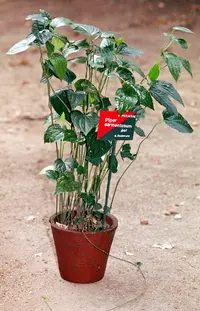
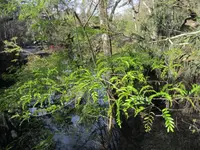
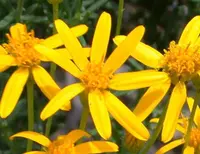
Egyptian riverhemp Care (Sesbania sesban)

Also known as: River Bean
Egyptian riverhemp

About Egyptian riverhemp

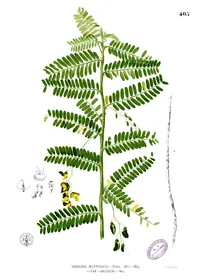
Egyptian riverhemp (Sesbania sesban) is a fast-growing leguminous shrub or small tree, often used as a green manure and windbreak in warm regions. It typically forms a loose, airy canopy with fine, pinnate leaves and small yellow flowers, followed by slender pods.

This species is native to tropical Africa and parts of Asia, where it thrives along riverbanks, floodplains, and seasonally wet fields. Its ability to fix nitrogen in the soil and tolerate periodic flooding makes it useful in agroforestry systems.

For those who want to care for Egyptian riverhemp, it generally prefers full sun, ample moisture, and well-drained, moderately fertile soil.

Main Plant Requirements

Care Difficulty

Easy Care

Light Preference

Full Sun

Water Requirements

Regular Water

Temperature Preference

Tropical / Frost Sensitive

Hardiness Zone

9–12

Soil Texture

Sandy, Loamy, Silty

Soil pH

Slightly acidic (6.5–7.0), Neutral (7.0)

Soil Drainage

Waterlogged tolerant

Fertilization

Minimal (feed rarely)

Get Personalized Care Plan

Scan your plant to receive care tips personalized for your specific plant

Available on iOS and Android

How to Care for the Egyptian riverhemp

Sesbania sesban grows fastest in open, bright conditions with long daily sun exposure.

  • Provide 6–8 hours of direct sun daily; full sun is ideal in most climates for strong stems and dense foliage.
  • In very hot regions, give Egyptian riverhemp light afternoon shade or filtered sun to reduce leaf scorch and moisture stress.
  • Young plants and new transplants benefit from a bit of morning sun plus partial shade, especially in late spring and summer, until roots are well established.

Sesbania sesban prefers consistently moist soil but reacts poorly to stagnant, airless conditions.

  • In the ground, water when the top 3–5 cm of soil feels slightly dry, then soak the root zone deeply so moisture reaches 15–20 cm down.
  • During hot, windy periods, monitor leaves for early wilting or dulling color, which signals the need for more frequent, thorough watering.
  • Avoid waterlogging; soils should drain within a few hours after irrigation, and yellowing lower leaves or soft stems indicate excess moisture and poor aeration.

This species thrives in warm climates and slows noticeably in cooler or cold conditions.

  • Aim for 70–90°F (21–32°C) for strong growth; growth rate drops outside this range but short deviations are usually tolerated.
  • Protect plants from frost; tissue damage can occur below 32°F (0°C), and roots may be killed by repeated freezes or prolonged cold, wet soil.
  • In hot regions, brief periods up to about 100°F (38°C) are tolerated if soil moisture is adequate, but combine heat with mulch and protection from hot, drying winds.

Humidity is not a major factor for Sesbania sesban, which adapts well to a wide range of air moisture levels.

Sesbania sesban grows best in loose, moist, well-drained soil that still holds some organic matter.

  • Use a loamy or sandy-loam mix with 30–40% compost to support fast growth and nitrogen fixation by root bacteria.
  • Aim for slightly acidic to neutral pH around 6.0–7.5, avoiding strongly acidic or saline conditions that restrict root function.
  • Blend coarse sand or fine gravel into heavy soil to improve drainage and reduce the risk of waterlogging and root rot.
  • Avoid compacted clay; incorporate coarse materials and organic matter to keep pore spaces open for air and deep rooting.

This species can be grown in containers for short-term or juvenile stages if the pot is large and stable.

  • Choose a deep, heavy pot to anchor the fast, upright growth and prevent tipping in wind or on balconies.
  • Use a coarse, free-draining mix and elevate the container slightly so drainage holes never sit in collected water.
  • Position the container where roots will not overheat, such as shading the pot wall or using light-colored material to reduce moisture loss.

Sesbania sesban grows fast and benefits from moderate feeding in poor or depleted soils.

  • Use a balanced NPK fertilizer (such as 10-10-10) or well-rotted compost for Egyptian riverhemp in spring and summer.
  • Apply fertilizer every 4–6 weeks during active growth, or refresh compost as a surface mulch layer.
  • Dilute liquid feeds to 50% strength to limit salt buildup and reduce the risk of soft, weak growth.
  • Stop feeding in late fall and winter so the plant can enter a natural rest period.

Sesbania sesban responds well to light structural pruning to manage size and encourage healthy regrowth.

  • Carry out main pruning in late winter or early spring before vigorous new growth starts.
  • Remove dead, diseased, crossing, or storm-damaged wood first to improve airflow and plant health.
  • Shorten or thin crowded branches to control height and spread, shaping an open, balanced canopy.
  • Use clean, sharp bypass pruners or loppers, making angled cuts just above outward-facing buds.

Sesbania sesban is usually grown in-ground, so transplanting young plants is more common than long-term container repotting.

  • Transplant in spring when soil is warming and the risk of hard frost has passed.
  • Move plants when roots circle the pot, growth slows, or soil dries very quickly after watering.
  • Choose a sunny, well-drained site and plant at the same depth, spreading roots gently to reduce circling.
  • Water thoroughly after transplanting, then keep soil evenly moist for 2–3 weeks to limit transplant shock.

New Sesbania sesban plants are most often raised from seed, with cuttings used less frequently.

  • Sow fresh seeds in late spring in warm conditions, ideally 70–80°F, for strong germination.
  • Scarify hard seed coats by gently nicking or soaking in warm water for 12–24 hours before sowing.
  • Use a free-draining mix, keep it evenly moist, and provide bright light without intense midday sun.
  • Semi-ripe stem cuttings in early summer can root in a humid propagator with bottom warmth and sterile medium.

Sesbania sesban is frost-sensitive and needs protection in regions with cold winters.

  • In areas below about 30°F, grow in containers and move plants indoors or into a frost-free greenhouse for winter.
  • Mulch the root zone with 5–8 cm of straw, leaves, or bark in late fall to buffer soil temperature.
  • In mild climates, light frost cloth can shield young stems during brief cold snaps.

Care Tips

Early staking support

Install sturdy stakes or a simple wire fence when plants are 20–30 cm tall so fast new growth stays upright and roots establish without wind rock, especially in exposed or riverbank sites.

Annual coppicing cycle

Cut stems back hard to 20–50 cm above ground at the end of the growing season to encourage dense resprouting, easier harvesting of biomass, and a more stable root system that resists lodging.

Managed self-seeding

If you do not want it to spread aggressively, remove most seed pods before they fully dry and leave only a few for regeneration, or collect pods and store seed dry for controlled sowing next season.

Rhizobium inoculation

Dust seed with a compatible Sesbania-specific Rhizobium inoculant before sowing to boost nitrogen fixation, then avoid using high-nitrogen synthetic fertilizers that can reduce this biological benefit.

Buffer from waterways

When growing Egyptian riverhemp near streams or ponds, plant in a defined bed or behind a physical barrier and inspect margins every few months to remove volunteer seedlings before they escape downstream.

Common Pests and Diseases

Sesbania stem borer

This pest bores into young stems and shoots, causing wilting, dieback, and hollow stems filled with frass (sawdust-like droppings). Symptoms include yellowing foliage and weak, easily broken branches on fast-growing plants.

Solution

Prune and destroy all infested shoots as soon as wilting or bore holes are seen, and avoid leaving cut stems on the ground. Encourage natural predators by maintaining plant diversity nearby, and in severe cases use a targeted systemic insecticide labeled for stem borers on woody legumes, applied according to label timing and dosage.

Leaf webworm

These insects feed on compound leaves, often tying leaflets together with silk to create protective webs, which leads to skeletonized or chewed foliage. Symptoms include patches of thin, lacy leaves and small caterpillars or larvae within silky nests.

Solution

Hand-remove and destroy webbed leaves and visible larvae, especially on young or small plants, to reduce the population. For heavier infestations, apply a biological product containing Bacillus thuringiensis (Bt) to the foliage, making sure to coat the undersides of leaves where larvae feed.

Powdery mildew

This disease causes white, powdery fungal growth on leaves, young stems, and sometimes pods, which can lead to leaf yellowing and premature drop in dense stands or during humid, shaded conditions. Symptoms include dull, gray-green foliage that later turns yellow or brown.

Solution

Improve air movement around plants by avoiding overcrowding and by pruning very dense growth, and water at the base rather than on the foliage. Remove heavily affected leaves, and if needed apply a sulfur-based or potassium bicarbonate fungicide labeled for powdery mildew on ornamentals, following interval and coverage directions.

Cercospora leaf spot

This disease produces small, circular to irregular brown or gray leaf spots with darker margins, often starting on older foliage and spreading in warm, humid weather. Symptoms include gradual thinning of the canopy as spotted leaves yellow and fall early.

Solution

Collect and dispose of fallen, infected leaves to reduce fungal spores, and avoid overhead irrigation that keeps foliage wet for long periods. In locations with recurring problems, apply a copper-based or chlorothalonil fungicide preventively at the start of warm, wet periods, repeating according to product guidance until conditions improve.

Root-knot nematodes

These microscopic worms attack roots, forming galls or knots and reducing the plant’s ability to take up water and nutrients, especially in light, sandy soils. Symptoms include stunted growth, pale foliage, and poor response to fertilizer, with swollen, lumpy roots visible when plants are dug up.

Solution

Rotate planting areas with non-host or resistant cover crops, and incorporate organic matter to improve soil structure and support beneficial soil organisms that suppress nematodes. In highly infested soils, solarize bare ground during the hottest months by covering it with clear plastic for 4–6 weeks before planting to reduce nematode levels and support successful growing Egyptian riverhemp.

Interesting Facts

Fast nitrogen fixer

This species forms root nodules with rhizobium bacteria that fix atmospheric nitrogen, allowing it to enrich poor soils and support cropping systems in tropical and subtropical regions.

Short-lived tree legume

Although it can reach small tree size, it typically lives only a few years, which makes it useful in short-rotation agroforestry systems for fuelwood, green manure, and temporary shade.

High-protein fodder leaves

Its foliage has relatively high crude protein content and is widely used as fodder for ruminant livestock in Africa and Asia, especially during dry seasons when other green feed is scarce.

Botan icon

Did you know?

In parts of East Africa and South Asia, this species is commonly planted along field boundaries and irrigation canals because its deep but relatively light root system helps stabilize soil and reduce erosion without competing excessively with nearby crops.

FAQs about Egyptian riverhemp

Poor flowering often comes from insufficient light, nutrient imbalance, or stress from pruning at the wrong time. Allow strong sun, avoid heavy nitrogen fertilization, and prune lightly after flowering wood sets to support repeat blooming.

Grow Healthy Plants with Botan Care

Keep your plants happy and healthy with plant identification, disease detection, and easy care guidance.

Botan plant care app — identify plants on mobile

Explore More Plants