Dry-summer rest
After foliage yellows and dies back, stop watering and keep the pot or bed on the dry side through summer, as this enforced dormancy prevents bulb rot and helps set buds for next season.


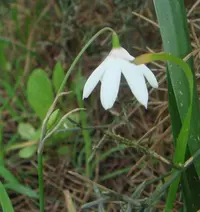
Corsican snowflake, Acis longifolia, is a small bulbous perennial from the Mediterranean, especially Corsica and nearby regions. It belongs to the amaryllis family and is grown mainly for its delicate early flowers.
Plants produce fine, grass-like leaves and slender stems topped with nodding white bell-shaped blooms that appear in late winter or early spring. The overall look is light and airy, best suited to rock gardens, gravel beds, or naturalistic plantings.
It prefers well-drained, rather dry soils outside its active growth period and benefits from shelter from very harsh winter conditions. Understanding how to care for Corsican Snowflake starts with providing good drainage, modest watering, and an open, sunny to lightly shaded position.

Care Difficulty
Moderate Care

Light Preference
Partial Shade

Water Requirements
Moderate Water

Temperature Preference
Cool Climate

Hardiness Zone
7–9

Soil Texture
Sandy, Loamy, Rocky

Soil pH
Slightly acidic (6.5–7.0), Neutral (7.0)

Soil Drainage
Well-drained

Fertilization
Minimal (feed rarely)
Scan your plant to receive care tips personalized for your specific plant
Available on iOS and Android
This bulb prefers bright, cool conditions with gentle sun exposure rather than intense heat.
This small bulb needs steady moisture in growth, then much drier conditions during summer dormancy.
This species prefers mild, Mediterranean-like conditions with cool winters and not-too-hot summers.
Humidity is a minor factor for Acis longifolia and it manages well in typical home or outdoor conditions.
Acis longifolia prefers a light, sharply drained mix that mimics rocky or sandy woodland soils.
This bulb is suitable for small containers, especially for controlling moisture and protecting from excessive winter wet.
Acis longifolia is a small bulb that needs only light feeding in free-draining soil.
Acis longifolia needs minimal pruning, focused mainly on cleanliness rather than shaping.
This bulb is usually grown in the ground and dislikes frequent disturbance once established.
Increasing Acis longifolia is most reliable through division of mature clumps, with seeds as a slower option.
This Mediterranean bulb is moderately hardy but benefits from some winter attention in colder regions.

Plant Health Check
Not sure what's wrong with your plant? Check your plant's health inside the app.
This bulb species is native almost exclusively to Corsica, where it grows in open scrub, rocky slopes, and light woodland, adapting to the island’s mild, Mediterranean climate.
Unlike many Mediterranean geophytes, its long, narrow leaves persist into late spring and early summer, only withering as the soil dries and the bulb enters summer dormancy.
The plant produces small, drooping, bell-shaped white flowers on slender stalks in late winter to early spring, often appearing while nearby vegetation is still sparse, giving it an early-season niche for attracting pollinators.

Acis longifolia has a very restricted natural range and is considered rare in the wild, which makes responsible cultivation and avoiding wild collection important parts of Acis longifolia plant care.
This bulb needs a distinct summer dormancy and cool, bright winter growth to flower well. Overly rich soil, heavy watering in summer, or planting too deep can all reduce bud formation and result in poor flowering.
Keep your plants happy and healthy with plant identification, disease detection, and easy care guidance.