Wright's Deervetch Care (Acmispon wrightii)

Wright's Deervetch

About Wright's Deervetch

Wright's deervetch (Acmispon wrightii) is a small, herbaceous legume native to dry, open habitats of the southwestern United States and northern Mexico. It often grows among grasses and low shrubs.

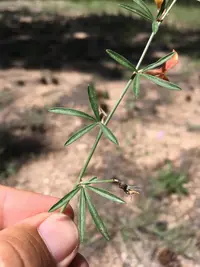
The plant forms a low, branching mound with fine stems, small compound leaves, and yellow to orange pea-like flowers that attract bees and other pollinators. Its natural tolerance of heat, sun, and poor, rocky soils makes it suitable for low-water gardens and restoration plantings.

Gardeners who care for Wright's Deervetch should note its preference for full sun, fast-draining soil, and relatively dry conditions, which generally makes it easier to grow than many thirstier ornamentals.

Main Plant Requirements

Care Difficulty

Moderate Care

Light Preference

Full Sun

Water Requirements

Low Water

Temperature Preference

Warm Climate

Hardiness Zone

8–11

Soil Texture

Sandy, Loamy, Rocky

Soil pH

Slightly acidic (6.5–7.0), Neutral (7.0)

Soil Drainage

Well-drained

Fertilization

Minimal (feed rarely)

Get Personalized Care Plan

Scan your plant to receive care tips personalized for your specific plant

Available on iOS and Android

How to Care for the Wright's Deervetch

This desert legume prefers strong light but benefits from some protection at the hottest times of day.

  • Provide 6–8 hours of direct sun daily, ideally with morning sun and light afternoon shade in hotter, low-rainfall regions.
  • Tolerates bright, open exposure but may show leaf scorch in prolonged, intense afternoon sun, especially during heatwaves above 95°F (35°C).
  • In partial shade, flowering and compact growth decline; choose the brightest, least-obstructed site and avoid heavy tree cover for Wright's Deervetch.

This species is drought-adapted and prefers infrequent, deep watering over frequent light applications.

  • Allow the top 5–8 cm of soil to dry completely before watering, then soak the root zone and let excess drain away.
  • During hot, dry periods, monitor foliage; slight dulling or minor leaf curl can signal the need for a thorough watering.
  • Avoid poorly drained or compacted soils, which cause yellowing leaves, soft stems, or root rot symptoms, especially problematic for Acmispon wrightii.

This plant is adapted to warm, dry climates but has some tolerance for moderate cold.

  • Optimal growth occurs around 65–85°F (18–29°C), typical of mild to warm spring and summer conditions in arid or semi-arid regions.
  • Plants usually tolerate brief drops to about 25°F (−4°C); harder freezes can damage foliage and young shoots, especially in exposed sites.
  • In hot summers above 95°F (35°C), growth may slow; combine full sun with free-draining soil to prevent heat-stressed roots and crown decline.

This drought-adapted species has low humidity needs and thrives in dry air typical of arid and semi-arid regions.

  • Target 20–40% humidity, similar to dry indoor air or outdoor desert conditions, for stable growth of Wright's Deervetch.
  • Plant in a very fast-draining mix so roots stay dry between waterings, reducing any sensitivity to brief humidity changes.
  • If air is unusually humid for long periods, increase air movement and reduce watering to prevent root and stem rot.

This species prefers lean, fast-draining, sandy or gravelly soil that mimics its native desert and semi-desert habitats.

  • Use a mix of roughly 50–70% mineral material (coarse sand, fine gravel, or pumice) with the rest a light, low-organic potting medium.
  • Aim for a slightly acidic to neutral pH around 6.0–7.5, which suits Acmispon wrightii and supports nutrient availability without excess salts.
  • Improve aeration and drainage by avoiding peat-heavy mixes and blending in coarse perlite or small grit rather than fine, water-holding materials.
  • Avoid dense, clay-rich, or consistently wet substrates, which quickly cause root decline and increase susceptibility to fungal problems.

This species can be grown in containers if the potting setup replicates its naturally dry, well-drained root environment.

  • Choose a wide, shallow pot to support its spreading habit and keep the root zone from staying wet at depth.
  • Select unglazed clay containers, which allow faster evaporation and help prevent prolonged saturation after rare deep waterings.
  • Raise the pot slightly on feet or blocks so drainage holes clear quickly and runoff does not reabsorb into the root zone.

This desert-adapted legume needs minimal feeding and often performs well in lean soils.

  • Use a light top-dressing of compost once in spring for container or very poor soils.
  • If needed, apply a low-rate, balanced slow-release fertilizer (e.g., 10-10-10) at 1/2 strength in early growth.
  • Avoid high-nitrogen products since Wright's Deervetch fixes its own nitrogen and can become rank or floppy.
  • Do not fertilize in late fall or winter, when growth slows or plants are dormant.

Pruning Acmispon wrightii is mainly about light shaping and hygiene rather than heavy cutting.

  • Best time is late winter to very early spring, before vigorous new growth starts.
  • Remove dead, diseased, or storm-damaged stems with clean, sharp hand pruners.
  • Thin a few crowded shoots to improve air flow and maintain a low, open form that supports flowering.
  • After blooming, lightly tip back leggy stems to keep mounds compact without removing too many flower buds.

This species is more often grown in the ground than in containers, so focus on careful transplanting.

  • Transplant in late winter to early spring while growth is modest and temperatures are mild.
  • Look for roots circling the pot, slow growth, or rapid drying soil as signs a container plant needs more space.
  • Move up only 1 pot size, gently loosen circling roots, and keep as much original root ball intact as possible.
  • Water thoroughly after transplanting, then keep soil lightly moist (not saturated) for 1–2 weeks to limit root stress.

Propagation of Acmispon wrightii is usually done from seed, which suits its natural life cycle.

  • Collect mature pods in late summer, then dry and store seeds cool and dry until sowing.
  • Scarify hard seed coats lightly with sandpaper or a brief hot-water soak to improve germination.
  • Sow in late winter to early spring in a well-drained gritty mix, just barely covering the seed.
  • Maintain bright light, good airflow, and moderate moisture; avoid overwatering to prevent damping-off in seedlings.

In its native range this plant is fairly cold tolerant and usually needs little winter care outdoors.

  • In-ground plants in mild climates generally overwinter without extra protection once established.
  • Apply a light, breathable mulch around (not on) the crown in late fall in regions with freezes.
  • Move container plants to a sheltered, unheated but frost-free spot and keep soil barely moist during winter.

Care Tips

Encourage Deep Roots

In the first growing season, give one thorough soak after planting and then allow the soil to dry noticeably before the next, which encourages deeper, more drought-resilient roots for this desert legume.

Promote Natural Nodulation

When planting into very poor or disturbed soils, dust the seed or root zone with a native legume inoculant containing compatible Rhizobium bacteria to improve nitrogen fixation and long-term vigor.

Protect From Foot Traffic

Site plants away from paths and use small stones or a low border to discourage stepping on the low, spreading stems, which are easily damaged and slow to recover in arid sites.

Time Seed Collection

Collect seed only from fully dried, tan pods that rattle slightly when shaken, then store them in a labeled paper envelope in a cool, dry place for the next sowing season.

Support Slope Plantings

On slopes or loose banks, plant into small, shallow terraces or behind rocks so the roots have a stable pocket of soil, which helps prevent erosion while growing Wright's Deervetch as a groundcover stabilizer.

Common Pests and Diseases

Seed weevils

These insects develop inside the seed pods and reduce viable seed production, which matters most when propagating plants from wild-collected or garden seed. Symptoms include small exit holes in mature pods and shriveled seed.

Solution

Collect pods as they begin to dry but before they fully split, then dry them in paper bags and discard any pods with tiny round holes. Avoid storing infested seed, and if seed production is important, rotate collection areas and encourage local predators such as birds by maintaining a diverse, pesticide-free habitat around the planting when trying to grow Acmispon wrightii.

Leaf miners

These insects live inside the leaf tissue and create pale, winding tunnels that can reduce photosynthetic area on the fine leaflets. Damage is usually cosmetic but can stress young or drought-stressed plants.

Solution

Remove and discard mined leaves as soon as they are noticed to break the insect life cycle. Encourage natural predators by avoiding broad-spectrum insecticides, and in small plantings use lightweight row cover over young plants if mining becomes heavy early in the season.

Powdery mildew

This disease causes a white, powdery coating on leaves and young stems, especially under warm, dry conditions with poor air movement. Affected foliage may yellow and age prematurely.

Solution

Increase spacing and airflow around plants, avoid overhead watering in late afternoon or evening, and remove heavily infected stems to reduce spore load. If needed, apply a mild preventative such as horticultural oil or potassium bicarbonate spray labeled for ornamental legumes, following label directions carefully.

Rust

This disease produces small orange to brown pustules on the undersides of leaves and along stems, which can lead to partial defoliation in humid or crowded plantings. Symptoms include yellowing areas around the pustules and early leaf drop.

Solution

Promptly remove and dispose of infected leaves and nearby plant debris to limit spore spread. Improve sun exposure and air circulation, avoid wetting foliage during irrigation, and in recurrent cases consider rotating plant locations and avoiding overhead irrigation where possible.

Interesting Facts

Arizona desert specialist

This species is native mainly to arid parts of Arizona and the southwestern US, where it grows in dry washes, rocky slopes, and open desert grasslands, tolerating high light and low rainfall conditions that would stress many other legumes.

Nitrogen-fixing legume partner

As a member of the legume family, it forms root nodules with symbiotic bacteria that convert atmospheric nitrogen into forms usable by plants, enriching nutrient-poor desert soils and supporting surrounding plant communities.

Seasonal low-growing habit

In its natural range it typically forms a low, spreading herb with small leaflets and yellowish to orange pea-like flowers that appear in response to favorable moisture and temperature conditions rather than on a fixed calendar schedule.

FAQs about Wright's Deervetch

This species is highly attractive to native bees and small pollinating insects, which visit its yellow pea-like flowers for nectar and pollen. It is useful in pollinator-friendly gardens and habitat restoration plantings in dry, sunny areas.

Grow Healthy Plants with Botan Care

Keep your plants happy and healthy with plant identification, disease detection, and easy care guidance.

Botan plant care app — identify plants on mobile

Explore More Plants