Low mound spacing
Space plants 25–30 cm apart in loose drifts so the spreading mounds can knit together into a low, weed-suppressing groundcover without smothering each other.

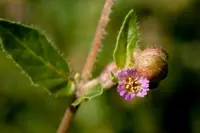
Annual windmills (Allionia choisyi) is a low, spreading annual native to arid and semi-arid regions of the southwestern United States and northern Mexico. It forms flat, circular clusters of small, fused pink to purple flowers that resemble a spinning pinwheel. Leaves are small, gray-green, and often slightly hairy, helping the plant tolerate heat and dry conditions.
This species suits rock gardens, xeriscapes, and naturalistic plantings where soil is well-drained and rainfall is limited. Light to moderate watering, full sun, and lean, sandy or gravelly soil generally support healthy growth. These traits make it relatively easy to grow when conditions are dry and bright, but less suitable for very humid or poorly drained sites, and understanding how to care for annual windmills starts with replicating its desert-like habitat.

Care Difficulty
Easy Care

Light Preference
Full Sun

Water Requirements
Low Water

Temperature Preference
Tropical / Frost Sensitive

Hardiness Zone
9–11

Soil Texture
Sandy, Loamy, Rocky

Soil pH
Slightly acidic (6.5–7.0), Neutral (7.0)

Soil Drainage
Well-drained

Fertilization
Minimal (feed rarely)
Scan your plant to receive care tips personalized for your specific plant
Available on iOS and Android
Allionia choisyi performs best in bright, open sites typical of warm, sunny climates.
This drought-tolerant species prefers deep but infrequent watering once established.
This warm-season plant thrives in hot, dry conditions and does not tolerate frost.
This species handles low humidity well and rarely needs special moisture management.
This desert‑adapted annual prefers lean, fast‑draining soil that dries quickly between waterings.
This plant can be grown in containers if the pot stays sharply drained and relatively shallow.
This drought-tolerant native annual windmills species needs only light feeding in typical garden soil.
Allionia choisyi benefits from light, timed pruning to keep the plant compact and flowering well.
This species is usually treated as an in-ground annual, so focus on careful transplanting rather than long-term repotting.
This plant is most commonly propagated from seed under warm, bright conditions.
In most climates Allionia choisyi behaves as a warm-season annual and does not need complex winter care.

Plant Health Check
Not sure what's wrong with your plant? Check your plant's health inside the app.
The small magenta flower clusters open mainly in the late afternoon and evening, an adaptation to attract crepuscular pollinators that are active at lower light and temperature levels in arid habitats.
This species naturally occurs in dry desert washes and disturbed sandy or gravelly soils of the southwestern United States and northern Mexico, where it tolerates intense sun, high temperatures, and periodic drought.
What looks like a single flower is actually a head of three reduced flowers arranged in a pinwheel pattern, a structure that likely improves visual attraction to pollinators while using relatively little tissue and water.
The flowers are rich in nectar and tend to attract small native bees, hoverflies, and occasionally butterflies. In warm, dry sites, the plant can be a useful addition to a pollinator-friendly bed or xeriscape planting.
Keep your plants happy and healthy with plant identification, disease detection, and easy care guidance.