Cupped Soot Lichen Care (Acolium inquinans)

Cupped Soot Lichen

About Cupped Soot Lichen

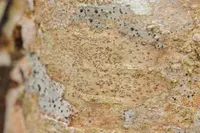
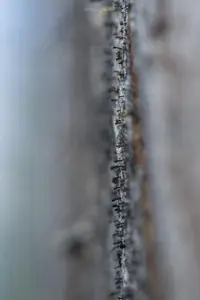
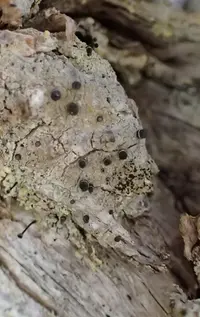
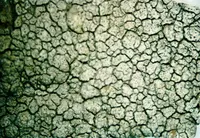
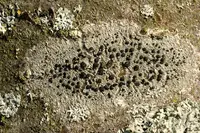
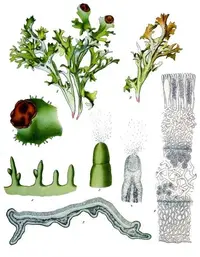
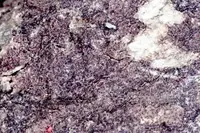
Cupped soot lichen, Acolium inquinans, is a crust-like lichen rather than a true plant. It forms dark, sooty patches with small cup-shaped fruiting bodies on bark or old wood. These cups release spores that help the lichen spread.

This species occurs mainly in temperate regions, often on the trunks and branches of deciduous trees. It is slow growing and depends on clean air and stable surfaces, which can make it difficult to establish deliberately. In nature, it prefers cool, humid conditions and stable, undisturbed substrates, so attempts to care for Cupped Soot Lichen focus on providing steady moisture, indirect light, and low pollution.

Main Plant Requirements

Care Difficulty

Moderate Care

Light Preference

Partial Shade

Water Requirements

Moderate Water

Temperature Preference

Cool Climate

Hardiness Zone

Unknown

Soil Texture

Rocky, Loamy, Sandy

Soil pH

Slightly acidic (6.5–7.0)

Soil Drainage

Well-drained

Fertilization

Minimal (feed rarely)

Get Personalized Care Plan

Scan your plant to receive care tips personalized for your specific plant

Available on iOS and Android

How to Care for the Cupped Soot Lichen

This crustose lichen prefers stable, cool light conditions rather than strong, direct sun.

  • Provide bright, indirect light or light dappled shade, roughly 2–4 hours of gentle morning sun with shade or filtered light for the rest of the day.
  • Avoid intense midday and afternoon sun, which can dry and bleach Cupped Soot Lichen, especially on exposed bark or stone surfaces.
  • In summer, protect from prolonged full sun; in winter, ensure sites remain open enough to receive diffuse daylight rather than deep shade.

This species relies on ambient moisture rather than direct watering, since it is a lichen on bark or rock, not a rooted plant.

  • Do not water Acolium inquinans like a potted plant; instead, allow natural rain, mist, or high humidity to supply moisture.
  • Avoid frequent hosing or soaking that keeps the substrate saturated for many hours, as this can encourage competing mosses and algae.
  • In very dry periods, occasional fine misting in the early morning can help hydration, but surfaces should dry fully between events.

This lichen tolerates a broad temperature range but performs best in cool to mild conditions.

  • Optimal activity typically occurs around 40–70°F (4–21°C), where moisture persists longer on bark or stone surfaces.
  • It withstands winter cold down to at least 10°F (-12°C) once established, provided freeze–thaw cycles are not combined with severe desiccation.
  • Sustained heat above 85°F (29°C) with low humidity can cause drying and dormancy, so choose microhabitats with some shade and air movement in hot seasons.

Humidity is not a major factor for Acolium inquinans, which naturally tolerates exposed, dry surfaces.

This lichen does not grow in conventional potting soil and instead establishes on firm, mineral or bark surfaces.

  • Favors hard, stable substrates such as weathered wood, old bark, or rock rather than loose, organic-rich soil.
  • Avoid nutrient-rich, moist mixes, as Acolium inquinans is adapted to nutrient-poor, periodically dry surfaces.
  • If a substrate is prepared, use a thin, compacted mineral layer (crushed rock, sand, fine grit) mimicking stone or old masonry.
  • Keep the surface well-aerated and exposed; do not cover the lichen with debris, moss, or dense organic layers.

This species is not well suited to standard container growing and is best left on natural outdoor substrates.

This lichen grows on nutrient-poor bark and wood and typically does not benefit from added fertilizer when established outdoors.

Pruning is not a standard practice for Acolium inquinans because the lichen naturally maintains its own structure on host surfaces.

This species is usually left in place on its natural substrate, so repotting or transplanting is rarely attempted.

  • Transplant only when absolutely necessary, for example when moving bark or wood pieces in habitat restoration or display projects.
  • Plan any move during mild, stable weather to reduce desiccation and thermal shock to the thallus and fruiting bodies.
  • Handle the supporting bark or wood rather than the lichen itself, keeping surfaces intact and undisturbed.
  • After relocation, maintain similar light, moisture, and air conditions to support re-establishment and limit additional stress.

Propagation of Acolium inquinans is specialized and usually left to natural spore dispersal or research settings rather than home cultivation.

Cupped Soot Lichen is highly cold hardy and normally requires no special winter care in outdoor conditions.

Care Tips

Choose stable substrates

Establish this lichen on long-lived, relatively smooth bark (such as mature beech or oak) or on calcareous stone to give the thallus many years of undisturbed surface for expansion.

Minimize bark disturbance

Avoid brushing, pressure-washing, or scraping trunks and branches that host colonies, since even light mechanical damage can remove the thin crust and slow recolonization for many years.

Avoid chemical drift

Keep fungicides, herbicides, and high-salt de-icing products away from colonized trees and nearby hardscape, as airborne or splash drift can burn the thallus and leave dead, bleached patches.

Control nutrient splash

Site host trees and stones away from concentrated nutrient inputs such as lawn fertilizer spreaders, compost tea outlets, or livestock runoff, because repeated nutrient splash favors algae and moss that can overgrow the lichen.

Monitor air quality

When growing Cupped Soot Lichen in gardens near roads or industrial areas, favor locations with better air circulation and some distance from exhaust sources, and monitor for soot or dust buildup that may need gentle, non-contact mitigation by improving airflow rather than washing surfaces.

Common Pests and Diseases

Air pollution damage

Symptoms include bleaching, thinning, or localized death of the thallus where it is exposed to exhaust fumes, industrial emissions, or smoke. This problem is common because this lichen often colonizes nutrient-poor, human-influenced surfaces with variable air quality.

Solution

Reduce exposure to direct exhaust or heavy smoke by choosing cleaner-air microhabitats when possible, such as away from busy roads or chimneys, and avoid using harsh chemicals or solvents on nearby surfaces. If colonies are being monitored or conserved, support better air quality through improved ventilation outdoors (for example on enclosed courtyards) and limit use of strong cleaning agents that release fumes.

Surface contamination

This problem appears as dark crusts, oily films, or particulate layers on the lichen surface from soot, dust, or other urban deposits, which can block light and reduce photosynthesis. These contaminant layers are frequent on lichens growing on walls, masonry, or roofs near traffic or fireplaces.

Solution

Gently rinse affected colonies with clean, lukewarm water from a squeeze bottle or fine mist sprayer, avoiding strong pressure that can detach the lichen. Allow the substrate to dry well between light rinses and prevent future buildup by limiting new soot sources nearby whenever feasible.

Algal overgrowth

This condition develops as a green, slimy film that spreads over the lichen, especially on damp, shaded vertical surfaces, and can outcompete the lichen for light. It is favored by consistently high moisture and very low air movement.

Solution

Reduce moisture duration by improving airflow around the substrate, for example by pruning nearby vegetation or increasing spacing from adjacent structures. Where conservation is a goal, very gently brush the surface with a soft, dry artist’s brush to dislodge loose algal film, followed by a light rinse, taking care not to scrape or detach the lichen itself; this is one of the more delicate aspects of Acolium inquinans care instructions.

Interesting Facts

Specialist soot lichen

This species is a lichenized fungus that grows almost exclusively on old, weathered, tarry or creosote-treated timber, especially railway sleepers and telegraph poles, making it a specialist of human-made substrates rich in aromatic hydrocarbons.

Minute cupped fruiting bodies

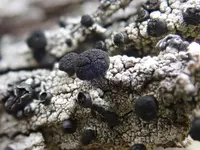
It forms tiny, dark, cup-like apothecia (spore-producing structures) embedded in a powdery black thallus, giving affected wood a finely soot-dusted appearance under low magnification.

Tolerant of pollution

Populations are often found along railways and industrial areas, suggesting a relatively high tolerance of atmospheric and substrate pollution compared with many other lichen species.

Botan icon

Did you know?

The species name inquinans means polluting or defiling in Latin, referring to the way its black, soot-like thallus visually stains and darkens the timber surfaces it colonizes.

FAQs about Cupped Soot Lichen

Growth is very slow. This lichen expands only a few millimeters per year, even in good conditions. It often appears unchanged for many seasons, which is normal and not a sign of poor Acolium inquinans care.

Grow Healthy Plants with Botan Care

Keep your plants happy and healthy with plant identification, disease detection, and easy care guidance.

Botan plant care app — identify plants on mobile

Explore More Plants