Use sturdy supports
Install discreet pea sticks or low wire hoops early in spring so stems can grow through them, which prevents wind damage and keeps tall flower spikes upright without needing harsh tying later.

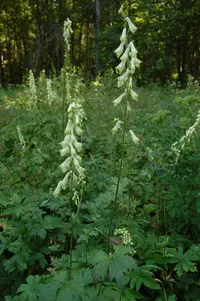
Aconitum lasiostomum is a perennial flowering plant in the buttercup family, known for its tall stems and hooded, usually blue to violet flowers. It forms clumps from tuberous roots and creates a strong vertical accent in cool-climate gardens.
This species is native to parts of Eurasia, where it grows in mountain meadows, forest edges, and moist, cool habitats. It prefers humus-rich, evenly moist, but well-drained soil in partial sun.
Gardeners who care for Aconitum lasiostomum should note that it is best suited to cooler regions and stable moisture. It is not ideal for hot, dry, or very exposed sites.

Care Difficulty
Moderate Care

Light Preference
Partial Shade

Water Requirements
Regular Water

Temperature Preference
Cool Climate

Hardiness Zone
4–7

Soil Texture
Loamy, Silty, Organic-rich

Soil pH
Acidic (5.5–6.5), Slightly acidic (6.5–7.0)

Soil Drainage
Moist but well-drained

Fertilization
Minimal (feed rarely)
Scan your plant to receive care tips personalized for your specific plant
Available on iOS and Android
This species prefers cool, bright conditions with protection from intense midday sun.
This plant thrives in consistently moist, never waterlogged soil.
This is a cold-hardy perennial suited to temperate outdoor climates.
This species prefers moderately moist air but usually copes well with typical outdoor humidity.
This perennial prefers cool, moist, well-structured soil that drains freely but does not dry out quickly.
This species can be grown in containers if the pot is deep and conditions remain cool and evenly moist.
This species grows well in fertile garden soil and only benefits from modest feeding in cultivation.
Pruning Aconitum lasiostomum is mainly about tidiness and supporting healthy flowering.
This species is usually grown in the ground and dislikes frequent disturbance, so transplant only when necessary.
Propagation of Aconitum lasiostomum is possible but should be done with care due to its toxic tissues.
This plant is generally cold hardy in temperate climates and needs minimal winter care in the ground.

Plant Health Check
Not sure what's wrong with your plant? Check your plant's health inside the app.
This monkshood is noted for its densely hairy upper sepal margins and lip, a feature that helps separate it from closely related Aconitum species in taxonomic keys.
The species is naturally restricted to parts of the Carpathian region in Eastern Europe, where it grows in cool, moist montane habitats such as forest edges and stream-adjacent meadows.
The deep helmet-shaped flowers with a narrow entrance restrict access mostly to strong bumblebees, which can force their way in to reach the nectar while effectively transferring pollen.
All parts of this species are highly toxic to humans and animals if eaten, and sap can irritate skin. Always handle with gloves, avoid ingestion, and keep plants out of reach of children, dogs, cats, and livestock.
Keep your plants happy and healthy with plant identification, disease detection, and easy care guidance.