Encourage Compact Mounds
Pinch very young, overly leggy shoots once early in the season to encourage a lower, denser mound that resists wind damage and exposes more buds to light.

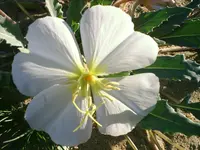
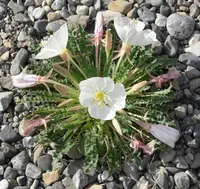
Birdcage evening primrose, Oenothera deltoides, is a short-lived perennial or annual wildflower native to arid regions of the southwestern United States and northern Mexico. It often grows in sandy washes, dunes, and other well-drained, open sites.
Plants form low, spreading rosettes with narrow gray-green leaves and showy white evening-blooming flowers that fade to pink by morning. As the flowers fade, the drying stems curl into a cage-like structure around the seed capsules, giving the plant its common name.
This species is adapted to hot sun, drought, and poor soils, which makes it relatively low maintenance in dry gardens. Gardeners who want to learn how to care for birdcage evening primrose benefit from understanding its preference for full sun and very sharp drainage.

Care Difficulty
Easy Care

Light Preference
Full Sun

Water Requirements
Low Water

Temperature Preference
Warm Climate

Hardiness Zone
7–10

Soil Texture
Sandy, Loamy, Rocky

Soil pH
Slightly acidic (6.5–7.0), Neutral (7.0)

Soil Drainage
Well-drained

Fertilization
Minimal (feed rarely)
Scan your plant to receive care tips personalized for your specific plant
Available on iOS and Android
This desert annual needs strong light to flower well and stay compact.
This species prefers dry, fast-draining conditions and is sensitive to excess moisture.
This plant is adapted to warm, dry climates with cool nights and low humidity.
Humidity is rarely critical for birdcage evening primrose if temperatures and light are suitable.
This species prefers very well-drained, sandy soil that mimics dry, open habitats.
This species can grow in containers if the pot is set up to stay dry and airy between waterings.
This desert native birdcage evening primrose needs only modest feeding in typical garden soil.
Pruning Oenothera deltoides is mainly for tidiness and to extend flowering.
This species is usually grown in the ground, so transplanting young plants correctly matters more than repotting.
Propagation of Oenothera deltoides is most reliable from seed.
In most mild, dry climates this species is fairly cold tolerant and needs little structured winter care.

Plant Health Check
Not sure what's wrong with your plant? Check your plant's health inside the app.
This desert annual forms a low, star-shaped rosette that often lies flat against sandy soil, an adaptation that reduces wind damage and helps trap moisture around the roots.
After the white flowers fade, the green sepals dry and curl into a ribbed, cage-like structure that surrounds the seed capsule, giving rise to the common name birdcage evening primrose.
Flowers typically open near sunset and are pollinated by night-flying moths, then often wilt by the following morning, a strategy that helps reduce water loss in hot, arid habitats.

This species plays a key role in stabilizing shifting sand dunes in its native desert range, with its spreading root system and ground-hugging growth helping to anchor loose soils and support other dune-dwelling organisms.
This species is best grown outdoors in sandy or gravelly soil with full exposure and good air movement. Indoors, low light and poor drainage usually weaken plants, so birdcage evening primrose indoor care is rarely successful long term.
Keep your plants happy and healthy with plant identification, disease detection, and easy care guidance.