great yellow gentian Care (Gentiana lutea)

Also known as: yellow gentian, bitter root, bitterwort, centiyane, genciana
great yellow gentian

About great yellow gentian

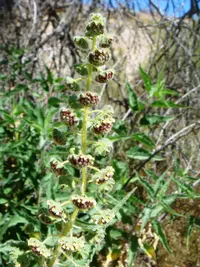
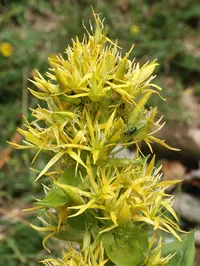
Great yellow gentian, Gentiana lutea, is a long-lived herbaceous perennial known for its tall stems, large opposite leaves, and clusters of yellow star-shaped flowers. It forms a strong taproot and develops slowly, so it suits patient growers who value longevity over quick results.

This species is native to mountainous regions of central and southern Europe, where it grows in open meadows and grassy slopes. It prefers cool conditions, moist but well-drained soil, and exposure to full sun or light shade.

Because it resents disturbance and takes years to mature, gardeners should plan carefully when they care for great yellow gentian. Once established, it is hardy and reliable under stable conditions.

Main Plant Requirements

Care Difficulty

Hard Care

Light Preference

Full Sun

Water Requirements

Regular Water

Temperature Preference

Cold Hardy

Hardiness Zone

3–7

Soil Texture

Loamy, Silty, Rocky

Soil pH

Acidic (5.5–6.5), Slightly acidic (6.5–7.0)

Soil Drainage

Moist but well-drained

Fertilization

Minimal (feed rarely)

Get Personalized Care Plan

Scan your plant to receive care tips personalized for your specific plant

Available on iOS and Android

How to Care for the great yellow gentian

This mountain perennial prefers strong light but not intense lowland heat.

  • Provide full sun in cool climates, aiming for 6–8 hours of direct light; in hotter areas, give morning sun with light afternoon shade to protect great yellow gentian from scorch.
  • Allow partial shade (about 3–4 hours direct sun) where summers are hot, as long as sites stay bright for the rest of the day.
  • Avoid deep shade, which leads to weak, floppy growth and poor flowering; choose open, unobstructed positions, especially from late spring to early fall.

This species prefers consistently moist, cool soil without staying waterlogged.

  • Water garden-grown Gentiana lutea when the top 2–3 cm of soil feels barely damp, aiming to keep the root zone evenly moist during active growth.
  • Use deep, infrequent watering rather than light splashes so moisture reaches 15–20 cm deep, and ensure soil drains freely to prevent root rot.
  • In cooler months and during dormancy, water less often, watching for drooping leaves as a sign of dryness and yellowing, soft tissue as a sign of excess moisture.

This hardy alpine perennial tolerates cold well but prefers moderate growing temperatures.

  • Optimal growth occurs around 55–70°F (13–21°C), especially in spring and early summer when foliage and flower stems are developing.
  • Mature plants survive winter lows down to about 0°F (-18°C) in the ground, tolerating snow cover and typical temperate frosts once established.
  • Heat above 80–85°F (27–29°C) can stress plants; provide mulch to cool the root zone and avoid very hot, exposed, reflective sites during peak summer.

Gentiana lutea prefers cool, moderately moist air but adapts to typical outdoor humidity in temperate climates.

  • Aim for 40–60% humidity when growing great yellow gentian in sheltered or semi-controlled conditions.
  • This species tolerates brief drier air if the root zone stays evenly moist and the soil does not fully dry out.
  • Crisping leaf edges or drooping foliage in hot, dry wind indicate humidity stress; use windbreaks or nearby vegetation to reduce moisture loss.

Gentiana lutea thrives in deep, loose, moist but free-draining mineral soils.

  • Use a loamy, slightly rocky mix with high mineral content: 50–60% garden loam, 20–30% coarse sand or grit, and 20–30% well-rotted compost.
  • Maintain slightly acidic to neutral pH around 6.0–7.0 to support nutrient uptake and healthy root development.
  • Improve aeration and drainage by blending in coarse sand, fine gravel, or horticultural grit rather than peat-heavy materials.
  • Avoid compacted clay, standing water, or very shallow stony soils, which encourage root rot and poor taproot formation.

This species is only moderately suitable for containers because its deep taproot needs significant depth and stable moisture.

  • Select an extra-deep, heavy container to accommodate the taproot and reduce tipping in strong wind.
  • Fill the pot with a mineral-rich, gritty mix that drains quickly yet retains some moisture at depth, such as loam with coarse sand and grit.
  • Position the container where temperature swings are limited, since roots in pots experience faster heating and cooling than in-ground plants.

This mountain perennial prefers lean soil, so great yellow gentian needs only light, infrequent feeding in cultivation.

  • Use a balanced, slow-release fertilizer (around 10-10-10) or a thin layer of mature compost in early spring.
  • Feed once at the start of the active growing season; avoid repeated applications that enrich the soil too much.
  • Apply at half the label strength to prevent soft, weak growth and salt buildup around the roots.
  • Do not fertilize during winter dormancy; allow the plant to rest in cool, unfed conditions.

Pruning Gentiana lutea is minimal and focuses on removing spent or damaged growth rather than shaping.

  • In late autumn or early spring, cut back dead flower stalks at the base using clean, sharp hand pruners.
  • Remove any dead, diseased, or storm-damaged leaves to reduce fungal issues and improve air movement.
  • Leave healthy basal foliage during the growing season to support photosynthesis and strong root development.
  • Avoid heavy cutting into the crown, as this deep-rooted perennial does not respond well to hard renovation pruning.

This deep-rooted species is best transplanted only when clearly necessary, as disturbance can stress mature Gentiana lutea plants.

  • Plan any transplanting for early spring or early autumn when temperatures are mild and soil moisture is steady.
  • Look for roots circling the container, emerging from drainage holes, or noticeably slowed growth as signs of crowding.
  • Lift with a wide rootball, disturb the taproot as little as possible, and replant at the same depth in well-drained soil.
  • Water thoroughly after transplanting, then keep soil evenly moist and shaded for 1–2 weeks to limit transplant shock.

Propagation of Gentiana lutea is typically done from seed and requires patience and cool conditions.

  • Sow fresh seeds in autumn in trays or pots outdoors, allowing natural winter cold to break dormancy.
  • Provide a free-draining, gritty seed mix and keep it consistently moist but not waterlogged during germination.
  • Expect slow, irregular germination over several months; leave trays undisturbed through one full winter–spring cycle.
  • Transplant young seedlings gently while small, taking care not to damage the developing taproot.

This species is cold hardy in most temperate climates and needs only modest winter care once established outdoors.

  • Tolerates freezing temperatures and snow when planted in well-drained soil on a slope or raised area.
  • Apply a light mulch layer (2–5 cm) around, but not over, the crown to buffer freeze–thaw cycles.
  • Leave dead stems standing in rough sites if desired for extra crown insulation, then cut back in late winter.
  • For container plants in colder regions, move pots to an unheated, sheltered spot to prevent rootball freezing solid.

Care Tips

Deep root space

Choose a deep planting site or container at least 30–40 cm tall so the strong taproot can develop fully, which is essential for long-lived plants and easier long-term harvesting.

Slow acclimation outdoors

When transplanting from pots to open ground, harden plants off over 7–10 days by gradually increasing time in full exposure to sun and wind to reduce transplant shock and root setback.

Stable soil moisture

In sloping or free-draining sites, form a broad, shallow basin around the crown to catch rain and irrigation water, then mulch lightly so moisture reaches the deep root zone without waterlogging the crown.

Planned harvest rotation

If roots are being harvested, plan a rotation by planting new seedlings every year in a separate strip so older plants can reach 4–5 years before harvest while younger plants replace them.

Winter crown protection

In colder regions, apply a loose, breathable mulch layer around but not over the crown in late fall to reduce freeze–thaw heaving and protect emerging buds, which supports long-term success when growing great yellow gentian.

Common Pests and Diseases

Rust

This disease causes yellow to orange pustules on leaves and stems, often leading to premature leaf drop and reduced plant vigor.

Solution

Remove and destroy affected leaves, avoid overhead watering, and improve air circulation around plants; in persistent cases, apply a sulfur or copper-based fungicide labeled for ornamental perennials according to instructions.

Powdery mildew

This disease produces white, powdery patches on leaf surfaces, which can cause leaf distortion and reduced flowering.

Solution

Increase spacing and airflow, water at soil level, remove heavily infected foliage, and use a potassium bicarbonate or sulfur-based fungicide if the problem continues.

Leaf spot

Symptoms include small brown to black spots on leaves that may merge into larger lesions, causing partial defoliation in wet seasons.

Solution

Promptly remove and discard infected leaves, avoid splashing water onto foliage, apply a mulch layer to limit soil splash, and use a broad-spectrum fungicide labeled for leaf spots if cultural measures are not sufficient.

Aphids

These insects cluster on young shoots and flower stalks, sucking sap and causing distortion, sticky honeydew, and sometimes sooty mold on leaves.

Solution

Spray colonies off with a strong stream of water, encourage natural predators such as lady beetles, and, if needed, treat with insecticidal soap or a horticultural oil, ensuring thorough coverage of stems and leaf undersides.

Gentian root nematodes

This pest consists of microscopic roundworms that feed on roots, causing stunted growth, poor flowering, and sometimes yellowing foliage despite adequate care.

Solution

Discard severely affected plants, avoid moving soil from infected beds, rotate planting areas, and, for valuable clumps, consider lifting and replanting into fresh, well-drained soil after removing as much old soil from the roots as possible; commercial hot-water treatment of divisions can also be used where available.

Interesting Facts

Extreme root longevity

Mature plants often develop a very thick taproot that can persist in the same mountain meadow for several decades, helping the plant survive harsh alpine winters and poor, stony soils.

Specialist pollinator strategy

The large, yellow, funnel-shaped flowers are adapted mainly to bumblebees and other strong, long-tongued insects that can push into the clustered blooms, ensuring efficient pollen transfer in windy, high-altitude habitats.

Slow-growing mountain perennial

This species typically needs several years from seed to first flowering in the wild, reflecting an adaptation to short growing seasons and nutrient-poor mountain grasslands in central and southern Europe.

Botan icon

Did you know?

The remarkably bitter compounds in its roots, mainly secoiridoid glycosides such as gentiopicroside and amarogentin, are so intense that they have been used as reference standards for measuring bitterness in pharmacological and flavor research.

FAQs about great yellow gentian

This species usually needs several years to build its large root before flowering. Lack of blooms also comes from too much shade, nutrient-poor or very dry soil, or damage to the crown or young flower stems.

Grow Healthy Plants with Botan Care

Keep your plants happy and healthy with plant identification, disease detection, and easy care guidance.

Botan plant care app — identify plants on mobile

Explore More Plants