Aconitum leucostomum Care

Aconitum leucostomum

About Aconitum leucostomum

Aconitum leucostomum is a perennial flowering plant in the buttercup family, known for its showy hooded blooms and upright clumping habit. It typically bears deeply divided, dark green leaves that create a dense, textured mound below the flower spikes.

This species is native to cooler regions of Eurasia, where it grows in mountain meadows, forest margins, and moist slopes. Gardeners value it for its ornamental flowers but should note that it can be demanding, needing stable moisture, cool conditions, and well-drained, fertile soil.

Understanding how to care for Aconitum leucostomum starts with placing it in a cool site with partial sun and consistent, not waterlogged, moisture.

Main Plant Requirements

Care Difficulty

Moderate Care

Light Preference

Partial Shade

Water Requirements

Keep Soil Moist

Temperature Preference

Cold Hardy

Hardiness Zone

4–7

Soil Texture

Loamy, Silty, Organic-rich

Soil pH

Acidic (5.5–6.5), Slightly acidic (6.5–7.0)

Soil Drainage

Moist but well-drained

Fertilization

Minimal (feed rarely)

Get Personalized Care Plan

Scan your plant to receive care tips personalized for your specific plant

Available on iOS and Android

How to Care for the Aconitum leucostomum

This perennial prefers cool, bright conditions with limited direct sun exposure.

  • Provide 3–5 hours of gentle morning sun with dappled or open shade the rest of the day, especially in warmer regions.
  • Tolerates partial shade and even light woodland shade, but flowering drops if light falls below roughly 2–3 hours of direct or bright filtered light.
  • Avoid hot afternoon sun, which can scorch foliage and dry soil quickly; give extra shade in summer and in sites with strong reflected light.

This plant performs best in consistently moist, cool soil that never becomes waterlogged.

  • Aim for soil that stays evenly damp; allow only the top 2–3 cm to dry slightly before the next deep watering in established beds.
  • Use rich, humus-heavy soil with good drainage so water moves through within a few minutes yet the ground feels moist when pressed.
  • Increase watering during active growth and hot, dry spells; watch for wilted, flopping stems as a sign of dryness and yellowing, mushy shoots as possible overwatering.

This hardy perennial thrives in cool to moderate climates and tolerates significant winter cold.

  • Optimal growing temperatures are around 50–70°F (10–21°C), with best flowering in cooler summers and mild springs.
  • The root system survives down to about -20°F (-29°C) under mulch; new shoots handle light frosts but very late hard freezes may damage tender growth.
  • In hot regions, prolonged periods above 85°F (29°C) can cause stress; provide shade, extra mulch, and steady soil moisture to keep roots cool.

This species prefers cool, moderately moist air but does not have strict humidity requirements.

  • Aim for 40–60% relative humidity, similar to typical outdoor conditions in temperate climates.
  • Tolerates short dry spells, but prolonged very dry air with heat can cause marginal leaf browning and faster wilting.
  • Increase local humidity during hot, dry weather by mulching the soil surface and grouping plants to reduce moisture loss.

This species grows best in consistently moist, deep, well‑drained loam.

  • Use a loamy mix with plenty of organic matter, such as garden loam blended with compost and leaf mold, to support steady moisture without waterlogging.
  • Ensure free drainage by avoiding compacted or heavy clay; incorporate coarse sand or fine grit if water lingers after rain or watering.
  • Target a slightly acidic to neutral pH around 6.0–7.0, avoiding very alkaline soils that can reduce nutrient availability.
  • For reliable Aconitum leucostomum care instructions, prioritize soil that stays evenly moist yet aerated, never saturated or bone dry for long periods.

This species can be grown in containers if the pot is deep, stable, and allows steady moisture without saturation.

  • Choose a tall, heavy container to support upright stems and prevent tipping in wind or heavy rain.
  • Fill the pot with a moisture‑retentive but draining mix, such as garden loam with compost and about 20–30% coarse grit or perlite, to balance water and air.
  • Elevate the container slightly on feet or blocks so drainage holes remain clear and excess water escapes quickly after irrigation or storms.

This perennial grows well in average garden soil and usually needs only light feeding to perform reliably.

  • Apply a light layer of garden compost or well-rotted manure around clumps in early spring, keeping material off stems and crowns.
  • Where soil is poor, use a balanced slow-release fertilizer (around 10-10-10) once in spring at label rate.
  • Avoid high-nitrogen feeds that encourage weak, floppy growth at the expense of flowering.
  • Do not fertilize Aconitum leucostomum during winter dormancy; stop feeding by late summer to allow stems to harden.

Pruning is mainly used to maintain health and support flowering on Aconitum leucostomum.

  • In late winter or very early spring, remove dead, damaged, or diseased stems at the base using clean, sharp pruners.
  • Deadhead spent flower spikes to encourage a tidier appearance and sometimes a light rebloom.
  • Thin crowded shoots lightly at the base if clumps become congested, improving air circulation and reducing disease risk.
  • After frost blackens foliage, cut stems down close to ground level to reset the plant for next season.

This species is usually grown in the ground; once established, it dislikes frequent disturbance.

  • Plan any transplanting for early spring or early fall, when soil is cool and moisture is reliable.
  • Move plants only if necessary, for example when growth declines or overcrowding occurs in a mixed border.
  • Dig a wide, deep root ball to keep as many fibrous roots intact as possible, then replant at the same depth.
  • Water thoroughly after transplanting, keep soil evenly moist for several weeks, and provide light shade to reduce stress.

Propagation is possible but should be done carefully because all parts of Aconitum leucostomum are poisonous if ingested and sap can irritate skin.

  • Divide mature clumps in early spring just as new shoots emerge, keeping divisions large to reduce setback.
  • Use a sharp, clean spade or knife and replant divisions immediately into moist, well-drained soil.
  • Sow fresh seed in pots or trays outdoors in fall, allowing natural cold stratification to break dormancy.
  • Maintain even moisture and partial shade for young plants during their first growing season to support steady establishment.

This hardy perennial tolerates typical outdoor winters in most temperate regions and needs only minimal attention.

  • After hard frost, cut back dead stems to a few cm above soil level to tidy beds and reduce disease carryover.
  • Apply a 5–8 cm mulch layer of leaf mold or compost over the root zone in late fall, keeping mulch off crowns.
  • Container-grown plants in colder climates can be overwintered in a sheltered, unheated space to prevent roots from freezing solid.

Care Tips

Sturdy staking

Install discreet stakes or a low support ring when shoots reach 20–30 cm so tall, hollow stems stay upright in wind and rain and avoid creasing at the base.

Cool root mulching

Apply a 3–5 cm layer of composted bark or leaf mold around the root zone each spring to keep roots cool, conserve moisture, and reduce weed competition without covering the crown.

Toxicity-safe placement

Site plants away from children’s play areas, dog runs, and vegetable beds, and always use gloves when handling stems or roots due to the plant’s highly toxic alkaloids.

Preventing crown rot

If soil is heavy, plant on a slight mound or in a raised bed and keep mulch pulled back 3–5 cm from the stems to reduce standing moisture and lower crown rot risk when growing Aconitum leucostomum.

Slug and snail control

In early spring, protect emerging shoots with wildlife-safe slug barriers or traps placed around, not on, the clump to prevent chewing damage that can permanently distort new growth.

Common Pests and Diseases

Aconitum mosaic virus

This disease causes pale or yellow mottling, streaks, and distorted leaves, often reducing flowering and overall vigor. Symptoms include uneven coloration along the veins and stunted new growth.

Solution

Remove and destroy symptomatic plants to limit spread, and disinfect tools after cutting any tissue. Control aphids and other sap-sucking insects that transmit viruses, and avoid planting new monkshood near obviously infected perennials. These steps are part of broader Aconitum leucostomum care instructions, especially in mixed cottage-style borders.

Powdery mildew

This disease produces a white or gray powdery coating on leaves and stems, often starting on lower foliage in crowded, humid beds. Affected leaves may yellow, curl, and age prematurely, reducing plant strength and flowering.

Solution

Improve air circulation by thinning nearby plants and avoiding overhead watering, especially in the evening. Remove and dispose of heavily infected leaves, and apply a sulfur or potassium bicarbonate-based fungicide labeled for ornamentals at the first sign of disease, repeating as directed in prolonged humid weather.

Crown and stem blight

This disease causes blackish or brown lesions at the base of stems and around the crown, sometimes leading to sudden wilting and collapse of shoots. Symptoms include dark, sunken tissue and rotting crowns in heavy, poorly drained soils.

Solution

Cut out and discard affected stems well below the damaged tissue, sterilizing pruners between cuts. Improve drainage with raised beds or soil amendments, avoid burying the crown too deeply, and rotate planting areas so monkshood does not stay in the same wet site year after year.

Leaf spots

This disease complex produces small brown, purple, or black spots that may merge into larger blotches, especially in cool, damp weather. Symptoms include premature yellowing and drop of older foliage, making plants look thin and stressed.

Solution

Remove and trash spotted leaves as they appear and again at the end of the season to reduce fungal carryover. Water at soil level rather than from above, and if needed apply a copper-based or chlorothalonil fungicide according to label directions when wet, cool conditions persist.

Aphids

These insects cluster on tender shoots and flower stems, sucking sap and causing curling, distorted growth and sticky honeydew on leaves. This pest can weaken young plants and act as a vector for viral diseases on monkshood species.

Solution

Dislodge colonies with a strong stream of water and pinch off heavily infested shoot tips. If populations remain high, use insecticidal soap or a light horticultural oil, applied thoroughly to leaf undersides and young stems, repeating at 5–7 day intervals until numbers drop, while encouraging natural predators like lady beetles by avoiding broad-spectrum insecticides nearby.

Interesting Facts

Siberian riverbank specialist

This monkshood species is naturally tied to cold, moist habitats along rivers and streams in parts of Siberia and northeastern Asia, often growing on alluvial soils regularly influenced by flooding and ice movement.

Distinct white-lipped flowers

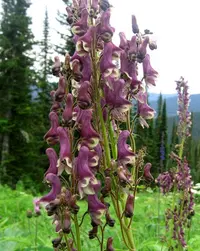
Its bluish to violet helmet-shaped flowers have a pale, whitish margin on the upper sepal, a feature that helps distinguish it from closely related aconites with more uniformly colored blooms.

Narrow regional distribution

Compared with many other aconite species, it has a relatively restricted native range, which makes accurate local floras and herbarium records important for confirming occurrences and monitoring wild populations.

FAQs about Aconitum leucostomum

All parts of this species are highly toxic to humans and animals if eaten, and sap can irritate skin. Always handle with gloves, avoid ingestion, and keep plants away from children, pets, and livestock.

Grow Healthy Plants with Botan Care

Keep your plants happy and healthy with plant identification, disease detection, and easy care guidance.

Botan plant care app — identify plants on mobile

Explore More Plants