Improve Root Resilience
Plant into deep, well-drained beds and lightly mound the soil 3–5 cm above grade to keep the crown dry and reduce losses from winter wet and root rot.

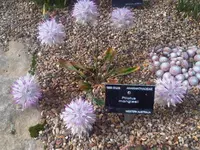
Ptilotus manglesii, commonly called pom pom, is a small perennial from dry regions of Western Australia. It belongs to the amaranth family and is adapted to harsh, sunny habitats. The plant forms low mounds of narrow leaves topped with rounded, feathery flower heads in soft pink or purple tones. These pom pom-like blooms appear above the foliage and give the plant a light, airy look. In cultivation, it prefers strong light, good air movement, and very well-drained, sandy or gravelly soil. Drought tolerance and dislike of wet roots are the main traits that influence how to care for pom pom successfully.

Care Difficulty
Moderate Care

Light Preference
Full Sun

Water Requirements
Low Water

Temperature Preference
Tropical / Frost Sensitive

Hardiness Zone
10–11

Soil Texture
Sandy, Loamy, Rocky

Soil pH
Slightly acidic (6.5–7.0), Neutral (7.0)

Soil Drainage
Well-drained

Fertilization
Minimal (feed rarely)
Scan your plant to receive care tips personalized for your specific plant
Available on iOS and Android
Ptilotus manglesii thrives in bright, open positions that mimic its sunny native habitat.
This drought-tolerant species prefers infrequent, deep watering and fast-draining soil.
This plant is adapted to warm, dry climates and performs best with mild winters and hot summers.
This species handles a wide humidity range and rarely needs special humidity management indoors.
Ptilotus manglesii prefers very free-draining, light soil that dries quickly between waterings.
This species grows well in containers when the pot and substrate are chosen to keep roots dry and aerated.
Ptilotus manglesii benefits from light, controlled feeding rather than rich, frequent fertilization.
Ptilotus manglesii responds well to light, timed pruning that maintains a compact, floriferous plant.
This species is usually grown in open, sandy ground; transplanting and pot moves should be infrequent and gentle.
Ptilotus manglesii is usually propagated from seed, with some success from soft tip cuttings under controlled conditions.
This warm-climate species dislikes prolonged frost and benefits from thoughtful winter preparation in cooler regions.

Plant Health Check
Not sure what's wrong with your plant? Check your plant's health inside the app.
This species is naturally restricted to nutrient-poor, sandy soils of southwestern Western Australia, where it grows on open sandplains and low scrub rather than in richer or forested habitats.
The flowers are arranged in small, rounded heads on short stalks, forming dense pom-pom–like inflorescences that distinguish it from taller, plume-forming Ptilotus relatives.
The floral bracts and outer parts of the flower head are covered in fine, silky hairs that create a silvery-pink sheen, which likely helps reflect intense sunlight and reduce water loss in its arid environment.
Lack of flowers usually relates to insufficient light, overly rich or wet soil, or too much nitrogen fertilizer. Ensure strong sun, sharp drainage, and avoid heavy feeding. Pinching spent blooms can also encourage new flower spikes.
Keep your plants happy and healthy with plant identification, disease detection, and easy care guidance.