


Black cohosh Identification (Actaea racemosa)

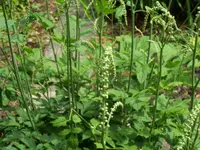
Recognize Black cohosh by its tall, leafless flowering stalks, often 3 to 6 feet (0.9 to 1.8 m) above the foliage, topped with narrow bottlebrush-like white flower spikes.

The leaves are large, twice or three-times divided, with sharply toothed leaflets, all arising from the base in a clump.

Actaea racemosa Identification

Identify Your Plant with Botan

Check your plant ID by uploading a clear photo to Botan.

Clear images work best. Avoid photos taken too close or too far away

Check the tall flower spikes and divided leaves of Actaea racemosa.

  • Forms a clump with upright, leafless flowering stems rising about 4-8 feet (1.2-2.4 m).
  • Leaves are large and compound, usually twice or three times divided into many sharply toothed leaflets.
  • Flowers sit in long, narrow racemes; each small white flower lacks petals and shows many prominent stamens.
  • Seed pods are dry follicles, often in small clusters, and each pod holds several seeds.

Use the flower spike plus the finely divided leaves as the fastest visual check.

Actaea racemosa shows clear visual shifts from low divided foliage to tall flowering stems.

  • Young plant: Forms a low clump of long-stalked, twice- to thrice-divided leaves; leaflets look coarse and sharply toothed, with no tall central flowering stem present.
  • Mature plant: Vegetative clumps appear broader and denser, with larger compound leaves rising from the base and stout upright stems that prepare the plant’s tall, narrow outline.
  • Flowering stage: A leafless upper stem extends well above the foliage, often reaching 4-6 feet (1.2-1.8 m), carrying slender bottlebrush-like white flower clusters above the leaves.
  • Fruiting stage: After bloom, the airy white spikes change to persistent narrow clusters of small dry fruits, while the tall stem remains obvious above the leafy base.

In spring, Actaea racemosa emerges as a mound of divided leaves. By early to midsummer, tall flower spikes rise well above the foliage, making the plant much easier to spot in woodland shade. After flowering, the spikes give way to dry seed heads that can persist into fall. Frost then kills back the top growth, leaving the plant absent above ground through winter.

A few woodland perennials can be mistaken for Black cohosh at a glance.

red baneberry(Actaea rubra)

Both have divided leaves and upright white flower clusters. Red baneberry is usually shorter, often 1-3 feet (30-90 cm), and its flower cluster is shorter and more oval, not the long narrow plume typical of this plant.

white baneberry(Actaea pachypoda)

It shares compound leaves and white flowers. White baneberry is best separated by its thick flower stalks and later white berries with dark tips on red stalks, while Actaea racemosa develops dry seed pods, not berries.

Actaea racemosa is native to eastern North America, from southern Ontario and Massachusetts south to Georgia and west to Missouri and Arkansas. That range helps separate it from similar garden perennials that are not native woodland species in the eastern US. In the wild it is most often found in rich deciduous woods, shaded ravines, and streamside forest edges. Finding it in moist, leafy woodland settings helps narrow identification better than appearance alone.

  • Poisonous plant parts: Actaea racemosa is considered poisonous if eaten. The root and berries are the main concern, and ingestion can affect humans and pets.
  • Handling caution: Normal skin contact is not the main risk for this species. The meaningful safety concern is ingestion rather than sap, hairs, or spines.

Check Your Plant ID

Use Botan to identify or confirm a plant from a photo, helping avoid mix-ups before labeling, buying, or planting.

FAQ

It produces dry follicles, not fleshy berries. These pod-like fruits are arranged along the same upright stalks as the flowers and later split open to release several seeds, aiding Black cohosh identification.

More Plant Identification Guides

Identify First. Learn What Comes Next.

Identify a plant from a photo with Botan, then get species-specific care information, safety notes, and common problems.

Botan app identifying a plant from a photo
Is Sugar Water Good for Plants?

4 min read · 14 Sept 2026

Is Sugar Water Good for Plants?

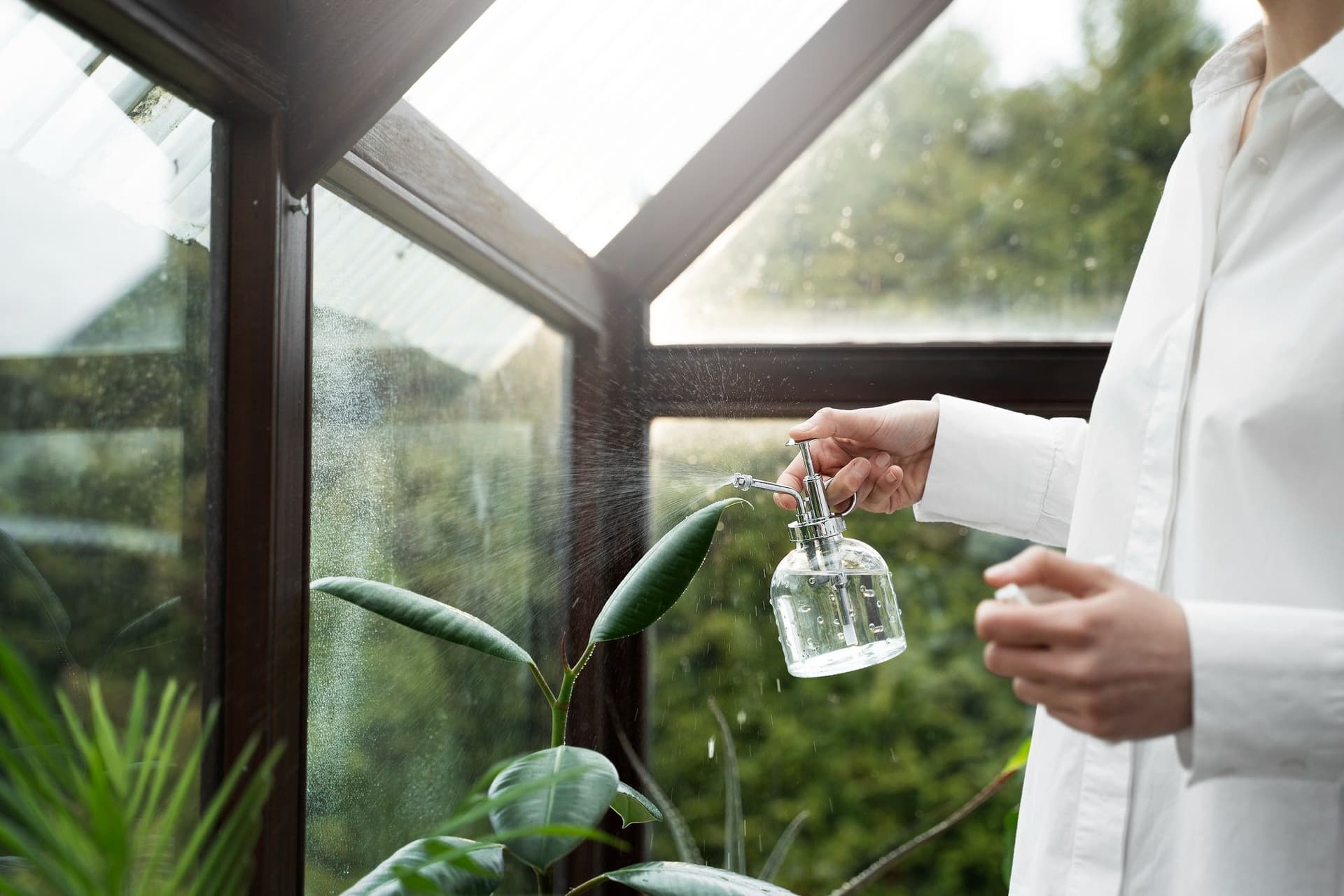
Sugar water may sound like an easy boost, but most rooted plants do not need extra sucrose. This guide explains how green tissues produce carbohydrates, when a sweetened solution can be useful, and why too much can cause problems.

Plant Care
Is Sugar Water Good for Plants?
How to Increase Humidity for Plants – 8 Simple Ways That Work

8 min read · 14 Aug 2026

How to Increase Humidity for Plants – 8 Simple Ways That Work

Dry indoor air stresses a lot of houseplants. You usually notice it first in the browning leaf tips. This guide describes 8 simple ways to raise the moisture around your plants, from humidifiers to pebble trays.

Plant Care
How to Increase Humidity for Plants – 8 Simple Ways That Work
12 Best Plants for Bathroom That Thrive in Humid Conditions

9 min read · 29 Sept 2026

12 Best Plants for Bathroom That Thrive in Humid Conditions

Discover the 12 best plants for bathroom spaces. Each pick comes with its own advantages, plus light, humidity, watering, and placement tips. Take a look and match the plant to your specific bathroom.

Plant Recommendations
12 Best Plants for Bathroom That Thrive in Humid Conditions