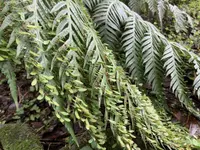
Actiniopteris semiflabellata Care

Actiniopteris semiflabellata

About Actiniopteris semiflabellata

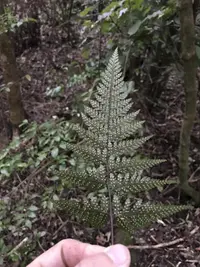
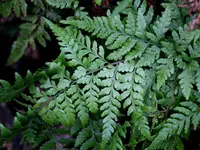
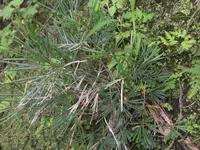
Actiniopteris semiflabellata is a small, clump-forming fern known for its fine, fan-shaped fronds that radiate from a central crown. Its compact size makes it suitable for containers and terrariums.

In nature, it occurs in rocky, often seasonally dry habitats in parts of Africa and nearby regions, where it tolerates high light and brief dry spells better than many ferns. This background makes it moderately forgiving if watering is not always perfect.

To care for Actiniopteris semiflabellata, provide bright, filtered light, a well-drained, gritty mix, and steady, light moisture without prolonged waterlogging.

Main Plant Requirements

Care Difficulty

Hard Care

Light Preference

Bright Indirect Light

Water Requirements

Keep Soil Moist

Temperature Preference

Tropical / Frost Sensitive

Hardiness Zone

11–12

Soil Texture

Sandy, Loamy, Organic-rich

Soil pH

Acidic (5.5–6.5), Slightly acidic (6.5–7.0)

Soil Drainage

Moist but well-drained

Fertilization

Light (every 4–6 weeks)

Get Personalized Care Plan

Scan your plant to receive care tips personalized for your specific plant

Available on iOS and Android

How to Care for the Actiniopteris semiflabellata

This fern prefers soft, filtered light similar to bright, sheltered rock crevices.

  • Provide bright, indirect light or light dappled shade for 6–8 hours per day; morning sun with afternoon shade is ideal in warm climates.
  • Tolerates partial shade, but fronds become sparse and elongated if light is too low; move slightly closer to the light source if growth is weak.
  • Protect Actiniopteris semiflabellata from harsh midday sun, which can scorch fronds and bleach color, especially in summer and in hot, dry sites.

This species prefers evenly moist conditions without prolonged drying or waterlogging.

  • Water when the top 1–2 cm of soil feels barely dry, aiming to keep the root zone lightly moist rather than wet.
  • Improve drainage with a gritty, well‑aerated mix so excess water drains within a few seconds after watering to reduce root rot risk.
  • In warmer months, dryness causes crisp, browning frond tips; in cooler seasons, reduce watering slightly and watch for yellowing, limp fronds as a sign of overwatering.

This fern is a warmth-loving species that dislikes both frost and extreme heat.

  • Aim for 65–80°F (18–27°C) for steady growth; short peaks to 85°F (29°C) are tolerated if humidity and shade are adequate.
  • Avoid temperatures below 50°F (10°C); frost will typically kill fronds, and repeated chills slow recovery and can damage the crown.
  • In hot summers above 85°F (29°C), provide extra shade, airflow, and slightly higher humidity to prevent frond scorch and stress to Actiniopteris semiflabellata.

This small fern prefers consistently higher humidity to maintain healthy fronds.

  • Aim for 60–80% humidity; it tolerates brief dips but prolonged air under 40% often causes browning tips.
  • Crisping frond edges, stalled growth, and frequent leaf shed indicate humidity stress rather than underwatering.
  • Increase humidity with a pebble tray under the pot, grouping plants closely, or using a small room humidifier nearby.

This fern needs a loose, moist, and well‑aerated substrate that never stays waterlogged.

  • Use a mix of 50–60% peat or coco coir, 20–30% fine compost, and 20–30% perlite or fine bark to keep the soil light and fibrous.
  • Ensure fast drainage so water runs through within seconds while the mix still holds gentle, even moisture around the roots.
  • Target a slightly acidic pH around 5.5–6.5, avoiding strongly alkaline mixes that can lock up micronutrients and stunt growth.
  • Improve aeration by adding extra perlite or fine orchid bark and avoid heavy garden soil or pure sand that compacts or dries unevenly.

This species is well suited to container growing due to its compact, shallow root system.

  • Choose a wide, shallow pot to match the fern’s spreading, surface‑level roots and prevent deep, unused wet zones.
  • Use a pot material that slightly breathes, such as unglazed clay, if the mix tends to stay wet longer than 3–4 days.
  • Ensure drainage holes are unobstructed and elevate the pot slightly so excess water can exit quickly after each watering.

This fern benefits from light feeding in active growth but is sensitive to excess nutrients.

  • Use a balanced liquid fertilizer (around 10-10-10) diluted to 1/4–1/2 strength for Actiniopteris semiflabellata.
  • Apply every 4–6 weeks during spring and summer when new fronds are forming.
  • Skip fertilizer on dry soil; water first, then feed to avoid root burn.
  • In autumn and winter, reduce to 1 very light feeding or stop entirely if growth is minimal.

Pruning focuses on hygiene rather than shaping, since this fern maintains a naturally compact form.

  • In late winter or early spring, remove fully brown, dead, or diseased fronds at the base.
  • Trim torn or pest-damaged leaflet tips with clean, sharp scissors to limit spread of problems.
  • Thin only severely crowded, weak fronds to improve air movement around the plant center.
  • Avoid heavy cutting into healthy green tissue, which can stress slow-growing fronds.

This small fern prefers a stable root environment and only needs infrequent repotting.

  • Repot every 2–3 years or when roots circle the pot base or exit drainage holes.
  • Plan repotting in early spring, just before the main flush of new fronds begins.
  • Move into a container only 2–3 cm wider, using a loose, well-drained, organic-rich mix.
  • Gently tease outer roots, keep the crown at the same level, water thoroughly, then shade for several days to limit stress.

Propagation is possible but slow, usually done by spores rather than division.

  • Collect ripe, brown spores from the undersides of mature fronds in late summer.
  • Sow spores on sterile, fine, moist peat-based mix and cover with clear plastic or glass.
  • Maintain 70–75°F, high humidity, and bright, indirect light for several weeks to months.
  • Keep the surface just moist until prothalli and then tiny fern plants form, then ventilate gradually.

This fern is frost sensitive and needs mild, protected conditions in winter.

  • Keep temperatures above 55°F; avoid exposure to frost or cold drafts.
  • For container plants, move indoors or to a greenhouse before night temperatures drop near 50°F.
  • Provide bright, indirect light and slightly drier soil, letting the top surface partially dry between waterings.

Care Tips

Shallow potting

Use a wide, shallow pot and keep the rhizomes close to the surface, as this fern roots superficially and sulks if buried too deep.

Mineral water quality

If fronds develop brown tips despite correct humidity, switch to rainwater, distilled, or reverse-osmosis water to avoid damage from hard tap water and accumulated salts.

Gentle air movement

Provide soft, indirect air circulation from a nearby fan on low to reduce fungal issues on dense fronds without exposing the plant to drafts.

Targeted pest checks

Inspect the tight fan bases and soil surface with a hand lens every 2–3 weeks for scale or spider mites, since pests often hide where the fronds join the crown.

Controlled division

Only divide clumps in late spring when multiple healthy crowns fill the pot, and split into 2–3 sections with a sterile knife to reduce stress when growing Actiniopteris semiflabellata.

Common Pests and Diseases

Scale insects

This pest feeds on fronds and rachises, causing yellowing, stunting, and sticky honeydew on the fine fan-like foliage.

Solution

Isolate the plant, then gently wipe fronds and stems with a cotton pad dipped in diluted insecticidal soap or neem oil, repeating every 7–10 days until no new scales appear; improve air movement and avoid overfertilizing, which encourages soft, vulnerable growth.

Spider mites

These insects thrive on the finely divided fronds in warm, dry air, causing pale stippling, dull foliage, and very fine webbing along the pinnae tips.

Solution

Raise humidity, rinse the fronds thoroughly with lukewarm water (including the underside), and follow with regular applications of insecticidal soap, ensuring consistent moisture and avoiding hot, direct sun that stresses the fern.

Mealybugs

This pest hides in crown crevices and along the frond bases, appearing as white cottony clusters that sap plant vigor and deform new growth.

Solution

Remove visible insects with a cotton swab dipped in isopropyl alcohol, then treat the plant with neem oil or insecticidal soap at 7–10 day intervals, paying special attention to the crown and any tight folds where mealybugs shelter.

Fungal leaf spot

This disease produces small brown or black spots along the delicate frond segments, sometimes with a yellow halo and gradual tissue thinning or dieback.

Solution

Remove and discard affected fronds, increase air circulation around the plant, keep water off the foliage, and use a labeled ornamental fern fungicide if spotting continues, while maintaining moderate, not stagnant, humidity to balance Actiniopteris semiflabellata care.

Interesting Facts

Miniature fan fronds

This fern forms very small, half-fan fronds, often only 2–5 cm long, with the leaf segments clustered at the tip of a wiry stipe, giving the plant a finely tufted, palm-like appearance at a tiny scale.

Rock crevice specialist

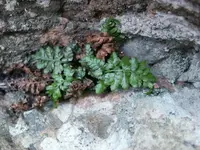
In nature it often grows in shallow soil pockets and rock crevices on limestone or other well-drained substrates, showing a strong adaptation to exposed, rocky habitats in warm regions of Africa and Asia.

Seasonal dormancy strategy

In parts of its range with a pronounced dry season, the foliage can die back almost completely, with the plant surviving as a compact rootstock until moisture returns, a strategy that helps it tolerate periodic drought.

FAQs about Actiniopteris semiflabellata

Brown leaf tips or margins usually result from low humidity, underwatering, or accumulated salts from fertilizer. Flush the soil, trim crispy parts, increase ambient humidity, and keep the potting mix lightly moist but never soggy.

Grow Healthy Plants with Botan Care

Keep your plants happy and healthy with plant identification, disease detection, and easy care guidance.

Botan plant care app — identify plants on mobile

Explore More Plants