Mark Dormant Clumps
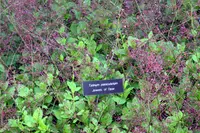
Label planting spots with durable tags in late spring so dormant crowns are not disturbed by digging or heavy mulching once foliage has fully died back.

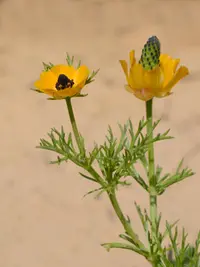
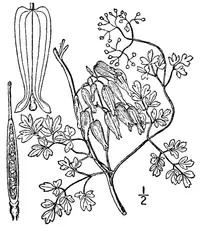
Adonis dentata is a small, cold-hardy perennial from open meadows and steppe-like habitats in parts of Eurasia. It forms low clumps of finely divided, feathery foliage. Bright yellow, daisy-like flowers appear in early spring, often before many other plants start growing. The blooms are held on short stems above the foliage, giving a compact, tidy look in rock gardens or sunny borders. Growth is slow and the plant prefers stable conditions, which can make it a bit challenging to establish. It generally favors full sun, cool conditions, and well-drained, slightly moist soil. Understanding how to care for Adonis dentata helps keep it long-lived and floriferous.

Care Difficulty
Moderate Care

Light Preference
Full Sun

Water Requirements
Moderate Water

Temperature Preference
Cool Climate

Hardiness Zone
4–7

Soil Texture
Sandy, Loamy, Organic-rich

Soil pH
Acidic (5.5–6.5), Slightly acidic (6.5–7.0)

Soil Drainage
Well-drained

Fertilization
Minimal (feed rarely)
Scan your plant to receive care tips personalized for your specific plant
Available on iOS and Android
This spring-flowering perennial prefers bright, cool conditions similar to open woodland edges.
This plant needs steady moisture in spring, then drier conditions after flowering and summer dormancy begin.
This cold-hardy perennial prefers cool to mild conditions and naturally experiences cold winters and fresh springs.
This species grows well in typical outdoor humidity and rarely needs special humidity management.
This species prefers light, well-aerated soil that stays moist yet drains freely.
This species can be grown in containers if the pot mimics its cool, free-draining garden conditions.
This spring-flowering perennial needs only modest feeding to flower well in most garden soils.
This plant needs only minimal pruning to stay healthy and compact.
This species is best treated as a small garden perennial that dislikes frequent disturbance.
Propagation is usually done from seed, as division can disturb the plant’s delicate root system.
This hardy perennial tolerates typical outdoor winter conditions in much of its suitable range and needs little intervention.

Plant Health Check
Not sure what's wrong with your plant? Check your plant's health inside the app.
This species is a small spring-flowering annual of dry Eurasian steppes and open fields, adapted to short growing seasons and low to moderate rainfall.
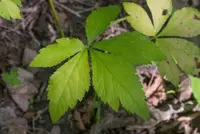
Its leaves are finely divided into narrow segments, creating a delicate, fern-like texture that helps reduce water loss and withstand strong steppe winds.
It typically flowers in early spring with bright scarlet to deep red blooms, taking advantage of cool, moist conditions before surrounding grasses fully develop.
Lack of flowers usually comes from insufficient winter chill, too much shade, or nutrient-rich, heavy soil. This species prefers a cold rest, full sun in spring, and relatively lean, well-drained ground for reliable flowering.
Keep your plants happy and healthy with plant identification, disease detection, and easy care guidance.