Label Dormant Sites
Mark the planting spots with durable labels in late spring as the foliage dies back so you do not accidentally disturb or dig up the tubers during summer and autumn soil work.

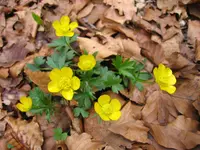
Wood buttercup (Ranunculus tuberosus) is a small, tuber-forming perennial from the buttercup family. It typically grows low to the ground with delicate stems and bright yellow flowers.
In nature it occurs in open woodlands, meadows, and grassy slopes in parts of Europe, often favoring light, well-drained soils. Its growth is seasonal, with foliage and flowers appearing in cooler months and dying back when conditions become too dry or hot.
This species can be moderately challenging, as it dislikes waterlogged soil and prolonged drought. Gardeners who learn how to care for Wood Buttercup usually focus on providing steady moisture, good drainage, and gentle light conditions.

Care Difficulty
Moderate Care

Light Preference
Partial Sun

Water Requirements
Moderate Water

Temperature Preference
Cool Climate

Hardiness Zone
7–9

Soil Texture
Loamy, Sandy, Organic-rich

Soil pH
Acidic (5.5–6.5), Slightly acidic (6.5–7.0)

Soil Drainage
Moist but well-drained

Fertilization
Minimal (feed rarely)
Scan your plant to receive care tips personalized for your specific plant
Available on iOS and Android
This species prefers cool, bright conditions with gentle sun rather than intense heat.
This tuberous perennial needs steady moisture in the growing season but dislikes waterlogged soil.
This plant prefers cool, mild climates and does best without temperature extremes.
This species grows best in moderate humidity but usually adapts to typical indoor levels.
Provide loose, well-drained, moderately fertile soil to protect the tubers from rot and compaction.
This species can grow successfully in containers if drainage and tuber space are managed carefully.
Ranunculus tuberosus benefits from modest, targeted feeding during its active spring growth.
Ranunculus tuberosus needs only light pruning to keep plants tidy and flowering well.
This species is usually grown in the ground and is moved mainly by lifting and transplanting its tubers.
New Ranunculus tuberosus plants are most often produced by division of tubers, with seeds used less commonly.
In most temperate climates this species is fairly cold hardy and needs only modest winter attention.

Plant Health Check
Not sure what's wrong with your plant? Check your plant's health inside the app.
This species is naturally associated with light, open Mediterranean woodlands and scrub, where it often grows in clearings or on rocky slopes with seasonally moist but well-drained soils.
It forms a small tuberous root system that allows it to store resources and survive the dry, warm summers typical of many of its native Mediterranean habitats.
It usually flowers in early spring, completing much of its visible life cycle before the canopy of surrounding trees and shrubs fully leafs out and reduces light at ground level.
This species spreads moderately by seed and short underground tubers. In suitable garden soil it can form small colonies but rarely becomes a nuisance. Periodic division and removal of unwanted seedlings usually keeps clumps within bounds.
Keep your plants happy and healthy with plant identification, disease detection, and easy care guidance.