Aechmea melinonii Care

Aechmea melinonii

About Aechmea melinonii

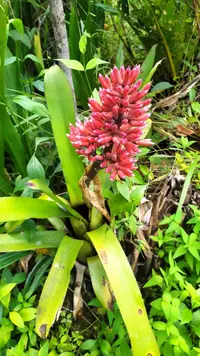
Aechmea melinonii is a tropical bromeliad that grows as a rosette of stiff, arching leaves with a central tank that can hold water. It often forms clumps over time, creating a layered, architectural look.

This species is native to northern South America, where it typically grows as an epiphyte on trees or occasionally on rocks. Its bold foliage and tall flower spikes make it a striking ornamental plant for warm climates and bright indoor spaces.

The plant is considered relatively easy for patient growers, as it tolerates some neglect and adapts to indoor humidity and light variations. Knowing how to care for Aechmea melinonii mainly involves providing bright, indirect light, moderate moisture, and a free-draining, airy substrate.

Main Plant Requirements

Care Difficulty

Moderate Care

Light Preference

Partial Shade

Water Requirements

Moderate Water

Temperature Preference

Tropical / Frost Sensitive

Hardiness Zone

11–12

Soil Texture

Sandy, Loamy, Organic-rich

Soil pH

Acidic (5.5–6.5)

Soil Drainage

Well-drained

Fertilization

Light (every 4–6 weeks)

Get Personalized Care Plan

Scan your plant to receive care tips personalized for your specific plant

Available on iOS and Android

How to Care for the Aechmea melinonii

This bromeliad prefers bright, filtered light with limited direct sun exposure.

  • Provide 4–6 hours of bright, indirect light daily, such as dappled shade under taller plants or behind a sheer curtain if near a window.
  • Allow gentle morning sun but protect Aechmea melinonii from harsh midday or afternoon sun, which can bleach or scorch the leaves.
  • In winter, move the plant to a brighter position or closer to a window to compensate for shorter days, watching that foliage color stays firm and not pale.

Watering focuses on both the central tank and the potting mix without letting either stay stagnant or bone dry.

  • Keep the rosette tank 1/2–3/4 full with fresh water and flush it every 1–2 weeks to prevent salt and algae buildup.
  • Let the top 2–3 cm of mix dry before watering the roots again; use a fast-draining bromeliad or orchid-style mix so excess water runs freely away.
  • Reduce watering in cooler months, watching for wrinkling or curling leaves as a sign of underwatering and brown, mushy bases as an indicator of overwatering.

This species prefers warm, stable temperatures typical of tropical and subtropical conditions.

  • Aim for 65–80°F (18–27°C) for active growth, avoiding sudden temperature swings that can stress the leaves and roots.
  • Protect the plant from cold; growth slows below 60°F (16°C), and tissue damage is likely below 45°F (7°C), with complete loss possible at freezing or frost.
  • In hot periods above 90°F (32°C), provide shade, extra air movement, and slightly higher humidity to prevent leaf scorch and excessive water loss from the rosette.

This bromeliad prefers moderately humid air but tolerates typical indoor levels if not extremely dry.

  • Aim for 40–60% humidity; it tolerates brief dips lower but prolonged very dry air can slow growth.
  • Crisping leaf tips or dull, wrinkled foliage indicate humidity stress in Aechmea melinonii.
  • Increase humidity with a nearby pebble tray or grouping plants, rather than misting the rosette, to avoid rot.

This species prefers a loose, airy, fast-draining mix that mimics epiphytic conditions.

  • Use a chunky mix of orchid bark, coarse perlite or pumice, and a small amount of peat or coco coir for moisture retention.
  • Ensure rapid drainage; water should flow through in seconds, leaving the mix slightly moist but never waterlogged.
  • A slightly acidic to neutral pH around 5.5–7 suits Aechmea melinonii, which is tolerant but not adapted to alkaline substrates.
  • Improve aeration by avoiding fine garden soil and adding extra bark or perlite if the mix feels dense or compacts after watering.

This species is well suited to container growing due to its compact root system and rosette form.

  • Choose a heavy, stable pot if the rosette becomes tall and top-heavy to prevent tipping in wind or from accidental bumps.
  • Select a pot only 2–4 in wider than the root ball so the mix dries predictably and does not stay wet for long periods.
  • Use breathable materials like terracotta if the environment is cool or shaded, as they help offset slow evaporation from the dense mix.

This bromeliad benefits from light feeding but is sensitive to excess salts, so use mild products and dilute well.

  • Use a balanced NPK liquid fertilizer at 1/4–1/2 strength, applied to the soil or very lightly to the leaf tank, never into the central cup in high concentration.
  • Feed every 4–6 weeks during spring–summer while Aechmea melinonii is actively growing under bright, warm conditions.
  • Stop or greatly reduce feeding in fall–winter, especially in low light or cool rooms, to avoid weak, stretched growth.
  • Organic options like dilute compost tea or a gentle slow-release fertilizer in the potting mix can provide a steady, low-level nutrient supply.

Pruning needs are minimal and mainly focus on tidiness and directing new growth.

  • In any season, remove dry, damaged, or rotting leaves at the base with clean, sharp scissors or pruning snips to improve airflow.
  • After the flower spike fades and dries, cut it off near the base to keep the plant neat and encourage energy into offsets.
  • Do not cut healthy central leaves, as this can deform the rosette and shorten the plant’s functional life.
  • Thin out overcrowded offsets only when needed, either removing them for propagation or to maintain the desired clump size.

This species grows slowly and has a compact root system, so repotting is infrequent but still useful over time.

  • Check every 2–3 years; repot when roots circle the pot, mix breaks down, or growth slows despite good light and watering.
  • Plan repotting for spring or early summer, when warmth and brighter light help the plant recover from root disturbance.
  • Choose a pot only 2–5 cm wider with excellent drainage and use a very airy bromeliad or orchid-style mix to prevent waterlogging.
  • After repotting, water lightly, keep humidity moderate, and shade from harsh sun for 1–2 weeks to reduce root stress.

New plants are most reliably produced from offsets, which form around the base of the mature rosette.

  • Separate offsets in spring–summer when they reach about 1/3–1/2 the height of the mother plant and have visible roots.
  • Use a clean, sharp knife to cut pups away, keeping a small piece of basal stem and attached roots when possible.
  • Plant each pup in a small pot with very free-draining bromeliad mix, keeping the base just above the medium surface.
  • Provide bright, indirect light, warm temperatures (70–80°F), and lightly moist mix until roots establish and new leaves appear.

This tropical bromeliad is frost-sensitive and needs protection in regions with cold winters.

  • Keep plants above 50°F; exposure near or below freezing can damage foliage and kill the central growing point.
  • Move container-grown Aechmea melinonii indoors before night temperatures fall below 55°F, placing it in bright, indirect light.
  • Reduce watering in winter, allowing the mix to dry slightly between waterings, and avoid cold water on the central rosette.

Care Tips

Tank water hygiene

Flush the central cup with fresh, low-mineral water every 2–3 weeks, then refill it, to prevent salt buildup and mosquito larvae in this bromeliad’s water reservoir.

Offset management

When pups reach about one-third to half the height of the mother rosette, cut them off with a sterile knife and pot individually to maintain an attractive clump and renew aging plants.

Stable container choice

Use a wide, heavy pot or add a top layer of decorative gravel to stabilize the shallow root system and prevent tall rosettes from tipping over, especially in high-traffic areas.

Light acclimation routine

When moving plants from indoor light to brighter outdoor positions, increase light exposure over 7–10 days to avoid leaf scorch and maintain good foliage color while growing Aechmea melinonii.

Salt and chemical control

Use collected rainwater or low-TDS filtered water if possible and avoid systemic insecticides containing imidacloprid in the cup, as both excess salts and some chemicals can damage tank-forming bromeliads over time.

Common Pests and Diseases

Mealybugs

This pest feeds on the leaf bases and sheltered areas of the rosette, sucking sap and leaving cottony white clusters. Symptoms include sticky honeydew, sooty mold on leaves, and slowed growth.

Solution

Isolate the plant, then remove visible colonies with cotton swabs dipped in isopropyl alcohol and rinse the rosette with a strong but gentle stream of lukewarm water. For heavier infestations, apply a systemic insecticide labeled for bromeliads or use repeat applications of insecticidal soap, keeping chemicals out of the central tank as much as possible.

Scale insects

These insects attach to the stiff leaves and leaf sheaths, appearing as small, flat or dome-shaped bumps. Symptoms include yellow spotting, dull foliage, and sticky honeydew around the plant.

Solution

Manually scrape or wipe off scales with a soft cloth or cotton pad dipped in isopropyl alcohol, taking care around the leaf bases. Follow with 2–3 treatments of horticultural oil or insecticidal soap at 7–10 day intervals, and improve air movement around the plant to make it less favorable for future scale buildup.

Tank water rot

This disease develops when water in the central cup is stagnant for long periods, especially in cool or low-light conditions, leading to soft, browning tissue at the rosette center. Symptoms include foul odor, collapsing inner leaves, and rapid decline from the crown inward.

Solution

Immediately flush out and discard all old tank water, trim away any mushy or brown central leaves, and let the tank remain dry for several days while keeping the root zone slightly moist. After recovery, maintain only fresh, non-chlorinated water in the cup, flush it at least weekly, and avoid keeping water in the tank in cool, dark conditions to support healthy Aechmea melinonii care.

Fungal leaf spots

This disease appears as small brown or tan spots with darker margins on the thick leaves, often starting where water sits for long periods. Symptoms include expanding lesions and occasional yellow halos around affected areas.

Solution

Remove and discard heavily spotted leaves, then improve airflow and avoid overhead misting that keeps leaves wet for many hours. If spots continue to spread, apply a broad-spectrum fungicide labeled for ornamental foliage plants, and water early in the day so the rosette can dry before night.

Aphids

These insects sometimes cluster on emerging flower spikes and tender inner leaves, sucking sap and distorting new growth. Symptoms include sticky honeydew, deformed bracts or flowers, and attraction of ants around the plant.

Solution

Rinse aphids off with a firm stream of water, focusing on the inflorescence and inner rosette. If populations rebound, use insecticidal soap or a neem oil spray directed at the undersides of leaves and flower stalks, repeating every 5–7 days until no new aphids appear.

Interesting Facts

Water-holding tank habit

This species forms a tight rosette that holds water between the stiff leaves, creating a small reservoir that supports aquatic invertebrates and provides moisture and nutrients to the plant in its native habitats of northern South America.

Variable growth forms

Aechmea melinonii occurs both as an epiphyte on trees and as a terrestrial plant in open, seasonally flooded areas, showing unusual ecological flexibility for a bromeliad.

Brightly colored bracts

In bloom, it produces a tall, upright inflorescence with vivid yellow to orange bracts and contrasting red stalks, which are adapted to attract hummingbirds as primary pollinators in lowland tropical forests.

Botan icon

Did you know?

In some populations along Amazonian river floodplains, large clumps of Aechmea melinonii can form dense stands that help stabilize soil and provide shelter and microhabitats for frogs, insects, and small invertebrates, making this bromeliad a structural component of the local ecosystem.

FAQs about Aechmea melinonii

This species usually flowers once when mature, then slowly declines while offsets develop. Lack of blooms often results from immaturity, insufficient light, or major stress. Patience, stable conditions, and allowing pups to reach full size usually solve the issue.

Grow Healthy Plants with Botan Care

Keep your plants happy and healthy with plant identification, disease detection, and easy care guidance.

Botan plant care app — identify plants on mobile

Explore More Plants