Rhizome Containment
Install a 20–30 cm deep root barrier or plant in a large sunken container with drainage holes to keep spreading rhizomes confined and prevent the colony from invading nearby beds.

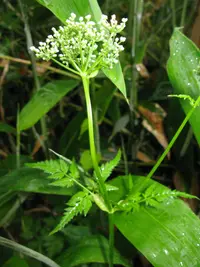
Aegopodium alpestre is a herbaceous perennial from mountain and subalpine regions of Europe and western Asia, related to the better-known ground elder. It forms low clumps with divided, fern-like leaves and upright stems that carry small white flower clusters in summer, giving a light, airy look.
In nature it usually grows in cool meadows, forest clearings, and moist slopes with reasonably fertile, well-drained soil. Its preference for cooler conditions and consistent moisture means it can be more demanding in warmer, drier gardens, so learning how to care for Aegopodium alpestre helps keep it attractive and healthy.

Care Difficulty
Moderate Care

Light Preference
Partial Shade

Water Requirements
Moderate Water

Temperature Preference
Cool Climate

Hardiness Zone
4–7

Soil Texture
Loamy, Silty, Organic-rich

Soil pH
Acidic (5.5–6.5), Slightly acidic (6.5–7.0)

Soil Drainage
Moist but well-drained

Fertilization
Minimal (feed rarely)
Scan your plant to receive care tips personalized for your specific plant
Available on iOS and Android
This woodland perennial prefers cool, filtered light conditions that mimic its native forest habitat.
This species favors evenly moist, cool soil but does not tolerate standing water for long periods.
This hardy perennial thrives in cool to mild climates and tolerates substantial winter cold once established outdoors.
This woodland perennial handles typical outdoor humidity and rarely needs special humidity management.
This species prefers moist, cool, well‑structured soil that stays evenly damp but not waterlogged.
This species can be grown in containers outdoors, but the pot must compensate for its spreading root habit.
This woodland perennial is modest in its nutrient needs and often grows well in reasonably fertile soil without heavy feeding.
Simple pruning keeps Aegopodium alpestre dense, healthy, and within its intended area.
This species is usually grown in the ground, so transplanting clumps is more common than container repotting.
New plants are most often produced by division, which also helps manage spread and vigor in established patches.
This hardy perennial usually needs little special winter care in temperate climates.

Plant Health Check
Not sure what's wrong with your plant? Check your plant's health inside the app.
This species is native to moist, cool mountain habitats of central and southern Europe, where it grows along forest streams, wet meadows, and subalpine clearings rather than in dry or lowland sites.
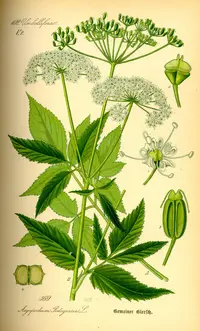
Its leaves are more delicately divided and lace-like than those of the related ground elder Aegopodium podagraria, forming softer clumps that reflect its adaptation to cooler, higher-elevation conditions.
The flat-topped white flower umbels provide easily accessible nectar and pollen to a range of small flies, beetles, and solitary bees typical of montane forest edges.
This species spreads by creeping rhizomes and can form dense ground-covering patches. In favorable conditions it may become aggressive, so gardeners often use edging, root barriers, or confined beds to keep it within bounds.
Keep your plants happy and healthy with plant identification, disease detection, and easy care guidance.