Staggered Succession Sowing
Sow small batches every 10–14 days instead of one large planting to keep a continuous supply of tender leaves and avoid plants bolting all at once in warming weather.

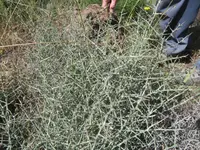
Lactuca orientalis is a wild lettuce species from dry, open habitats in parts of Europe and western Asia. It is a herbaceous plant with upright stems and narrow, often gray-green leaves.
The plant typically forms loose clumps and produces small, pale flower heads that resemble other lettuce relatives. It is adapted to poor, often rocky soils and seasonal drought.
These natural traits make it relatively undemanding where winters are cool and summers are dry. Light, well-drained soil and full sun exposure usually suit it best.
Gardeners who want to care for Lactuca orientalis should understand that it behaves more like a short-lived wildflower than a lush leafy vegetable crop.

Care Difficulty
Moderate Care

Light Preference
Full Sun

Water Requirements
Moderate Water

Temperature Preference
Cool Climate

Hardiness Zone
5–8

Soil Texture
Sandy, Loamy, Organic-rich

Soil pH
Acidic (5.5–6.5), Slightly acidic (6.5–7.0)

Soil Drainage
Well-drained

Fertilization
Minimal (feed rarely)
Scan your plant to receive care tips personalized for your specific plant
Available on iOS and Android
This species prefers bright, open conditions similar to sunny steppe or meadow habitats.
This plant prefers consistently moist but not waterlogged soil, especially during active growth.
This species prefers cool to mild conditions and declines in extreme heat or hard frost.
This species prefers moderate humidity but usually copes well with typical household air.
Lactuca orientalis prefers loose, well-drained, moderately fertile soil to support fast, shallow root growth.
This species is suitable for container growing when provided with enough root space and rapid drainage.
This wild lettuce is adapted to low-nutrient soils and usually needs only light feeding in cultivation.
Pruning for Lactuca orientalis is minimal and mainly aims to keep plants tidy and healthy.
This species is more often grown in open ground, so focus on careful transplanting rather than frequent repotting.
Propagation of Lactuca orientalis is usually done from seed for maintaining genetic diversity and local adaptation.
Lactuca orientalis is generally cold hardy in temperate climates and needs little specific winter care in the ground.

Plant Health Check
Not sure what's wrong with your plant? Check your plant's health inside the app.
Lactuca orientalis is naturally associated with dry steppe and semi-desert habitats across parts of Eastern Europe, the Caucasus, Central Asia, and the Middle East, where it grows on stony and sandy slopes with low organic matter.
This species develops a relatively deep taproot for its size, which allows it to access water from deeper soil layers and tolerate prolonged dry periods that are typical in steppe environments.
Like many members of the genus Lactuca, it produces a white milky latex in its stems and leaves, which acts as a defense against herbivores and can make the plant taste bitter to grazing animals.
Growth is relatively quick under cool to mild conditions. From seed, rosettes usually form within a few weeks, and plants often reach flowering size in a single season if moisture and nutrients are adequate.
Keep your plants happy and healthy with plant identification, disease detection, and easy care guidance.