Rotate for symmetry
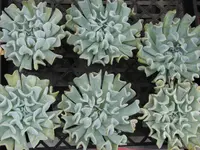
Turn the pot 90° every 1–2 weeks during active growth so rosettes develop evenly and stems do not lean or twist toward the strongest light source.

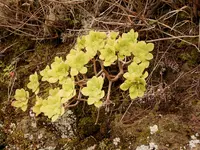
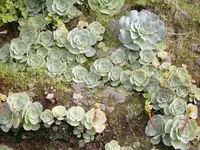
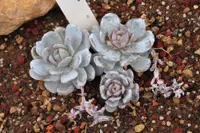
Aeonium goochiae is a small, shrubby succulent from the Canary Islands, valued for its compact rosettes and branching habit. It typically forms clusters of fleshy, spoon-shaped leaves on woody stems.
In cultivation it is usually grown in pots or rock gardens, where good light and sharp-draining, gritty soil help maintain tight, healthy rosettes. It dislikes prolonged cold and excess moisture, so protection from frost and heavy rain is important.
Because it is relatively slow-growing and sensitive to overwatering, how to care for Aeonium goochiae focuses on controlled watering and bright, indirect light rather than frequent feeding or constant moisture.

Care Difficulty
Moderate Care

Light Preference
Partial Sun

Water Requirements
Low Water

Temperature Preference
Warm Climate

Hardiness Zone
10–11

Soil Texture
Sandy, Loamy, Rocky

Soil pH
Slightly acidic (6.5–7.0), Neutral (7.0)

Soil Drainage
Well-drained

Fertilization
Minimal (feed rarely)
Scan your plant to receive care tips personalized for your specific plant
Available on iOS and Android
This succulent prefers bright, gentle sun with protection from intense afternoon exposure.
This plant prefers infrequent, deep watering that allows the soil to dry between soakings.
This succulent favors mild, frost-free conditions and dislikes temperature extremes.
This succulent tolerates a wide humidity range and rarely needs special humidity management indoors.
Aeonium goochiae needs a very fast-draining, mineral-rich mix to prevent root problems.
This species is very suitable for container growing, especially where winters are cool or wet.
This succulent needs only light feeding to support compact, healthy growth.
Pruning is mainly used to keep this aeonium neat and structurally sound.
Repotting is infrequent and mainly needed when the plant outgrows or depletes its container.
Propagation is commonly done from stem and rosette cuttings for clonal plants.
Cold sensitivity means some winter management is important, especially in temperate climates.

Plant Health Check
Not sure what's wrong with your plant? Check your plant's health inside the app.
This species is naturally restricted to the island of La Gomera in the Canary Islands, where it grows on rocky slopes and cliffs in a mild, ocean‑influenced climate.
It forms tight, flat rosettes of smooth green leaves that can show reddish tones under strong light, a combination used by botanists to distinguish it from closely related Canary Island aeoniums.
Taxonomically it belongs to a small, closely related complex within the genus Aeonium that has been the subject of detailed studies on island speciation, helping researchers understand how new species evolve on oceanic islands.
Brown tips or edges usually result from underwatering, intense heat, or low humidity combined with strong sun. Check soil moisture, reduce heat stress, and avoid sudden environmental changes. Also protect from hot, drying winds to prevent desiccation.
Keep your plants happy and healthy with plant identification, disease detection, and easy care guidance.