Winter growth shift
Treat this species as winter-growing by slightly increasing water and light exposure from late fall to early spring while reducing both during hot midsummer dormancy to prevent rosette collapse.

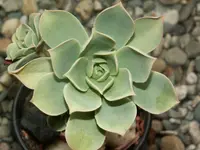
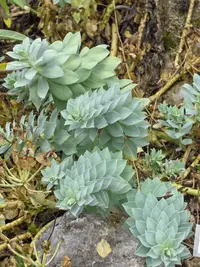
Aeonium lancerottense is a rosette-forming succulent shrub from the Canary Islands, valued for its architectural form and drought tolerance. It develops tight, rounded rosettes of fleshy green leaves on branching, woody stems, creating a compact, sculptural look in pots or rock gardens.
In habitat it grows on rocky, exposed slopes, which explains its preference for bright light and fast-draining, low-organic soil. It generally prefers dry conditions with infrequent watering, which makes it suitable for growers who may forget regular irrigation.
Once its basic needs are met, it is a relatively forgiving plant. Understanding how to care for Aeonium lancerottense mainly involves controlling water, avoiding frost, and providing enough sun without extreme heat stress.

Care Difficulty
Moderate Care

Light Preference
Full Sun

Water Requirements
Low Water

Temperature Preference
Tropical / Frost Sensitive

Hardiness Zone
10–11

Soil Texture
Sandy, Loamy, Rocky

Soil pH
Slightly acidic (6.5–7.0), Neutral (7.0)

Soil Drainage
Well-drained

Fertilization
Minimal (feed rarely)
Scan your plant to receive care tips personalized for your specific plant
Available on iOS and Android
This Canary Islands succulent prefers bright, gentle sun with some protection from harsh midday exposure.
This species prefers infrequent, thorough watering with time for the soil to dry between soakings.
This succulent favors mild conditions and is sensitive to hard frost and extreme heat.
This species handles typical indoor humidity well, so moisture around the roots is more critical than air humidity.
This succulent prefers a very fast-draining, mineral-rich medium that dries quickly between waterings.
This species grows well in containers when the pot supports fast drainage and a stable root zone.
Feeding is modest but helpful for Aeonium lancerottense grown in containers during its active season.
Pruning is simple and mainly used to keep Aeonium lancerottense compact and healthy.
Container-grown plants need infrequent repotting, while garden plants benefit from careful transplanting when overcrowded.
Propagation is commonly done from stem cuttings to produce identical plants.
This succulent is frost tender and needs protection in climates with freezing winters.

Plant Health Check
Not sure what's wrong with your plant? Check your plant's health inside the app.
This species is naturally restricted to the island of Lanzarote in the Canary Islands, where it grows on dry cliffs and rocky slopes, often anchored in very shallow volcanic substrate.
Unlike some solitary aeoniums, this plant forms many-branched shrubs with multiple rosettes at the tips, an adaptation that helps it capture more light and recover after partial damage in its harsh habitat.
In its native climate it does most of its active growth during the cooler, wetter winter months and can partially pause growth or shed lower leaves in the dry summer, which helps reduce water loss in a Mediterranean-type climate.

Genetic and morphological studies indicate that this species is part of an evolutionary radiation of Aeonium in the Canary Islands, where repeated isolation on different islands has produced many closely related but geographically restricted endemics.
Yellow, soft leaves usually come from excess moisture and poor drainage, sometimes combined with low light. Check for soggy soil, reduce watering, improve drainage, and remove badly damaged leaves to limit rot spreading along the stem.
Keep your plants happy and healthy with plant identification, disease detection, and easy care guidance.