Rotate for symmetry
Turn the pot 90° every 1–2 weeks during active growth so rosettes develop evenly and do not lean or twist toward a single light source.

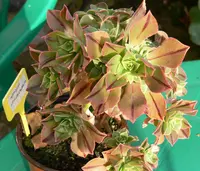
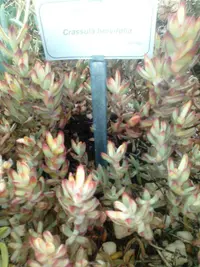
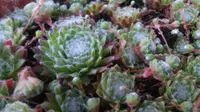
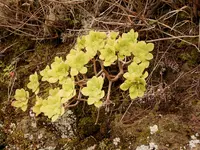
Aeonium leucoblepharum is a small shrubby succulent from arid, rocky habitats in East Africa and the Arabian Peninsula. It forms rosettes of fleshy, spoon-shaped leaves on branching stems.
Leaves are usually green with pink to red margins, often developing stronger color in bright light, which makes it popular in collections and rock gardens. The plant stays relatively compact and has a slow to moderate growth rate.
It is generally considered easy to grow as long as it receives strong light, infrequent but thorough watering, and sharply draining soil. Understanding how to care for Aeonium leucoblepharum mainly involves preventing overwatering and avoiding prolonged frost.

Care Difficulty
Moderate Care

Light Preference
Full Sun

Water Requirements
Low Water

Temperature Preference
Tropical / Frost Sensitive

Hardiness Zone
10–11

Soil Texture
Sandy, Loamy, Rocky

Soil pH
Slightly acidic (6.5–7.0), Neutral (7.0)

Soil Drainage
Well-drained

Fertilization
Minimal (feed rarely)
Scan your plant to receive care tips personalized for your specific plant
Available on iOS and Android
This succulent favors bright conditions that balance color development with leaf protection.
Watering should support fleshy leaves without leaving roots in prolonged moisture.
Temperature management helps this succulent maintain firm leaves and steady growth.
This succulent stays healthiest in relatively dry household air with no special humidity control.
Aeonium leucoblepharum grows best in a sharply draining, mineral-based mix that dries quickly between waterings.
This species is well suited to container growing when the pot supports fast drainage and stable top growth.
This succulent benefits from modest feeding during its active growth, but excess nutrients can cause weak, leggy growth in Aeonium leucoblepharum.
Pruning focuses on tidying the rosettes and maintaining a compact, branching form in Aeonium leucoblepharum.
Container-grown plants appreciate repotting only when root-bound, as this species prefers slightly tight conditions.
Propagation of Aeonium leucoblepharum is commonly done from stem cuttings, which root well under the right conditions.
Cold sensitivity means Aeonium leucoblepharum needs careful handling in regions with frost or freezing temperatures.

Plant Health Check
Not sure what's wrong with your plant? Check your plant's health inside the app.
This species is native to upland regions of East Africa, especially in Ethiopia, Kenya, and Uganda, where it often grows on rocky slopes and cliffs exposed to strong sun and wide temperature swings.
The specific epithet leucoblepharum refers to the fine pale cilia, or hair-like structures, that can appear along the leaf edges, giving the margins a subtle eyelash-like look when closely examined.
Its rosettes can shift from green with soft pink markings in lower light to much stronger red or purple tones in high light, because pigments called anthocyanins accumulate in the leaves as protection from intense sun.
This species grows moderately, not rapidly. In good conditions, rosettes usually add noticeable size over 1–2 growing seasons, with clumps expanding gradually rather than quickly. Growth slows or pauses during very hot, dry summers and in low light.
Keep your plants happy and healthy with plant identification, disease detection, and easy care guidance.