Cat's Tail Aloe Care (Aloe castanea)

Cat's Tail Aloe

About Cat's Tail Aloe

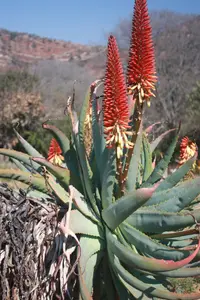
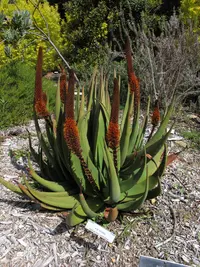
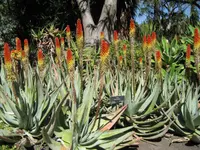
Cat's tail aloe, Aloe castanea, is a shrubby succulent from South Africa known for its branching stems and long, curved flower spikes that resemble a cat’s tail. It can form a small, tree-like shape over time in the ground, but usually stays compact in containers.

This species has thick, narrow leaves with small teeth along the edges and produces rich orange to brownish flowers that attract pollinators. Its drought tolerance and slow to moderate growth make it suitable for growers who want to care for Cat's Tail Aloe with relatively low effort.

It prefers bright light, infrequent but deep watering, and a fast-draining, gritty soil mix to avoid root problems.

Main Plant Requirements

Care Difficulty

Easy Care

Light Preference

Full Sun

Water Requirements

Low Water

Temperature Preference

Warm Climate

Hardiness Zone

9–11

Soil Texture

Sandy, Loamy, Rocky

Soil pH

Slightly acidic (6.5–7.0), Neutral (7.0)

Soil Drainage

Well-drained

Fertilization

Minimal (feed rarely)

Get Personalized Care Plan

Scan your plant to receive care tips personalized for your specific plant

Available on iOS and Android

How to Care for the Cat's Tail Aloe

This sun-loving South African succulent grows best with strong, consistent light.

  • Provide 6–8 hours of sun daily, ideally with morning sun and light afternoon shade, especially in hotter regions.
  • Outdoors, place Cat's Tail Aloe in full sun to very bright, open exposure; in partial shade it will survive but may elongate and flower less.
  • Watch leaves for feedback: pale, scorched patches indicate too much intense midday sun, while weak, stretched growth signals insufficient light.

This drought-tolerant aloe stores water in its leaves and prefers infrequent, deep watering.

  • Allow soil to dry at least 4–6 cm deep before watering; in hot, dry weather this may mean roughly every 10–21 days, depending on soil and exposure.
  • Use sharply draining, gritty soil and raised beds or mounds so water never pools around the roots of Aloe castanea after rain or irrigation.
  • Shriveling, thin leaves suggest underwatering, while soft, yellowing or translucent leaves and a sour soil smell point to overwatering and possible root rot.

This species prefers warm, dry conditions and dislikes prolonged cold or frost.

  • Aim for 65–85°F (18–29°C) for active growth, with the best performance in the middle of this range under bright light.
  • Protect plants when temperatures drop near 32°F (0°C); brief light frost may mark leaves, while harder or repeated frost can kill growing tips.
  • In hot spells above 95°F (35°C), provide some afternoon shade and avoid watering during peak heat to reduce stress and prevent sudden root damage.

This species handles typical household humidity and prefers fairly dry air.

  • Aim for 30–50% humidity; avoid extended periods above 60% to reduce rot risk.
  • Dry indoor air is usually tolerated, but combined with heat it can cause leaf tips to shrivel slightly.
  • If air is very humid, increase air movement with a fan and keep leaves dry to prevent fungal spotting.

Aloe castanea needs a sharply draining, mineral-rich substrate to prevent root and stem rot.

  • Use a sandy, gritty mix such as 50–70% inorganic material (pumice, coarse perlite, or grit) blended with 30–50% cactus potting mix.
  • Aim for slightly acidic to neutral pH around 6.0–7.0 for stable nutrient availability and healthy root function.
  • Ensure the mix feels loose and crumbly; water should drain through in seconds, not sit on the surface or pool in the saucer.
  • Avoid heavy loam, clay, fine peat, or mixes with a high compost fraction that stay wet or compact around the roots.

This species is well suited to container growing when the pot supports its woody, branching form.

  • Choose a wide, heavy pot that resists tipping as the canopy becomes taller and more top-heavy over time.
  • Select unglazed clay to allow faster moisture loss if the substrate tends to stay damp after watering.
  • Leave a clear gap between the substrate surface and the rim so water cannot wash stem bases repeatedly when you irrigate.

This succulent benefits from light feeding but grows acceptably with minimal fertilizer in lean, gritty soil.

  • Use a diluted balanced liquid fertilizer (around 10-10-10 or 20-20-20 at 1/4–1/2 strength) during active growth in spring and summer.
  • Feed Cat's Tail Aloe every 4–6 weeks only if growth is active and the plant receives strong light.
  • Avoid organic compost-heavy mixes that stay wet; they increase rot risk in the root zone.
  • Stop feeding in fall and winter when growth slows, to prevent soft, weak tissue.

Pruning Aloe castanea is mainly hygienic, keeping the plant tidy and reducing disease risk.

  • Best time is late winter to early spring, before strong new growth starts.
  • Remove dead, damaged, or shriveled leaves at the base, and cut out rotted or diseased tissue.
  • Thin crowded basal shoots only if needed to maintain a strong, open structure and defined form.
  • Use clean, sharp pruning shears or a knife, and let cut surfaces dry and callus in good airflow.

This aloe prefers a stable root environment and needs repotting only when clearly outgrowing its container.

  • Look for roots circling the pot, pushing through drainage holes, or noticeably slowed growth as signals to repot.
  • Plan repotting for late spring, every 3–4 years, when temperatures are consistently warm and growth is starting.
  • Choose a pot just 2–5 cm wider with fast-draining cactus mix, handling the root ball gently to limit disturbance.
  • After repotting, keep the plant slightly dry and shaded for 5–7 days to reduce root stress before resuming normal light and water.

Aloe castanea is most commonly propagated from offsets, with seeds used mainly by advanced growers.

  • Detach basal offsets in late spring or early summer when they have several leaves and their own roots.
  • Let cut or broken surfaces dry and callus for 2–5 days in a shaded, airy place before planting.
  • Place offsets in a dry, gritty mix, then water lightly only after initial root anchoring to reduce rot risk.
  • For seed, use warm temperatures (70–80°F), bright indirect light, and keep the mix just barely moist until germination.

This aloe is sensitive to hard frost and needs protection in regions with cold winters.

  • Keep plants above 30–32°F; sustained freezing damages leaves and stems.
  • In the ground, apply a dry, gritty mulch around the root zone to insulate crowns while keeping them well drained.
  • Move container plants indoors or into a cold greenhouse before frost, placing them in bright light.
  • Water very sparingly indoors in winter, allowing the mix to dry almost completely between waterings.

Care Tips

Stabilize Top-Heavy Stems

As stems elongate and become top-heavy, use a low, heavy terracotta pot and top-dress with coarse gravel to anchor the root zone and prevent the plant from tipping over.

Rotate For Even Form

Turn the pot 90° every 2–3 weeks during active growth so all sides receive similar light, which keeps the branching stems evenly spaced instead of leaning strongly to one side.

Winter Rest Management

In regions with cool, bright winters, give this species a pronounced dry rest by removing saucers, keeping the plant under cover from rain, and only watering lightly once the lower leaves begin to slightly wrinkle.

Encourage Flowering Spikes

To increase the chance of flowering, maintain a strong light gradient between summer (bright, long days) and winter (shorter days, cooler nights) and avoid repotting or disturbing the root ball in the 2–3 months before its usual bloom season.

Targeted Pest Checks

Inspect the branch joints and leaf bases every few weeks for mealybugs or scale, and at the first sign, isolate the plant and wipe affected areas with a cotton swab dipped in 70% isopropyl alcohol before populations become established when growing Cat's Tail Aloe.

Common Pests and Diseases

Aloe mite

This pest causes abnormal, warty, or horn-like growths (galls) on leaves, stems, and especially old flower stalks. Symptoms include rough, distorted tissue that replaces the plant’s normal smooth surfaces.

Solution

Remove and discard all affected leaves or stems well below the damaged area, cutting into clean, normal tissue with a sterile tool. Bag and trash the prunings (do not compost), then isolate the plant and monitor new growth; for severe or spreading cases, discard the entire plant to protect nearby aloes, as miticides labeled for eriophyid mites are rarely practical for home use.

Aloe rust

This disease produces small yellow spots that turn brown to black, often with a powdery or raised surface on the leaf. Symptoms include scattered lesions that may coalesce and cause yellowing and weakening of the leaf.

Solution

Remove and discard affected leaves to reduce spore spread, then keep foliage dry by watering at soil level and providing strong air movement. Space plants so leaves dry quickly, avoid overhead watering in cool periods, and if needed apply a sulfur- or copper-based fungicide labeled for ornamental succulents, following the label exactly.

Black leaf spot

This disease causes irregular, dark brown to black, sunken spots on leaves, often starting near old mechanical damage or water-sitting areas. Symptoms include gradually enlarging lesions and localized softening of the affected tissue.

Solution

Cut away severely spotted sections with a clean, sharp tool and let the wounds dry in bright, airy conditions. Reduce humidity, avoid letting water sit on leaves, and improve light and airflow around the plant; in persistent cases, use a broad-spectrum fungicide suitable for succulents and discard heavily affected plants to protect a collection.

Mealybugs

These insects appear as white, cottony clusters in leaf bases, along stems, and near the roots, often causing sticky honeydew and sooty mold. This pest weakens plants, distorts new growth, and can slow flowering on mature Aloe castanea.

Solution

Isolate the plant, then dab visible insects with cotton swabs dipped in 70% isopropyl alcohol and repeat weekly until clear. Rinse leaf crevices with a strong but gentle water spray, inspect the root zone for root mealybugs when repotting, and for larger infestations use an insecticidal soap or neem oil spray, applied thoroughly to all plant surfaces and repeated as directed.

Scale insects

These insects look like small, hard, brown or gray bumps on leaves and stems, often clustering along the midrib and lower leaf surfaces. This pest feeds on sap, causing yellowing, reduced vigor, and sometimes sticky honeydew on nearby surfaces.

Solution

Gently scrape or rub off individual scales with a fingernail or soft toothbrush, then wipe affected areas with a cloth lightly moistened with 70% isopropyl alcohol. For broader infestations, use repeated treatments with insecticidal soap or horticultural oil, ensuring full coverage of leaf bases and undersides, and keep the plant in bright, dry, well-ventilated conditions to discourage reinfestation while growing Cat's Tail Aloe.

Interesting Facts

South African endemic shrub

This species is naturally restricted to parts of northeastern South Africa, where it grows on rocky slopes and outcrops in bushveld habitats with strong sun and fast-draining soils.

Distinctive curled inflorescences

The plant produces narrow, branching flower spikes whose side branches curve and twist, giving rise to the common name cat's tail aloe because the inflorescences resemble a cat’s tail.

Nectar-rich winter flowers

In its native range, it flowers mainly in the cooler months, producing dense clusters of orange-brown blossoms that are rich in nectar and attract sunbirds and many insect pollinators.

Botan icon

Did you know?

Aloe castanea naturally forms a multi-stemmed, small tree or large shrub that can reach several meters in height in habitat, making it one of the few aloes that can develop a conspicuous woody framework rather than remaining stemless or short-stemmed.

FAQs about Cat's Tail Aloe

Growth is moderate, not rapid. Young plants usually add 5–10 cm of stem and new side shoots per year in good conditions, slower in containers. Cooler temperatures, low light, and restricted watering reduce extension growth.

Grow Healthy Plants with Botan Care

Keep your plants happy and healthy with plant identification, disease detection, and easy care guidance.

Botan plant care app — identify plants on mobile

Explore More Plants