Prevent crown rot
When planting or repotting, keep the leaf rosette slightly above the soil line and use a small top layer of coarse grit so water never pools at the crown, which greatly reduces rot risk in mature plants.

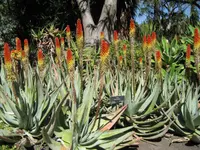
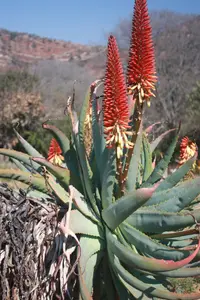
Rock aloe (Aloe petricola) is a compact, clump-forming succulent known for its dense rosettes of blue-green, fleshy leaves edged with firm, pale teeth. Mature plants produce tall, branched flower spikes with tubular orange and yellow blooms that attract pollinators.
This species is native to rocky slopes in South Africa, where it experiences strong light and well-drained, mineral-rich soils. Its drought tolerance and slow, contained growth habit make it suitable for containers and dry landscapes.
Aloe petricola is generally considered easy to grow if protected from frost, excess moisture, and poorly drained soil. Understanding how to care for rock aloe mainly involves providing bright light, infrequent watering, and gritty, fast-draining substrate.

Care Difficulty
Easy Care

Light Preference
Full Sun

Water Requirements
Low Water

Temperature Preference
Warm Climate

Hardiness Zone
9–11

Soil Texture
Sandy, Loamy, Rocky

Soil pH
Slightly acidic (6.5–7.0), Neutral (7.0)

Soil Drainage
Well-drained

Fertilization
Minimal (feed rarely)
Scan your plant to receive care tips personalized for your specific plant
Available on iOS and Android
Aloe petricola thrives in bright, direct sun but benefits from some protection during the hottest hours in many climates.
This species is drought-tolerant and prefers infrequent, deep watering in sharply draining soil.
This aloe prefers warm, dry conditions and does poorly in prolonged cold or frost.
Aloe petricola handles typical indoor humidity well and rarely needs adjustments if air is not extremely dry.
Aloe petricola needs very fast-draining, gritty soil that keeps roots aerated and never waterlogged.
This species is well suited to container growing when the pot supports fast drainage and root stability.
This drought-tolerant succulent needs only light feeding during active growth for healthy leaves and flowering in rock aloe indoor care.
Pruning needs for Aloe petricola are minimal and mainly cosmetic, aiming to keep the rosette clean and prevent rot.
Container-grown Aloe petricola benefits from infrequent repotting to refresh soil and manage root crowding.
Propagation of Aloe petricola is commonly done by separating offsets, with seeds as a slower alternative.
Winter care for Aloe petricola focuses on avoiding freezing temperatures and excessive moisture.

Plant Health Check
Not sure what's wrong with your plant? Check your plant's health inside the app.
In the wild this species often grows on rock outcrops and cliff faces in Mpumalanga, South Africa, anchoring its roots in shallow crevices where many other succulents cannot survive.
Its upright inflorescences often show striking bicolored flower heads, with buds that are bluish to greenish and open into vivid orange-red flowers on the same spike.
The tubular flowers are adapted for bird pollination, especially by sunbirds that visit for nectar and transfer pollen between plants in its natural habitat.

This species is part of a naturally occurring hybrid complex and can form intermediate plants where its range overlaps with closely related aloes, which makes it useful for botanists studying speciation and gene flow in succulent plants.
Lack of flowers usually comes from insufficient light, a pot that is too small, or a plant that is still immature. Cool, dry winter conditions and strong sun in the growing season help trigger flower spikes.
Keep your plants happy and healthy with plant identification, disease detection, and easy care guidance.