Aeonium percarneum Care

Aeonium percarneum

About Aeonium percarneum

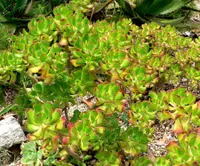
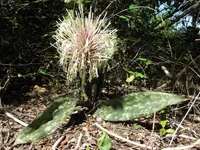
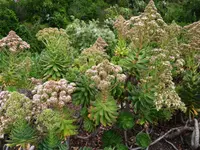
Aeonium percarneum is a small, shrubby succulent from the Canary Islands, valued for its compact rosettes and branching habit. Its fleshy, spoon-shaped leaves often show warm green to reddish tones, especially in brighter light.

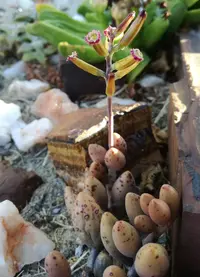
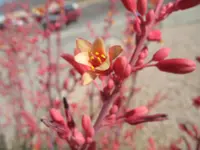
This species typically forms low, bushy clumps rather than a single tall stem, making it suitable for containers and rock gardens. Yellow star-shaped flowers may appear on tall stalks when the plant is mature.

It is considered relatively easy to grow, provided it has strong light, good air movement, and sharply drained, gritty soil. Understanding how to care for Aeonium percarneum mainly involves avoiding excess water and cold, wet conditions.

Main Plant Requirements

Care Difficulty

Moderate Care

Light Preference

Full Sun

Water Requirements

Low Water

Temperature Preference

Tropical / Frost Sensitive

Hardiness Zone

10–11

Soil Texture

Sandy, Loamy, Rocky

Soil pH

Slightly acidic (6.5–7.0), Neutral (7.0)

Soil Drainage

Well-drained

Fertilization

Minimal (feed rarely)

Get Personalized Care Plan

Scan your plant to receive care tips personalized for your specific plant

Available on iOS and Android

How to Care for the Aeonium percarneum

This succulent prefers bright, gentle sun with protection from harsh midday exposure.

  • Provide 4–6 hours of direct morning sun or late-afternoon sun, plus bright indirect light for the rest of the day to keep rosettes compact and colorful.
  • Tolerates light partial shade, but growth becomes looser and leaf color dulls if it receives less than about 3–4 hours of direct or strong filtered light.
  • In hotter climates, shield Aeonium percarneum from intense midday summer sun to prevent leaf scorch and bleaching, especially in dark-leaved forms.

Watering should mimic a dry, coastal climate with brief soakings and clear drying periods.

  • Allow the top 3–5 cm of soil to dry before watering, then water thoroughly so it drains quickly through a gritty, well-draining mix.
  • In active growth (cooler seasons), expect to water more often; in hot, dry summer dormancy, reduce watering sharply and only moisten when leaves start to slightly wrinkle.
  • Watch for signs: swollen, yellowing, or mushy lower leaves suggest overwatering and poor drainage, while crisp, shriveled leaves and very light pots indicate underwatering.

This species favors mild conditions and dislikes both hard frost and extreme heat.

  • Aim for 55–75°F (13–24°C) for steady growth, with best vigor in the cooler end of this range during its active season.
  • Protect from cold below 32°F (0°C); brief light frosts may mark leaves, while harder or prolonged freezes can kill growing tips and roots.
  • In hot spells above 90°F (32°C), growth often slows or pauses; provide afternoon shade and airflow to limit heat stress and sunburn on exposed rosettes.

This succulent handles typical indoor humidity and rarely needs special adjustments.

  • Target 30–50% humidity, similar to most heated or air‑conditioned homes.
  • Dry indoor air is usually tolerated; issues arise mainly when combined with heat and underwatering.
  • Low humidity stress shows as shriveling leaves that stay firm rather than mushy from rot.
  • Increase humidity slightly only in very arid rooms by grouping plants instead of misting Aeonium percarneum.

Aeonium percarneum needs a very fast-draining, gritty substrate to protect its roots from rot.

  • Use a cactus or succulent mix amended with extra mineral material such as pumice, coarse perlite, or horticultural grit.
  • Aim for a sandy or sandy-loam texture that breaks apart easily in the hand and never stays soggy after watering.
  • Keep pH slightly acidic to neutral, roughly 6.0–7.2, which suits most commercial succulent mixes without extra adjustment.
  • Avoid heavy peat-only mixes, clayey garden soil, or dense compost that slows drainage and restricts aeration around the roots.

This species is well suited to container growing both outdoors and in bright indoor positions.

  • Choose a low, wide pot to balance the rosette-heavy top growth and reduce the risk of tipping in wind or from accidental bumps.
  • Select unglazed terracotta if moisture tends to linger, since its porous walls let the mix dry faster between waterings.
  • Leave a small gap between the soil surface and pot rim so water can be applied slowly without spilling, allowing it to drain quickly through.

This succulent benefits from light feeding during active growth but is sensitive to overfertilizing.

  • Use a balanced liquid fertilizer (around 10-10-10 or 20-20-20) diluted to 25–50% strength for Aeonium percarneum.
  • Feed every 4–6 weeks in the main growing season if the plant is in a free-draining, low-nutrient mix.
  • Avoid slow-release pellets that can concentrate salts in small pots; compost-based mixes usually need less feeding.
  • Stop feeding in summer dormancy and in winter, resuming only when new growth is clearly visible.

Light pruning keeps this aeonium compact, healthy, and visually tidy.

  • Best time for pruning is late winter to early spring, just before strong new growth starts.
  • Remove dead, shriveled, or pest-damaged rosettes and stems back to firm, green tissue.
  • Thin crowded rosettes to improve airflow and maintain an open, balanced shape on Aeonium percarneum.
  • Use clean, sharp scissors or pruning snips and let cut surfaces dry before watering to reduce rot risk.

Container-grown plants benefit from occasional repotting to maintain root health and fresh substrate.

  • Repot every 2–3 years or when roots circle the pot, drainage slows, or growth becomes weak.
  • Choose late winter to early spring, as Aeonium percarneum resumes active growth, to support quick recovery.
  • Move into a pot only 2–3 cm wider, using a gritty, fast-draining cactus or succulent mix.
  • Handle the root ball gently, remove loose old soil, and keep watering light for 5–7 days after repotting.

This species is most often propagated from stem cuttings taken from healthy rosettes.

  • Take 5–10 cm stem cuttings in late winter or spring, avoiding soft or etiolated growth.
  • Allow cut ends to callus for 2–5 days in a dry, shaded place to limit rot risk.
  • Insert cuttings into barely moist, gritty mix and keep in bright, indirect light with good airflow.
  • Seeds can be sown on the surface of a well-draining mix at 65–75°F, kept lightly moist until germination.

Cold sensitivity means this plant needs careful winter management in most temperate climates.

  • Aeonium percarneum is not frost hardy; sustained temperatures below 32°F can damage or kill tissues.
  • Move containers indoors or into a bright, frost-free greenhouse before the first hard frost.
  • Provide bright light, cool to mild temperatures (45–60°F), and very sparing watering in winter.
  • Outdoors in mild zones, use a gritty, raised bed and light mulch around the root zone, keeping crowns dry.

Care Tips

Rotate for symmetry

Turn the pot 90° every 1–2 weeks during active growth so all rosettes receive similar light, which keeps the plant compact and reduces weak, one-sided stems.

Manage top-heavy stems

If stems become tall and top-heavy, cut and re-root the healthiest rosettes in fresh, gritty mix and discard or compost leggy, weak growth to maintain a stable, attractive clump.

Summer dormancy adjustment

In very hot, dry summers, expect partial dormancy with leaves curling or shrinking and reduce watering while keeping the plant bright and airy rather than trying to force new growth.

Targeted pest monitoring

Inspect the tight leaf rosette centers and stem joints every 1–2 weeks for mealybugs or aphids and treat early with a cotton swab dipped in isopropyl alcohol before populations build up.

Use cuttings strategically

When refreshing an overgrown plant, root several stem cuttings of different sizes in one pot to create a fuller, multi-headed specimen, which is one of the most efficient methods for growing Aeonium percarneum over time.

Common Pests and Diseases

Mealybugs

This pest commonly hides in the centers of rosettes and along stems, sucking sap and causing distorted, stunted growth and sticky honeydew. Symptoms include white, cottony clusters that are especially visible on undersides of leaves and at leaf joints.

Solution

Isolate the plant, then dab visible insects with cotton swabs dipped in 70% isopropyl alcohol and repeat weekly until no new clusters appear. For heavier infestations on Aeonium percarneum care instructions often include a thorough rinse with lukewarm water, followed by applications of a mild insecticidal soap or neem oil, ensuring rosettes dry quickly afterward to avoid fungal issues.

Aeonium mite damage

This pest (eriophyid mites) can cause tight, misshapen rosettes, rough or warty tissue, and leaves that fail to expand normally. Symptoms include distorted new growth with a felted or blistered appearance, while older leaves may look relatively normal.

Solution

Remove and discard the most deformed rosettes or stems, then keep the plant in bright, airy conditions to promote healthy new growth. In persistent cases, use a targeted miticide labeled for eriophyid mites, and avoid overhead misting or crowding plants, which can help mites spread between rosettes.

Aphids

These insects often cluster on tender new growth and flower stems, sucking sap and causing curling leaves, sticky honeydew, and occasionally sooty mold. This pest is more frequent when plants are soft-grown in partial shade or overfertilized.

Solution

Rinse colonies off with a firm stream of water, paying attention to the undersides of leaves and flower stalks, and repeat as needed over several days. If aphids return, apply insecticidal soap or neem oil in the early morning, ensuring full coverage but allowing foliage to dry before intense sun to prevent leaf spotting.

Fungal leaf spots

This disease appears as small brown, gray, or black lesions on leaves, often starting on older or shaded foliage after periods of prolonged moisture. Symptoms include spotting that may coalesce into larger patches, leading to premature leaf drop in dense rosettes.

Solution

Remove affected leaves, improve air circulation, and avoid overhead watering or letting water sit in the rosettes for long periods. In humid or persistent cases, apply a broad-spectrum fungicide labeled for ornamental succulents, and space plants so foliage dries fully between waterings.

Soft bacterial rot

This disease can affect basal rosettes or damaged stems, causing water-soaked, foul-smelling tissue that quickly collapses, often after mechanical injury or excess water in warm conditions. Symptoms include mushy areas at the stem base or crown that spread rapidly through fleshy tissue.

Solution

Cut away all affected soft tissue back to firm, healthy material using a sterile blade, and discard infected parts rather than composting them. Allow remaining cut surfaces to dry and callus in a warm, airy place, reduce watering significantly, and if rot is extensive, propagate only from firm, uninfected cuttings taken well above the damaged area.

Interesting Facts

Color-shifting rosettes

Under strong sun and cooler temperatures, this species often develops warm pink to reddish tones along the leaf margins, while in lower light it tends to stay more uniformly green.

Branching shrub habit

Unlike many compact Aeonium species, it can form a much-branched, shrubby structure with multiple rosettes on woody stems that may reach around 60–90 cm in suitable outdoor conditions.

Canary Islands native

This species is naturally restricted to the Canary Islands, where it grows on rocky slopes and coastal cliffs exposed to ocean winds and periodic drought.

FAQs about Aeonium percarneum

Brown leaves usually result from intense sun scorch, prolonged dryness, or past overwatering that damaged roots. Check for soft, blackened stems, adjust light exposure, and adopt a consistent, moderate watering pattern to prevent further tissue death.

Grow Healthy Plants with Botan Care

Keep your plants happy and healthy with plant identification, disease detection, and easy care guidance.

Botan plant care app — identify plants on mobile

Explore More Plants