


Rotate for symmetry
Turn the pot 90° every 2–3 weeks so the rosette develops evenly and the stem does not lean permanently toward the light source.

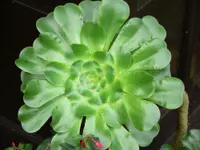
Aeonium undulatum is an evergreen succulent from the Canary Islands, valued for its architectural rosettes and glossy, slightly wavy leaves. It forms a single, often tall stem topped with a large, open rosette that can become quite striking in mature plants.
In mild climates it is often grown outdoors in containers or rock gardens, while in colder regions it is kept as a houseplant or greenhouse specimen. Its drought tolerance and relatively slow growth make it manageable for most beginners who want to learn how to care for Aeonium undulatum.
This species prefers bright light, low to moderate watering, and very free-draining soil, which helps prevent root problems and keeps the rosette compact and healthy.

Care Difficulty
Moderate Care

Light Preference
Full Sun

Water Requirements
Low Water

Temperature Preference
Tropical / Frost Sensitive

Hardiness Zone
9–11

Soil Texture
Sandy, Loamy, Rocky

Soil pH
Slightly acidic (6.5–7.0), Neutral (7.0)

Soil Drainage
Well-drained

Fertilization
Minimal (feed rarely)
Scan your plant to receive care tips personalized for your specific plant
Available on iOS and Android
This succulent prefers bright, gentle sun that avoids the harshest midday exposure.
Watering should respect its succulent nature and seasonal growth pattern.
This species prefers mild, frost-free conditions with moderate seasonal variation.
This succulent stays healthiest in relatively dry air with modest humidity needs.
Aeonium undulatum prefers a sharply draining, gritty substrate that dries quickly between waterings.
This species is well suited to container growing outdoors or in bright, dry locations.
This succulent benefits from light feeding but grows acceptably in lean, well-drained soil.
Pruning is mainly used to tidy growth and manage leggy stems.
Container-grown plants appreciate occasional repotting to refresh the substrate and manage size.
This species is commonly propagated from stem cuttings taken from healthy rosettes.
Cold conditions require attention, as this succulent is not reliably hardy below light frost.

Plant Health Check
Not sure what's wrong with your plant? Check your plant's health inside the app.
This species occurs naturally only on the island of Gran Canaria in the Canary Islands, where it grows on dry, rocky slopes and cliffs, often in full sun and exposed to wind.
It is easily recognized among aeoniums by its large, glossy green rosettes with strongly undulating, or wavy, leaf margins that create a shallow bowl shape at the center of the rosette.
Each rosette is monocarpic, meaning it dies after producing its tall, conical inflorescence of yellow, star-shaped flowers, while new side rosettes on branched plants can continue the life of the clone.

In its native range, this species can form shrub-like plants up to about 1 m tall, creating small, open stands that visually dominate exposed rocky outcrops during the flowering season and provide structural habitat for invertebrates on otherwise sparse slopes.
Brown tips or edges usually come from underwatering, intense midday sun, or low humidity combined with wind. Check soil moisture, move the plant to bright but gentler light, and avoid hot reflected surfaces that scorch leaves.
Keep your plants happy and healthy with plant identification, disease detection, and easy care guidance.


hedge cactus
Cereus hildmannianus
 POPULAR
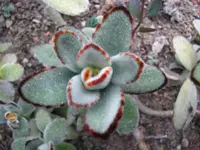
Panda Plant
Kalanchoe tomentosa
 POPULAR
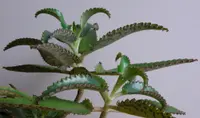
Mother of Thousands
Kalanchoe daigremontiana
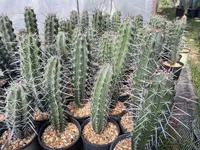
Stenocereus chacalapensis
Stenocereus chacalapensis
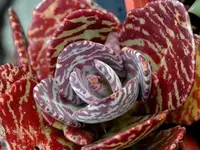
Desert Surprise
Kalanchoe humilis
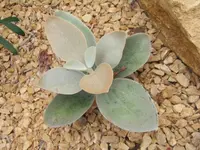
Copper Spoons
Kalanchoe orgyalis
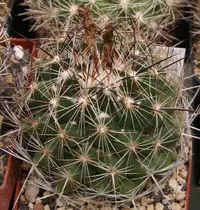
Nickels' cactus
Coryphantha nickelsiae
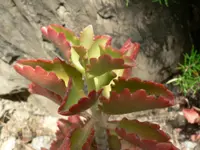
Six-Angled Kalanchoe
Kalanchoe sexangularis