Stake Tall Spikes
Install slim, unobtrusive stakes when flower spikes reach about 20–30 cm to prevent wind snapping; tie loosely with soft ties so stems can still move slightly without kinking.

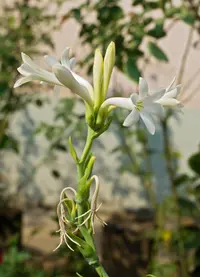
Tuberose, Agave amica, is a tender, bulbous perennial grown mainly for its highly fragrant white flower spikes. It forms narrow, grass-like leaves from an underground bulb-like structure called a rhizome.
The plant originates from Mexico but is now widely cultivated in warm and subtropical regions for cut flowers and garden display. It usually grows in clumps, sending up tall, upright flowering stems in warm weather.
Flowering is strongest in sunny, sheltered spots with well-drained, moderately fertile soil. Regular moisture during active growth supports healthy foliage and abundant blooms.
Beginners can learn how to care for tuberose with moderate effort, as it responds well to stable warmth, good drainage, and protection from cold or waterlogged soil.

Care Difficulty
Moderate Care

Light Preference
Full Sun

Water Requirements
Moderate Water

Temperature Preference
Warm Climate

Hardiness Zone
8–10

Soil Texture
Sandy, Loamy, Organic-rich

Soil pH
Slightly acidic (6.5–7.0), Neutral (7.0)

Soil Drainage
Well-drained

Fertilization
Light (every 4–6 weeks)
Scan your plant to receive care tips personalized for your specific plant
Available on iOS and Android
Agave amica prefers bright, sustained light to flower and grow strongly outdoors.
Agave amica needs thorough but infrequent watering that allows the soil to dry slightly between soakings.
Stable warmth supports strong vegetative growth and flowering for this species.
This species grows best in relatively dry air and does not rely on high humidity.
Agave amica prefers fast-draining, mineral-rich soil that dries quickly between waterings.
This bulb is well suited to container growing outdoors on patios, balconies, or sunny steps.
Agave amica benefits from light, targeted feeding rather than heavy fertilization.
Pruning Agave amica focuses on hygiene and safety rather than reshaping the plant.
Transplanting is mainly needed when clumps become crowded or flowering declines.
Propagation of Agave amica is usually done by division, with seeds used less often.
Winter care depends on climate, as Agave amica is sensitive to prolonged freezing.

Plant Health Check
Not sure what's wrong with your plant? Check your plant's health inside the app.
This species opens its tubular white flowers after dusk and releases a very strong, sweet fragrance at night, timed to attract moth pollinators that navigate by scent more than by color.
Agave amica is native to Mexico, where it grows in warm, open habitats with well-drained soils, often in cultivated fields and disturbed areas rather than dense natural forests.
This plant was long known as Polianthes tuberosa, but molecular studies of DNA led taxonomists to merge Polianthes into Agave, so it is now placed in the species Agave amica.

The intensely scented flowers of this species have made it one of the most important floral crops for traditional perfumery, and it is still grown on a large scale in regions such as southern France and India specifically for solvent-extracted tuberose absolute used in high-end fragrances.
Lack of flowering usually comes from insufficient warmth, too little light earlier in the season, or bulbs that are too small or overcrowded. Allow foliage to mature fully each year so bulbs can store enough energy for next season’s blooms.
Keep your plants happy and healthy with plant identification, disease detection, and easy care guidance.