Winter rain protection
In climates with cool, wet winters, place the container under an overhang or use a simple clear cover to keep excessive rain off the rosette and prevent crown rot while still allowing good airflow.

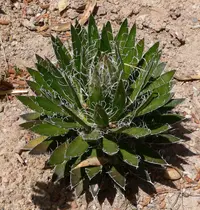
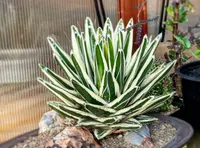
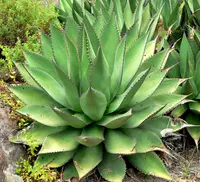
Thread-leaf agave, Agave schidigera, is a compact rosette-forming succulent from arid regions of Mexico. It stores water in its thick leaves, which helps it tolerate drought.
The plant has narrow, dark green leaves with white margins and curling white fibers, giving it a fine, thread-like look. It stays relatively small, which suits containers and smaller outdoor spaces.
This species prefers bright light, sharp drainage, and infrequent watering, and it dislikes prolonged cold and wet conditions. With suitable light and dry, gritty soil, it is straightforward to care for Thread-leaf Agave.

Care Difficulty
Easy Care

Light Preference
Full Sun

Water Requirements
Low Water

Temperature Preference
Warm Climate

Hardiness Zone
8–11

Soil Texture
Sandy, Loamy, Rocky

Soil pH
Slightly acidic (6.5–7.0), Neutral (7.0)

Soil Drainage
Well-drained

Fertilization
Minimal (feed rarely)
Scan your plant to receive care tips personalized for your specific plant
Available on iOS and Android
This species thrives in strong light and suits open, sunny positions in most warm climates.
Watering for this desert species must be infrequent and guided by soil dryness, not by a fixed schedule.
This agave prefers warm, dry conditions but can handle a surprising amount of cold if kept dry.
Humidity is rarely a concern for this desert species and typical indoor levels are adequate.
Use a very fast-draining, mineral-rich mix to prevent root rot in Agave schidigera.
This species is well suited to container growing when the pot manages water and weight effectively.
Agave schidigera needs only modest feeding, as it is adapted to lean, rocky soils.
Pruning for this species is minimal and mainly focused on safety and hygiene.
Container-grown Thread-leaf Agave is slow growing and rarely needs frequent repotting.
Propagation of this species is usually done by offsets, with seed used less often in home settings.
This agave is relatively cold tolerant when mature but still benefits from thoughtful winter care in many regions.

Plant Health Check
Not sure what's wrong with your plant? Check your plant's health inside the app.
This species develops distinctive white, thread-like filaments that peel naturally from the leaf margins, giving it a fringed appearance unlike many other compact agaves.
Agave schidigera forms a tight, symmetrical rosette rarely exceeding about 45–60 cm in diameter in cultivation, which contributes to its popularity in small, dry gardens and containers.
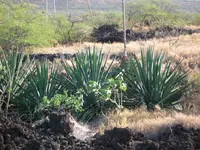
It is naturally distributed in higher-elevation regions of central Mexico, where it grows on rocky slopes and open pine-oak woodlands, adapted to intense sunlight and sharp drainage.

Agave schidigera is monocarpic, meaning each rosette flowers only once after many years, then dies, but it typically produces offsets around the base that continue the life of the clump.
This species is monocarpic, so it flowers only once at maturity, often after 10–20 years. Lack of flowering is normal in younger plants. Adequate light, space, and time are the main requirements, not fertilizers.
Keep your plants happy and healthy with plant identification, disease detection, and easy care guidance.