Establish a gravel collar
After planting, top-dress the root zone with a 3–5 cm ring of coarse gravel or small stones to keep the leaf base dry, reduce soil splash, and lower the risk of rot and fungal spotting on the lower leaves.

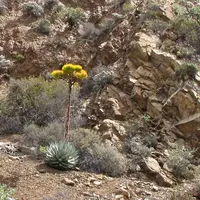
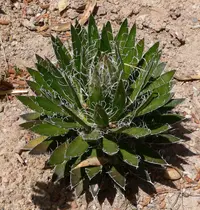
Agave sebastiana is a compact, slow-growing succulent from arid regions of Mexico. It forms tight rosettes of stiff, bluish-green leaves with sharp tips and finely toothed edges. Mature plants may eventually produce a tall flowering stalk, after which the rosette dies, often leaving offsets around the base. This species is valued for its architectural form and strong drought tolerance, which makes it suited to dry gardens and container culture. It prefers bright light, sharply draining soil, and infrequent watering, so learning how to care for Agave sebastiana is straightforward once its dry-land origin is understood.

Care Difficulty
Easy Care

Light Preference
Full Sun

Water Requirements
Low Water

Temperature Preference
Warm Climate

Hardiness Zone
9–11

Soil Texture
Sandy, Loamy, Rocky

Soil pH
Slightly acidic (6.5–7.0), Slightly alkaline (7.0–7.5)

Soil Drainage
Well-drained

Fertilization
Minimal (feed rarely)
Scan your plant to receive care tips personalized for your specific plant
Available on iOS and Android
This desert succulent needs strong light to maintain its compact rosette and leaf color.
This species is highly drought tolerant and prefers infrequent, deep watering.
This agave prefers warm, arid conditions but tolerates moderate cold when mature and well drained.
This species tolerates a wide humidity range and rarely needs special adjustment indoors or outdoors.
Agave sebastiana needs very fast-draining, mineral-rich soil to prevent root rot.
This species is well suited to container growing when the pot is set up to drain and dry quickly.
This drought-adapted succulent needs only light feeding to stay healthy in containers or poor soils.
This species needs minimal pruning, mainly for safety and cleanliness rather than shaping.
This slow-growing agave dislikes frequent disturbance, so repot or transplant only when clearly necessary.
Most home growers rely on offsets for propagating this agave, as seed production is infrequent.
This species has some cold tolerance but benefits from basic winter precautions, especially in wet or very cold climates.

Plant Health Check
Not sure what's wrong with your plant? Check your plant's health inside the app.
This species is naturally restricted to rocky coastal bluffs and cliff slopes on Cedros Island off the Pacific coast of Baja California, where it grows in very shallow, well-drained soils exposed to strong sun and wind.
Unlike some other agaves that offset freely, this plant typically forms tight, solitary to sparsely clumping rosettes with short, broad, gray-green leaves edged by dark teeth and a pronounced terminal spine.
Agave sebastiana is considered rare in the wild because its distribution is limited to a small island area, making it vulnerable to habitat disturbance, grazing pressure, and other localized environmental changes.
Yellowing leaves usually result from overwatering, poor drainage, or cold damage. Check that the potting mix drains very well, the container has open holes, and the plant is not exposed to prolonged temperatures below its tolerance.
Keep your plants happy and healthy with plant identification, disease detection, and easy care guidance.