Queen Victoria agave Care (Agave victoriae-reginae)

Queen Victoria agave

About Queen Victoria agave

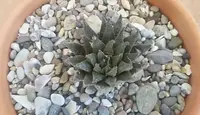
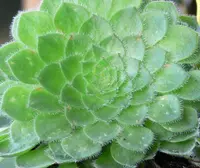
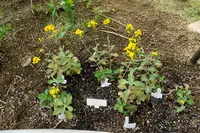
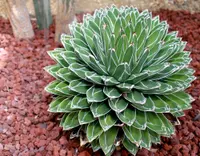
Queen Victoria agave (Agave victoriae-reginae) is a compact, slow-growing succulent from arid regions of northern Mexico. It forms a tight, spherical rosette of thick, triangular leaves. Distinct white leaf markings and sharp, dark tips give it a precise, architectural look that suits containers and rock gardens. The plant usually stays small and tidy, which makes it easier to manage than many larger agaves. It is drought tolerant and adapts well to bright, dry conditions, so those who learn how to care for Queen Victoria agave often find it long-lived and low maintenance. It prefers strong light, very well-draining soil, and infrequent watering.

Main Plant Requirements

Care Difficulty

Easy Care

Light Preference

Full Sun

Water Requirements

Low Water

Temperature Preference

Warm Climate

Hardiness Zone

9–11

Soil Texture

Sandy, Loamy, Rocky

Soil pH

Slightly acidic (6.5–7.0), Neutral (7.0)

Soil Drainage

Well-drained

Fertilization

Minimal (feed rarely)

Get Personalized Care Plan

Scan your plant to receive care tips personalized for your specific plant

Available on iOS and Android

How to Care for the Queen Victoria agave

This compact desert succulent needs strong light to keep its tight rosette form and clear leaf markings.

  • Provide 6–8 hours of direct sun outdoors, ideally with morning sun and light afternoon shade, especially in hot, low-humidity climates.
  • Tolerates bright partial shade, but Queen Victoria agave grown in less than 4–5 hours of sun may stretch, lose contrast in leaf markings, and grow more slowly.
  • In very hot summers, protect from intense late-afternoon sun to reduce leaf scorch; in winter, maximize light by avoiding shade from buildings or trees.

This species is highly drought-tolerant and prefers thorough but infrequent watering.

  • Allow the soil to dry deeply between waterings; the top 5–8 cm should feel completely dry and the plant should look slightly less plump before watering again.
  • Use sharply draining, gritty soil so water runs through quickly; avoid any standing water around the base of Agave victoriae-reginae to reduce rot risk.
  • In warm growing seasons, expect to water more often after hot, dry spells; in cool or dormant periods, water only enough to prevent severe shriveling of the leaves.

This desert-adapted plant prefers warm, dry air and handles a wide temperature range once established.

  • Aim for 70–90°F (21–32°C) during active growth; it also tolerates short peaks up to about 100°F (38°C) if the soil is well-drained and watering is not excessive.
  • Mature plants can briefly withstand drops to around 20–25°F (-6 to -4°C), but any frost can mark leaves, so protection such as covering or moving containers is useful.
  • In regions with cold winters below 20°F (-6°C), grow it in a spot where it stays dry in winter, or use a container so the plant can be sheltered from prolonged freezes.

This desert succulent tolerates low household humidity and rarely needs special humidity care.

Agave victoriae-reginae needs a very fast-draining, mineral-heavy substrate that prevents waterlogging around the roots.

  • Use a gritty mix such as 50–70% inorganic materials (pumice, coarse sand, small gravel) blended with cactus mix.
  • Aim for a lean, low-organic medium; too much peat or compost holds excess moisture and encourages root rot.
  • Keep pH slightly acidic to neutral (pH 6.0–7.0), which supports nutrient availability without stressing roots.
  • For heavy native soil, grow in raised beds or mounds amended with coarse grit to improve drainage and aeration.

This species is well suited to container growing when drainage and stability are carefully managed.

  • Choose a wide, low container that balances the rosette’s weight and reduces the risk of tipping in wind.
  • Use a pot material like unglazed terracotta if faster moisture loss is needed in wet or humid climates.
  • Elevate the pot slightly on feet or bricks so drainage holes remain clear and water does not pool under the container.

This compact succulent needs modest feeding to support slow, steady growth in containers.

  • Use a balanced, low-nitrogen cactus fertilizer or diluted 10-10-10 at 1/4–1/2 strength.
  • Feed Queen Victoria agave once per month in spring–summer when actively growing.
  • Do not apply fertilizer in fall–winter; allow the plant to rest dormant.
  • Always water lightly before feeding to prevent root burn in dry soil.

Pruning Agave victoriae-reginae is minimal and focuses on hygiene rather than shaping.

  • Best time is late spring to summer, when growth is most active.
  • Remove only dead, dried, or damaged leaves at the base using clean, sharp pruning shears.
  • Cut close to the stem without injuring healthy tissue to maintain the natural rosette form.
  • Dispose of removed material promptly to reduce pest and disease harboring sites.

This slow-growing agave tolerates being underpotted and needs infrequent repotting.

  • Repot every 3–5 years or when roots circle the pot and emerge from drainage holes.
  • Plan repotting in late spring, using a slightly larger container with gritty, fast-draining mix.
  • Water lightly a few days before, then slide the root ball out gently to limit root breakage.
  • After repotting, keep in bright shade and water sparingly for 1–2 weeks to reduce transplant shock.

Propagation of this species is possible but limited, as many plants produce few offsets.

  • Offsets (pups) are the most practical method; separate them in late spring or early summer.
  • Use a clean knife to detach pups with some roots, then let cut surfaces dry 2–3 days.
  • Plant in a sterile, gritty cactus mix and keep slightly moist, not wet, until established.
  • Seed propagation requires warm temperatures, bright light, and well-drained soil, but germination is slow.

This agave is relatively cold tolerant but still benefits from careful winter management in many climates.

  • Mature plants handle brief drops to about 15–20°F if soil is very well drained and dry.
  • In-ground plants in colder areas need a gravel mulch to keep the crown drier in winter.
  • For containers, move plants indoors or to an unheated, frost-free space with bright light.
  • Reduce watering sharply in winter; keep soil almost dry to prevent cold-related root rot.

Care Tips

Use deep containers

Select a pot that is deeper than it is wide, with a large center drainage hole, to allow the taproot to develop fully and keep the rosette compact and stable.

Top-dress with mineral grit

Apply a 1–2 cm layer of coarse gravel, pumice, or chicken grit on the soil surface to keep the leaf bases dry, reduce rot risk, and prevent soil from splashing into the rosette after watering.

Rotate for symmetrical form

Turn the container 90° every 2–3 weeks during the bright season so light reaches all sides evenly, helping maintain the plant’s characteristic geometric shape instead of leaning or flattening on one side.

Protect from winter rain

In regions with cool, wet winters, move outdoor plants under a roof overhang or use a simple clear rain shield to keep water off the rosette while still allowing maximum light and airflow.

Handle with protective tools

When repotting or inspecting roots, cradle the plant using folded newspaper, thick gloves, or tongs to avoid leaf damage and to keep the rigid spines from injuring hands while caring for Queen Victoria agave.

Common Pests and Diseases

Agave snout weevil

This pest bores into the base of the rosette, causing internal damage that leads to sudden collapse of leaves and a foul, fermenting odor. Symptoms include yellowing, wilting, and a loose, wobbling crown that may pull away easily.

Solution

Remove and discard any severely infested plants, including the root, and do not compost them. For nearby healthy plants, use a systemic insecticide labeled for weevils in ornamental agave, keep soil well-drained, and avoid wounding the plant base, as fresh cuts attract adults.

Agave mite

These microscopic eriophyid mites feed in tight leaf axils, leading to distorted growth, rough or scabby tissue, and corky brown lesions that may look like fungal spots. Symptoms include stunted or uneven new leaves and scarring along leaf surfaces or margins.

Solution

Isolate suspected plants, then remove and dispose of the most distorted or heavily scarred leaves. Treat remaining rosettes with a miticide specifically labeled for eriophyid mites, avoid overhead watering that splashes between plants, and maintain good spacing to reduce spread when growing Queen Victoria agave.

Scale insects

These insects attach along the leaf surfaces and bases as small, hard bumps that can be brown, gray, or whitish. This pest sucks sap, causing yellowing, reduced vigor, and sticky honeydew that may encourage sooty mold.

Solution

Physically remove visible scale with a cotton swab dipped in alcohol or a soft brush, then rinse the plant thoroughly. For heavier infestations, use a horticultural oil or insecticidal soap applied according to label directions, repeating as needed while improving light and airflow to support recovery.

Anthracnose

This disease causes tan to dark brown sunken spots on leaves, often with darker margins and sometimes a yellow halo. Symptoms include expanding lesions that may coalesce, leading to blighted leaf tips and weakened overall appearance.

Solution

Prune and discard affected leaf parts using clean tools, and avoid wetting the foliage when watering. Improve air circulation, reduce overhead irrigation, and, in persistent or severe cases, apply a copper-based or other labeled fungicide as part of broader Agave victoriae-reginae care instructions.

Interesting Facts

Geometric leaf pattern

This species forms a tight, almost spherical rosette where each thick leaf is edged with sharp white markings that trace its outline, creating a natural geometric pattern that is used as a reference in botanical illustration and design studies.

Solitary growth habit

Unlike many other agaves that produce abundant offsets, this plant usually grows as a single rosette or with very few pups, which contributes to its slow spread in the wild and makes mature clumps relatively uncommon.

Endemic desert specialist

The species is naturally restricted to a small area of the Chihuahuan Desert in northeastern Mexico, where it occupies rocky limestone slopes and outcrops, showing a strong adaptation to high light, high heat, and very low water availability.

Botan icon

Did you know?

Botanical studies have documented that this species can take several decades to reach flowering size, and after producing a tall flower stalk with thousands of blossoms, the individual rosette dies, a classic example of a monocarpic life cycle in succulents.

FAQs about Queen Victoria agave

This species is monocarpic, so it flowers only once when fully mature, often after several decades. Lack of bloom is usually normal immaturity, not a care problem, especially in container or indoor specimens.

Grow Healthy Plants with Botan Care

Keep your plants happy and healthy with plant identification, disease detection, and easy care guidance.

Botan plant care app — identify plants on mobile

Explore More Plants