Stable container weight
Use a heavy clay or ceramic pot rather than lightweight plastic to counterbalance the tall, top-heavy stems and reduce the risk of tipping as the plant matures.

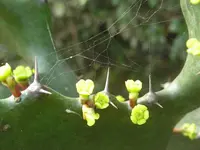
Antique spurge, Euphorbia antiquorum, is a succulent shrub or small tree with thick, three-angled green stems that resemble a cactus but are not related to cacti. The plant forms a branching, architectural shape that fits well in dry gardens and bright indoor spaces.
It is native to arid and semi-arid regions of India and nearby areas, where it is adapted to strong sun and long dry periods. Its drought tolerance and slow to moderate growth rate make it relatively easy to maintain if watering is controlled carefully.
Those who learn how to care for antique spurge usually focus on giving it strong light, fast-draining soil, and protection from prolonged cold or excess moisture around the roots.

Care Difficulty
Easy Care

Light Preference
Full Sun

Water Requirements
Low Water

Temperature Preference
Tropical / Frost Sensitive

Hardiness Zone
10–12

Soil Texture
Sandy, Loamy, Rocky

Soil pH
Slightly acidic (6.5–7.0), Slightly alkaline (7.0–7.5)

Soil Drainage
Well-drained

Fertilization
Minimal (feed rarely)
Scan your plant to receive care tips personalized for your specific plant
Available on iOS and Android
This succulent shrub prefers bright, intense light with some protection from extreme midday sun.
This drought-tolerant succulent stores water in its stems and needs infrequent but thorough watering.
This species prefers warm, dry conditions and is sensitive to cold and frost.
Humidity is not a major factor for Euphorbia antiquorum, which thrives in most indoor household conditions.
Soil for Euphorbia antiquorum must be sharply draining and mineral-rich to prevent root and stem rot.
This species is well suited to container growing when the pot choice manages drainage and stability.
This succulent shrub needs modest feeding to support steady growth without forcing soft, weak tissues.
Pruning Euphorbia antiquorum is mainly done to manage size, remove damage, and maintain a stable, attractive form.
Container-grown plants benefit from occasional repotting to refresh the gritty, free-draining substrate and ease root congestion.
New plants are most commonly produced from stem cuttings taken during the warm, active growing season.
This species is frost sensitive and needs protection in regions with cold winters or sudden temperature drops.

Plant Health Check
Not sure what's wrong with your plant? Check your plant's health inside the app.
This species naturally develops a tiered, candelabra-like framework, with thick 3-angled stems forming repeated, segmented whorls that give it a very architectural outline even in the wild.
The paired spines on its ridges are modified leaves, an adaptation that reduces water loss while still offering some protection from herbivores in its native, seasonally dry habitats.
Populations of this species show notable variation in stem thickness, branching pattern, and rib prominence, which has led to frequent confusion and misidentification with related Euphorbia species in older botanical literature.

In parts of India, this species has long been planted as a living boundary or property marker, because its dense, spiny, drought-tolerant structure forms a durable barrier that is difficult for people and livestock to push through.
This species often flowers sparsely in cultivation. Lack of bloom usually relates to plant immaturity, insufficient light intensity, or stress from recent repotting or pruning. Stable, bright conditions and time are the main requirements, not heavy feeding.
Keep your plants happy and healthy with plant identification, disease detection, and easy care guidance.