Staggered Pinching
Pinch back only some of the young shoots every 2–3 weeks in early summer so plants flower in waves rather than all at once, extending the blooming period and keeping the clumps compact.

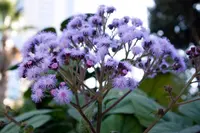
Flat-top whiteweed, Ageratum corymbosum, is a herbaceous perennial or subshrub known for its flat-topped clusters of small white flower heads. It typically forms loose, upright clumps with branching stems and simple green leaves.
This species is native to parts of Mexico and Central America, often found in open, sunny habitats and disturbed areas. It is considered relatively easy to grow where winters are mild, provided it has well-drained soil and moderate moisture.
Gardeners who want to care for flat-top whiteweed should note that it prefers full sun to light shade and does best in soils that do not stay waterlogged.

Care Difficulty
Moderate Care

Light Preference
Partial Sun

Water Requirements
Moderate Water

Temperature Preference
Warm Climate

Hardiness Zone
9–11

Soil Texture
Sandy, Loamy, Organic-rich

Soil pH
Acidic (5.5–6.5), Slightly acidic (6.5–7.0)

Soil Drainage
Well-drained

Fertilization
Light (every 4–6 weeks)
Scan your plant to receive care tips personalized for your specific plant
Available on iOS and Android
This species grows best in open, bright sites with consistent access to direct light.
This plant prefers evenly moist, well-drained soil and reacts quickly to prolonged drought or saturation.
This species performs best in warm, frost-free conditions and slows markedly in cool weather.
This species prefers moderate ambient humidity and usually manages in typical household conditions.
Ageratum corymbosum grows best in loose, moderately fertile, well-drained soil that holds some moisture but never stays waterlogged.
This species is suitable for container growing outdoors when drainage and pot stability are managed carefully.
This species grows in modest soils but responds well to light feeding during the active season, so caring for flat-top whiteweed benefits from a restrained approach.
Pruning supports bushy growth and prolonged flowering in Ageratum corymbosum.
Gardeners usually grow this plant in the ground, so transplanting is more common than container repotting.
Ageratum corymbosum is typically propagated from seed but can also be increased by softwood cuttings under suitable conditions.
This species is frost sensitive and usually grown as a tender perennial or warm-season annual in cooler regions.

Plant Health Check
Not sure what's wrong with your plant? Check your plant's health inside the app.
This species occurs naturally in moist, montane cloud forests of central and southern Mexico, where it grows along forest edges, clearings, and roadsides in cool, humid conditions.
The plant produces dense, flat to slightly rounded corymbs of small, tufted flower heads, which create the characteristic flat-top whiteweed look that attracts diverse pollinators.
In its native range, the species flowers over an extended season and offers nectar and pollen for butterflies, moths, and small bees, helping sustain pollinator activity along disturbed forest margins and secondary growth areas.
This species is very attractive to pollinators. The flat flower clusters provide easy landing platforms and abundant nectar. Butterflies, native bees, hoverflies, and other beneficial insects frequently visit, making the plant useful in wildlife and pollinator gardens.
Keep your plants happy and healthy with plant identification, disease detection, and easy care guidance.