scarlet passionflower Care (Passiflora coccinea)

Also known as: red passionflower, passion flower
scarlet passionflower

About scarlet passionflower

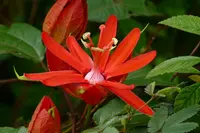
Scarlet passionflower, Passiflora coccinea, is a vigorous tropical vine grown mainly for its bright red, star-like flowers. It typically climbs on supports and can cover trellises, fences, or arbors with dense, glossy foliage.

This species is native to humid lowland forests of northern South America, where it grows in warm, frost-free conditions. In cultivation it prefers bright light, evenly moist but well-drained soil, and consistent warmth.

Flowering is most reliable when the plant has enough light and space to climb, so small indoor setups can be challenging. Understanding how to care for scarlet passionflower helps keep it flowering and manageable rather than overgrown or weak.

Main Plant Requirements

Care Difficulty

Moderate Care

Light Preference

Partial Sun

Water Requirements

Regular Water

Temperature Preference

Tropical / Frost Sensitive

Hardiness Zone

10–11

Soil Texture

Loamy, Sandy, Organic-rich

Soil pH

Acidic (5.5–6.5), Slightly acidic (6.5–7.0)

Soil Drainage

Moist but well-drained

Fertilization

Moderate (every 2–4 weeks)

Get Personalized Care Plan

Scan your plant to receive care tips personalized for your specific plant

Available on iOS and Android

How to Care for the scarlet passionflower

This tropical vine needs abundant light to flower well while avoiding harsh extremes.

  • Provide 4–6 hours of direct morning sun plus bright, filtered light the rest of the day for strong Passiflora coccinea growth and flowering.
  • Accepts light afternoon shade, especially in hot climates, to prevent leaf scorch and premature flower fade from intense sun.
  • In winter or cloudy seasons, prioritize the brightest spot available; leggy stems, small leaves, and poor blooming indicate insufficient light.

This species prefers evenly moist soil that never stays soggy for long periods.

  • Water when the top 3–5 cm of soil feel dry, aiming for consistently moist but not waterlogged conditions to protect the roots.
  • Use well-draining soil and, if in a container, drainage holes; yellowing, soft leaves and a sour smell suggest overwatering, while crisp, drooping leaves suggest underwatering.
  • Reduce watering slightly in cooler months when growth slows, but do not allow the root zone to dry out completely for extended periods.

This tropical climber grows best in warm, stable conditions without frost exposure.

  • Aim for 70–85°F (21–29°C) for active growth; flowering is most reliable when temperatures stay within this warm range.
  • Protect Passiflora coccinea from cold; growth slows below 60°F (16°C), and tissue damage occurs near 40°F (4°C) or with any frost.
  • In hot spells above 90°F (32°C), provide mulch and some afternoon shade to limit heat stress, leaf scorch, and excessive moisture loss.

This species prefers consistently moist air and benefits from elevated humidity.

  • Aim for 50–70% humidity; it tolerates brief dips lower but prolonged very dry air slows growth and flower production.
  • Crisping leaf edges, stalled buds, and rapid leaf drop indicate humidity stress rather than underwatering.
  • Use grouped plants, a nearby humidifier, or a pebble tray under (not touching) the pot to raise humidity around scarlet passionflower.

Passiflora coccinea grows best in airy, moisture-retentive but free-draining soil.

  • Use a loamy mix with 40–60% organic matter such as compost plus bark fines, blended with perlite for structure and drainage.
  • Aim for slightly acidic to neutral pH, roughly 6.0–7.0, avoiding strongly alkaline mixes that can lock up nutrients.
  • Improve aeration by adding coarse perlite or fine orchid bark so roots receive oxygen even after heavy watering.
  • Avoid heavy clay, compacted, or waterlogged substrates that stay soggy for more than 24 hours, as these promote root rot.

This species is suitable for container growing when the pot is chosen for both root development and vine support.

  • Select a deep, wide container so vigorous roots and the vine’s base remain stable as it climbs a trellis or support.
  • Choose a heavier material such as ceramic or thick-walled plastic outdoors to reduce tipping in wind as top growth increases.
  • Ensure drainage holes are large and unobstructed, and elevate the pot slightly so water clears the base quickly after irrigation.

Passiflora coccinea responds well to moderate feeding during its active growing season.

  • Use a balanced liquid fertilizer (for example 10-10-10) at 1/2 strength every 2–4 weeks in spring and summer.
  • Alternatively, apply a slow-release balanced fertilizer at the start of spring for container plants.
  • Supplement with a thin layer of compost over the root zone for scarlet passionflower grown in the ground.
  • Reduce feeding to once every 6–8 weeks or stop entirely in fall and winter when growth slows.

Pruning helps manage the vigorous growth and flowering performance of Passiflora coccinea.

  • Plan main pruning for late winter or very early spring before strong new growth starts.
  • Remove dead, damaged, weak, or tangled vines first to improve light and air penetration.
  • Shorten overly long stems to maintain size and encourage branching and more flowering shoots.
  • Use clean, sharp bypass pruners and make cuts just above a node to reduce dieback.

Container-grown Passiflora coccinea benefits from periodic repotting or transplanting to maintain strong growth.

  • Check for roots circling the pot, emerging from drainage holes, or slowed growth as signs it needs more space.
  • Plan repotting or outdoor transplanting for spring, after frost risk has passed and growth is restarting.
  • Move up only 1 pot size, using well-drained, fertile mix, and keep the root ball at the same soil level.
  • Water thoroughly after repotting, shade from harsh sun for a few days, and avoid heavy feeding until recovery is clear.

New plants of Passiflora coccinea are most often produced from stem cuttings or seeds.

  • Take semi-ripe stem cuttings in late spring or summer, 10–15 cm long, with at least 2–3 nodes.
  • Insert cuttings into moist, free-draining mix, keep at 70–80°F with high humidity, and provide bright, indirect light.
  • Sow fresh seeds in warm conditions, lightly covered, as germination can be slow and uneven.
  • Use rooting hormone on cuttings and maintain consistently moist, not waterlogged, substrate to reduce losses.

This tropical species is frost-sensitive and needs careful winter management in cooler climates.

  • In regions below USDA zone 10, grow in containers and move plants indoors before temperatures drop below 50°F.
  • Provide bright, cool indoor conditions in winter and allow the soil surface to dry slightly between waterings.
  • In mild climates, mulch the root zone with 5–8 cm of organic material to buffer temperature swings.
  • Expect slower growth in winter and avoid heavy pruning or strong feeding until spring returns.

Care Tips

Sturdy trellis support

Install a strong, weather-resistant trellis or wires before planting so the vines can be gently tied and trained as they grow, preventing stem breakage and tangling later.

Encourage flowering spurs

Loop or gently arch long vines horizontally along the support structure, as this positioning encourages more lateral shoots, which in turn carry more flowers.

Targeted pollination aid

In areas with few pollinators, hand-pollinate fresh flowers in the morning by transferring pollen between flowers with a small, clean brush or cotton swab to improve fruit set.

Cold-season protection

In regions with cool winters, mulch the root zone with 5–8 cm of organic material and wind-protect the base with burlap or frost cloth to help the plant resprout from the crown if top growth is damaged.

Routine vine renewal

Every 2–3 years, remove one or two of the oldest, least-productive vines at the base in late winter to stimulate vigorous new growth and support long-term success when growing scarlet passionflower.

Common Pests and Diseases

Passion vine mite

This pest feeds on the undersides of leaves, causing bronzing, fine yellow stippling, and eventual leaf drop, especially in hot, dry conditions. Symptoms include slowed growth and a dull, dusty appearance on foliage.

Solution

Increase humidity around the plant, then hose or shower leaves thoroughly, focusing on the undersides, and repeat weekly until populations drop. For persistent infestations, use a horticultural oil or insecticidal soap thoroughly on both leaf surfaces, and avoid water stress, which favors mite outbreaks.

Heliconius caterpillars

These insects are butterfly larvae that selectively feed on passionflower foliage, chewing large holes and sometimes defoliating young vines. Damage is usually concentrated on new growth and tender shoots.

Solution

Hand-pick caterpillars from vines and remove heavily skeletonized leaves to encourage new growth. In small gardens, physical removal and encouraging natural predators is usually enough; in production settings, targeted use of Bacillus thuringiensis (Bt) can protect new flushes without harming adult butterflies.

Passionflower fusarium wilt

This disease causes sudden wilting, yellowing of lower leaves, and dieback of shoots, often starting on one side of the plant. Symptoms include brown vascular streaking inside stems when they are cut open.

Solution

Remove and destroy affected vines, including as much root material as possible, and avoid replanting passionflowers in the same soil for several years. Improve drainage, avoid overwatering, and use clean tools and propagation material to reduce the risk of spread; in container culture, discard infected soil and repot into fresh, sterile mix.

Cercospora leaf spot

This disease produces small, circular to irregular brown or purplish spots with pale centers on leaves, which can merge and cause premature leaf drop in humid, warm conditions. Symptoms include thinning foliage and reduced vigor on lower and inner parts of the vine.

Solution

Prune to improve airflow, avoid wetting foliage late in the day, and promptly remove and dispose of infected leaves. In areas with recurring problems, use a preventive copper-based fungicide during warm, wet periods and maintain good spacing and trellising to keep leaves drier.

Scale insects

These insects appear as small, immobile bumps on stems and leaf veins, sucking sap and excreting honeydew that can lead to sooty mold. Symptoms include sticky leaves, general decline, and yellowing or distorted new growth.

Solution

Gently scrape or wipe scales off with a cotton pad dipped in alcohol, then wash the plant with lukewarm water and mild insecticidal soap. For heavier infestations, apply horticultural oil thoroughly to smother remaining scale, and repeat at 7–14 day intervals while monitoring new growth closely as part of Passiflora coccinea plant care.

Interesting Facts

Specialized hummingbird partners

In its native Amazonian range, this species is primarily pollinated by long-billed hummingbirds that match the length and shape of its tubular red flowers, an example of floral adaptation to a specific pollinator group.

Shallowly lobed leaves

Unlike many other passionflowers with deeply divided foliage, this species usually has entire or only shallowly 3-lobed leaves, which helps distinguish it from similar red-flowering Passiflora species in the field.

True tropical origin

This plant is native to lowland rainforests of northern South America, where it grows as a woody vine in consistently warm, humid conditions rather than in seasonally cooler subtropical habitats favored by many related species.

FAQs about scarlet passionflower

This species is a twining vine that climbs using tendrils, rather than spreading along the ground. It needs a trellis, fence, or other vertical support to attach to and develop its long, ornamental stems.

Grow Healthy Plants with Botan Care

Keep your plants happy and healthy with plant identification, disease detection, and easy care guidance.


Botan plant care app — identify plants on mobile

Explore More Plants