Control Spreading Edges
Once runners appear beyond the desired area, slice vertically through the stolons with a clean spade and lift unwanted pieces to prevent the planting from becoming invasive while keeping a dense groundcover where needed.

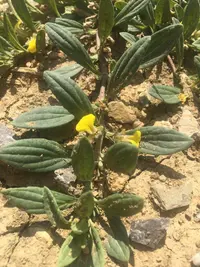
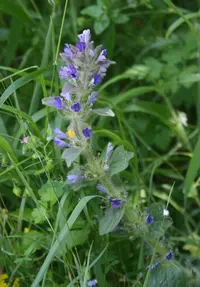
Ajuga salicifolia is a low, spreading perennial from the mint family, valued mainly as a groundcover. It typically forms dense mats of foliage with short upright flower spikes. Leaves are usually narrow and simple in shape, while the flowers are arranged in tiers along the stems, creating a soft, carpeted effect when in bloom.
This species is native to parts of Eurasia, where it grows in open habitats with moderate moisture. It is generally considered undemanding, provided it has reasonably moist, well-drained soil and at least partial light. Gardeners who learn how to care for Ajuga salicifolia often choose it for filling gaps between larger plants or stabilizing small banks.

Care Difficulty
Moderate Care

Light Preference
Partial Shade

Water Requirements
Moderate Water

Temperature Preference
Cool Climate

Hardiness Zone
6–9

Soil Texture
Loamy, Sandy, Organic-rich

Soil pH
Acidic (5.5–6.5), Slightly acidic (6.5–7.0)

Soil Drainage
Moist but well-drained

Fertilization
Minimal (feed rarely)
Scan your plant to receive care tips personalized for your specific plant
Available on iOS and Android
This groundcover prefers cool, bright conditions with some protection from strong sun.
This plant prefers consistently moist, but not saturated, soil.
This hardy perennial copes with a wide range of outdoor temperatures when established.
This species handles a range of humidity but grows best with moderate, stable air moisture.
Ajuga salicifolia prefers loose, moist, well-drained soil that does not stay waterlogged.
This species is suitable for container growing when drainage and horizontal space for spreading stolons are managed carefully.
This species is modest in its nutrient needs, so light feeding supports steady growth without creating weak, lush foliage.
Pruning is mainly used to keep this low perennial tidy and to remove declining material after flowering.
This groundcover is more often transplanted in beds than grown long term in containers, but similar principles apply.
New plants are most often produced by division of established clumps rather than by seed.
This perennial is generally hardy in temperate climates and usually requires minimal winter attention once established.

Plant Health Check
Not sure what's wrong with your plant? Check your plant's health inside the app.
This species is native to moist montane slopes and stream edges in the western Himalaya, where it grows among rocks and grasses rather than forming dense carpets like many other Ajuga species.
Its specific epithet salicifolia refers to the narrow, often lance-shaped leaves that resemble those of willows (genus Salix), giving the plant a more linear, upright look than the broad-leaved bugleweeds.
In its native range it experiences cool summers and cold, often snowy winters, so it performs best in climates with moderate summer heat and reliable winter chill, which influences practical Ajuga salicifolia care instructions in temperate gardens.
This species forms a mat through short runners but is not usually aggressively spreading in average garden conditions. It can slowly fill gaps in borders or rock gardens. Edge beds if you want to limit its spread.
Keep your plants happy and healthy with plant identification, disease detection, and easy care guidance.