Spring clump division
Divide crowded clumps every 3–4 years in early spring, replanting healthy outer sections at the same depth to keep plants vigorous and flowering well when growing Lady's Mantle.

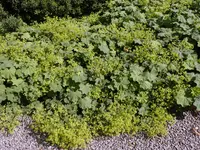
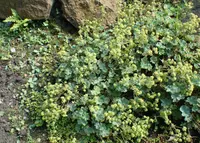
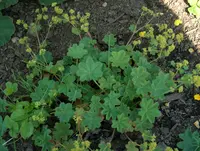
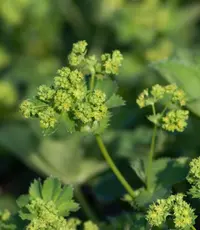
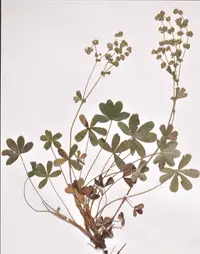
Lady's mantle, Alchemilla xanthochlora, is a hardy, low-growing perennial herb from the rose family. It forms soft mounds of scalloped, velvety green leaves that catch and hold water droplets. In late spring to summer it produces airy clusters of tiny yellow-green flowers that sit above the foliage. The plant is native to Europe and western Asia, where it grows in meadows, woodland edges, and moist grasslands. It is generally easy to grow, adapting well to cool to mild climates and tolerating partial shade and average garden soils. Once established, it is resilient, making it straightforward to care for Lady's Mantle in many temperate gardens.

Care Difficulty
Easy Care

Light Preference
Partial Shade

Water Requirements
Moderate Water

Temperature Preference
Cold Hardy

Hardiness Zone
3–8

Soil Texture
Loamy, Clay, Organic-rich

Soil pH
Acidic (5.5–6.5), Slightly acidic (6.5–7.0)

Soil Drainage
Moist but well-drained

Fertilization
Minimal (feed rarely)
Scan your plant to receive care tips personalized for your specific plant
Available on iOS and Android
This perennial prefers cool, bright conditions with protection from harsh midday sun.
This plant prefers consistently moist but not saturated soil.
This hardy perennial tolerates a wide range of outdoor temperatures when planted in the ground.
This species is adaptable and humidity is rarely a limiting factor outdoors.
This plant prefers moist, well-aerated soil that does not stay waterlogged.
This species suits container growing when moisture and drainage are carefully balanced.
Alchemilla xanthochlora is modest in its nutrient needs but responds to light feeding on poorer soils.
Pruning Alchemilla xanthochlora keeps the clump neat and can extend ornamental value.
This species is most often grown in the ground, with transplanting more relevant than container repotting.
Alchemilla xanthochlora is commonly propagated by division, with seed and cuttings used less often.
This hardy perennial generally needs minimal winter care in most temperate climates.

Plant Health Check
Not sure what's wrong with your plant? Check your plant's health inside the app.
The leaves have a finely water-repellent, micro-rough surface that causes droplets of dew and guttation fluid to bead into nearly perfect spheres at the leaf center, a feature that has attracted folk interest for centuries.
This species is notably rich in hydrolysable tannins such as ellagitannins, which contribute to its astringent taste and have been characterized in phytochemical studies of the genus.
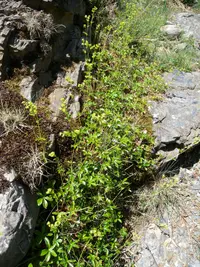
In the wild it is most often found in cool, moderately moist grasslands and meadow margins across central and eastern Europe, where it tolerates mowing and grazing better than many associated forbs.

This species has been included as a defined ingredient in some official European herbal pharmacopoeias, which distinguishes it from many other Lady’s Mantle taxa that are used only in traditional, local remedies.
This species forms clumps and can self-seed, slowly expanding into wider patches over time. It is not usually aggressive, but in ideal conditions seedlings may appear beyond the original planting and need occasional thinning or removal.
Keep your plants happy and healthy with plant identification, disease detection, and easy care guidance.