


Substrate anchoring
Press the moss gently but firmly onto rough, stable surfaces such as bark slabs or porous rock so the stem bases make continuous contact, which encourages faster attachment and reduces desiccation of Alleniella complanata mats.

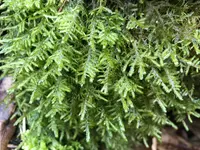
Flat Neckera, now placed in the genus Alleniella as Alleniella complanata, is a small, creeping moss often found forming dense, flat mats. It commonly grows on damp, shaded rocks, tree bases, and rotting wood in temperate regions, especially in humid forests and along stream banks.
Its shoots are tightly pressed to the surface, giving a smooth, carpet-like look that helps retain moisture and protect underlying substrates. This compact, mat-forming habit makes it useful in moss gardens and terrarium landscapes.
The plant prefers consistent moisture, cool to mild temperatures, and low to moderate light, which reflects its woodland origins. Once suitable humidity and shade are provided, it is relatively stable, so learning how to care for Flat Neckera mainly involves maintaining an even, damp environment without strong sun or drying air currents.

Care Difficulty
Moderate Care

Light Preference
Partial Shade

Water Requirements
Keep Soil Moist

Temperature Preference
Cool Climate

Hardiness Zone
Unknown

Soil Texture
Silty, Peaty, Organic-rich

Soil pH
Acidic (5.5–6.5)

Soil Drainage
Moist but well-drained

Fertilization
Minimal (feed rarely)
Scan your plant to receive care tips personalized for your specific plant
Available on iOS and Android
This moss prefers low, cool light similar to a shaded forest floor.
This species needs consistently moist conditions and does not tolerate drying out.
This moss prefers cool to mild temperatures with protection from frost and extreme heat.
This moss prefers consistently moist, humid air but survives short dry periods if kept hydrated at the base.
Alleniella complanata thrives on thin, moist, well-aerated substrates that mimic damp bark or rock surfaces rather than standard potting soil.
This species can be grown in shallow containers or trays when moisture and aeration are controlled carefully.
Alleniella complanata, often called Flat Neckera, is a moss that gains little from fertilization and usually grows well on nutrient-poor substrates.
Alleniella complanata needs minimal pruning, mainly to keep mats tidy and healthy in cultivation.
This moss is usually grown on rocks, bark, or shallow trays, so transplanting focuses on refreshing the substrate rather than classic pot repotting.
In cultivation, Alleniella complanata is usually propagated by simple division of existing mats rather than from spores.
This moss is naturally cold hardy in many temperate climates and usually needs little dedicated winter care outdoors.

Plant Health Check
Not sure what's wrong with your plant? Check your plant's health inside the app.
This species forms thin, strongly flattened shoots that overlap like roof tiles, creating smooth green carpets tightly pressed against rock or bark surfaces.
It often grows on calcareous (lime-rich) rocks, walls, and mortar, taking advantage of slightly basic conditions that many other mosses do not tolerate well.
Its tiny spores are easily dispersed by wind and water splash, which helps explain its scattered but wide distribution across temperate regions of Europe and parts of North America.

Molecular studies have shown that this species, long treated in the large moss genus Neckera, is distinct enough to be placed in the segregate genus Alleniella, illustrating how DNA evidence can significantly reshape moss classification.
Growth is slow, typically adding only a few millimeters per year. Like many mosses, it expands more by creeping and branching than vertical growth. Stable moisture, cool temperatures, and clean, low-nutrient substrates encourage steady but modest expansion.
Keep your plants happy and healthy with plant identification, disease detection, and easy care guidance.

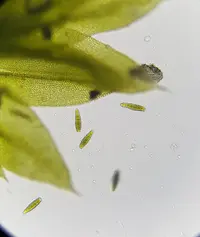
zygodon moss
Zygodon conoideus
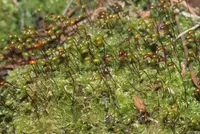
velvet feather-moss
Brachytheciastrum velutinum
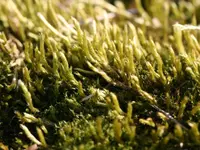
brachythecium moss
Brachythecium salebrosum
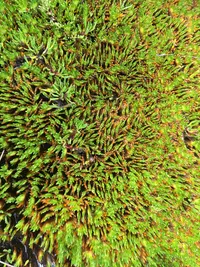
Distichia muscoides
Distichia muscoides
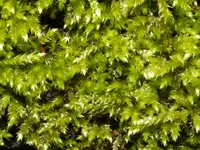
brachythecium moss
Brachythecium rutabulum
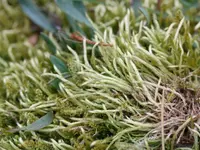
brachythecium moss
Brachythecium albicans
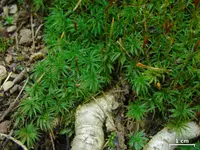
atrichum moss
Atrichum altecristatum
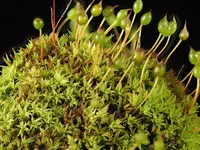
zygodon moss
Zygodon viridissimus