Prepare stable substrate
Before attaching the moss, brush and lightly roughen bark, rock, or clay surfaces so the tiny rhizoids can anchor securely and form an even mat rather than patchy clumps.

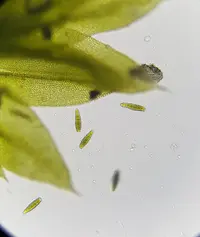
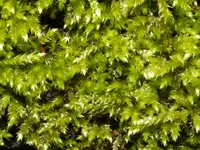
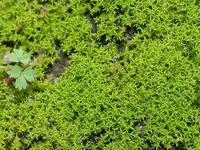
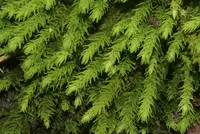
Zygodon conoideus is a small, cushion-forming moss that grows tightly against bark, rock, or old walls. Its fine, upright leaves create dense, green tufts with a soft texture.
This species is typically found in temperate regions, especially in humid, shaded woodlands and on tree trunks. It relies on clean, moist air and consistent humidity, which can limit its success in very dry or polluted areas.
Light shade, regular moisture, and a stable, rough surface help care for zygodon moss, but it remains a niche plant best suited to patient growers and controlled environments.

Care Difficulty
Moderate Care

Light Preference
Partial Shade

Water Requirements
Keep Soil Moist

Temperature Preference
Cool Climate

Hardiness Zone
Unknown

Soil Texture
Loamy, Rocky, Organic-rich

Soil pH
Acidic (5.5–6.5)

Soil Drainage
Moist but well-drained

Fertilization
Minimal (feed rarely)
Scan your plant to receive care tips personalized for your specific plant
Available on iOS and Android
This moss prefers cool, soft light that mimics shaded rock or woodland conditions.
This species needs constantly moist but not stagnant conditions around its rhizoids and growing surface.
This moss thrives in cool to mild climates with stable, moderate temperatures.
This moss prefers consistently moist air and reacts quickly to drying conditions.
This species grows best on a moist, stable, mineral-rich substrate rather than typical potting soil.
This moss can be grown in shallow containers if moisture and drainage are tightly controlled.
This moss has very low nutrient demand, so fertilizing Zygodon conoideus is rarely necessary and should always be done lightly.
Pruning Zygodon conoideus is minimal and mainly about keeping the moss cushion clean and evenly textured.
Moving this moss is more about transplanting its mats than classic repotting, and it handles disturbance poorly if allowed to dry out.
Propagation relies on spreading small moss fragments rather than conventional cuttings or seeds used for vascular plants.
This moss is generally cold hardy and usually needs little structured winter care in typical temperate climates.

Plant Health Check
Not sure what's wrong with your plant? Check your plant's health inside the app.
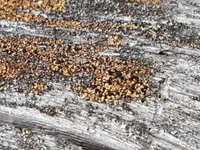
This species most often grows as a small epiphyte on the bark of living trees, especially in humid, shaded forests, rather than on soil or rocks, reflecting a narrow ecological niche.
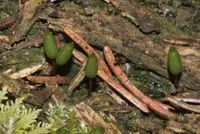
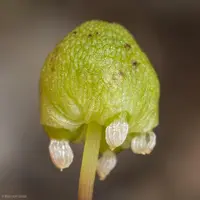
Its sporophytes develop small, strongly conical spore capsules that give the species its name and help distinguish it from many other cushion-forming mosses under magnification.
The moss has a scattered, often local distribution in parts of Europe, where it can be confined to specific woodland types with stable humidity and relatively clean air.
This species grows slowly, forming small cushions that expand a few millimeters to about 1 cm per year. Growth speed depends on constant moisture, cool to mild temperatures, clean air, and stable surfaces such as bark or rock.
Keep your plants happy and healthy with plant identification, disease detection, and easy care guidance.